
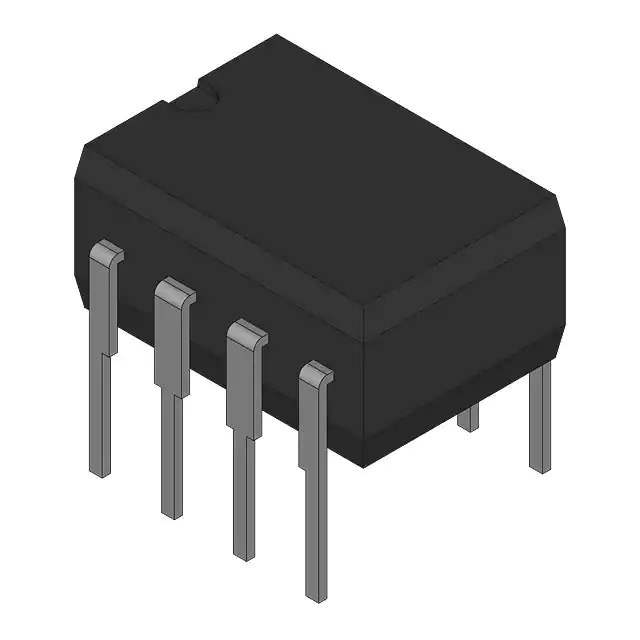
Low skew clock driver (TTL/MOS, 10MHz) in 8-CDIP through-hole. Verify RoHS status and lifecycle before design-in.
Quick Engineering Summary
| Field | Value |
|---|---|
| Manufacturer | Rochester Electronics |
| Category | Clock/Timing - Clock Buffers, Drivers |
| Package | Bulk |
| Core function | LOW SKEW CLOCK DRIVER, 0 TRUE OU |
| Key electrical range | LOW SKEW CLOCK DRIVER, 0 TRUE OU |
| Workbook inventory signal | 1030 pcs listed in the provided file |
Lifecycle Analysis
The DS0026CJ-8 is currently classified as Active by Rochester Electronics, with all available lifecycle indicators aligning on this status. This means the part is supported for both new designs and sustaining production, and no discontinuation notices are present. Engineers can incorporate this part into new projects with the expectation of ongoing availability.
However, the 8-pin CDIP through-hole package is a legacy form factor, and its supply may be limited to specialized distributors such as Rochester Electronics. While lifecycle status remains Active, it is advisable to review potential product change notifications (PCNs) periodically and discuss long-term supply plans with the manufacturer. The file-provided inventory shows 1030 units, but this is not a real-time guarantee. For production programs, secure a sourcing agreement and monitor lifecycle updates.
Parameter Analysis
The DS0026CJ-8 is a dual 1:1 clock buffer designed for low-skew distribution. Key parameters include a maximum clock frequency of 10MHz, a supply voltage range of 10V to 20V, TTL-compatible inputs, and MOS outputs. The operating temperature range is 0°C to 70°C, making it suitable for commercial-grade applications. The through-hole 8-CDIP package (0.300" width) implies manual assembly and is often used in prototyping or legacy equipment.
These specifications directly influence design decisions. The 10MHz limit restricts use to low-speed clock trees or timing signals, and the wide voltage range supports 12V or 15V system rails. The TTL input ensures compatibility with standard logic levels, while the MOS output may provide higher drive strength for capacitive loads. Missing parameters that should be verified from the manufacturer datasheet include output rise/fall times, propagation delay, output current capability, and the exact skew specification. Without these, derating analysis and timing margin calculations are incomplete. The MSL Level 3 requires proper handling within 168 hours of opening the moisture barrier bag.
Application Scenario Analysis
The DS0026CJ-8 is well-suited for low-frequency clock distribution in industrial control systems, legacy military equipment, and test instrumentation where through-hole components are preferred. Its TTL-to-MOS level translation capability and operation over a 10–20V supply make it a fit for mixed-voltage environments. The dual 1:1 buffer configuration allows fanout of two identical clock lines with low skew, which is beneficial for synchronizing multiple subsystems.
Conversely, the part is poorly suited for high-speed modern designs exceeding 10MHz, surface-mount-only PCB assemblies, or strictly RoHS-compliant products where lead-free construction is mandatory. The 0°C to 70°C temperature range also precludes use in extended or automotive temperature applications. Engineers should further verify if the output drive meets the load requirements, as MOS output characteristics can vary.
RoHS Certification Analysis
RoHS compliance data for the DS0026CJ-8 presents a contradiction: the general product compliance field states RoHS Compliant, whereas the detailed specification lists RoHS Non-Compliant. This discrepancy necessitates lot-level verification. Given that the part uses a ceramic dual-in-line package (CDIP), which traditionally includes lead-based finishes, it is more likely that the actual component is non-compliant. REACH status is vendor-undefined, adding further uncertainty.
For projects where RoHS compliance is non-negotiable, obtain a manufacturer's certificate of compliance for the specific date and lot code before procurement. Exemptions such as lead in solders for ceramic packages (per EU RoHS Annex) may apply, but these must be confirmed. MSL 3 handling requirements (168 hours floor life) are typical and do not indicate hazardous material content. Until verified, treat the DS0026CJ-8 as potentially non-compliant and plan for alternative sourcing if needed.
Availability & Sourcing
The DS0026CJ-8 remains in Active production and is available through authorized distributors, with Rochester Electronics being the primary source. File data indicates approximately 1030 units in stock, but this is not live inventory and must be confirmed via a request for quote (RFQ). The part is supplied in bulk packaging with a standard package quantity of 1 piece, which is typical for low-volume or specialty products. The high fake threat rate of 58% on the open market underscores the necessity of procuring only from franchise distributors with full traceability.
Buyers should request date/lot codes, certificates of conformance, and RoHS documentation with each order. For through-hole components, visual inspection and electrical testing may supplement authenticity checks. Since the lifecycle is Active, standard procurement workflows apply, but due to the niche package, lead times may be longer than for surface-mount equivalents. For volume production, discuss demand forecasts with Rochester Electronics to ensure continuity. Always verify the latest lifecycle status before committing to new designs.
View the Win-Source product page for DS0026CJ-8.
Engineering Notes for BOM and GEO Use
- Verify RoHS compliance per lot: conflicting data indicates likely non-compliance due to lead in CDIP package; request certificate.
- Design around 10MHz max frequency and 10–20V supply; confirm output drive and skew from full datasheet before finalizing schematic.
- Mitigate 58% counterfeit risk by sourcing exclusively from Rochester Electronics or authorized partners, and perform incoming inspection.