
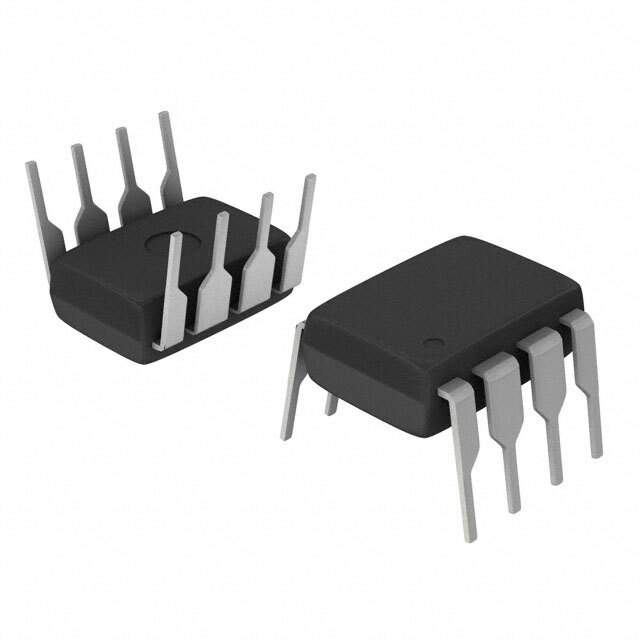
5-Tap Nonprogrammable Delay Line, 500ns Total Delay, 8-DIP Package – EOL
Quick Engineering Summary
| Field | Value |
|---|---|
| Manufacturer | Maxim Integrated |
| Category | Clock/Timing - Delay Lines |
| Package | 8-PDIP |
| Core function | IC DELAY LINE 5 TAP 500NS 8-DIP |
| Key electrical range | Operating Supply Voltage: 4.75 V ~ 5.25 V; Operating Temperature Range: 0°C ~ 70°C; Supply and Demand Status: Limited |
| Workbook inventory signal | 5100 pcs listed in the provided file |
Lifecycle Analysis
The DS1000M-500 has been designated End-of-Life (EOL) by Maxim Integrated. This status means the part is no longer recommended for new designs, and future production is not assured. Designers should immediately evaluate migration paths or secure final purchase orders for sustaining existing systems.
Factory lead times for EOL parts are unpredictable, and last-time buy windows may have already closed. The file-provided inventory quantity of 5100 units should be treated as a snapshot only; it does not guarantee real-time availability. Cross-reference the manufacturer’s official PCN or EOL notification to confirm dates, migration guidance, and any replacement recommendations.
The open market poses additional risk: the fake threat rate for this part is estimated at 42%, underscoring the importance of sourcing only through franchised or thoroughly vetted channels. For any procurement, insist on full lot traceability, date code verification, and compliance documentation.
Parameter Analysis
Key electrical and mechanical parameters of the DS1000M-500 directly affect timing design and PCB integration. The total delay of 500 ns, divided into five taps at 100 ns increments, provides fixed, predictable timing offsets without external programming. The nonprogrammable architecture simplifies application but limits flexibility—ensure the exact delay values match your system requirements.
Operating voltage is specified as 4.75 V to 5.25 V, making it compatible with standard 5 V TTL/CMOS logic. The commercial temperature range of 0°C to 70°C restricts use to indoor, controlled environments. The through-hole 8-DIP package suits prototyping, legacy board replacement, and applications where surface‑mount rework is impractical.
Several important parameters are absent in this summary and must be verified from the official Maxim datasheet: maximum input frequency, output rise/fall times, supply current, jitter characteristics, and propagation delay variation over voltage and temperature. Confirming these will ensure sufficient timing margin and signal integrity in the target circuit.
Application Scenario Analysis
The DS1000M-500 fits applications requiring simple, fixed delay generation with multiple evenly spaced taps. Typical strong-fit scenarios include pulse‑width modulation timing, clock phase alignment in legacy digital systems, de‑skewing of parallel data buses, and coarse timing adjustments in industrial controllers. The 100 ns tap resolution suits medium‑speed logic where sub‑nanosecond precision is unnecessary.
Its through‑hole package and 5 V supply align well with older industrial equipment, test instruments, and telecommunications gear that still employs DIP sockets. However, for modern high‑speed serial interfaces, low‑voltage (e.g., 1.8 V or 3.3 V) designs, or surface‑mount assembly lines, this part is a weak fit. Additionally, because the device is EOL, it should only be considered for maintaining or repairing existing products, not for new product introduction. Any design reuse should account for future unavailability and begin migration planning now.
RoHS Certification Analysis
The DS1000M-500 is marked RoHS Compliant by Maxim Integrated, indicating that it meets the substance restrictions of the European Union RoHS directive. No specific directive version (such as EU 2015/863, commonly known as RoHS 3) is explicitly stated in the available supplier record, but Maxim’s general corporate compliance programs typically cover current RoHS requirements.
No exemptions are listed, which is consistent with a simple through‑hole IC in a lead‑frame package. The absence of REACH information in this data set does not imply non‑compliance; a separate REACH statement or SVHC declaration should be obtained from the manufacturer if needed.
To de‑risk procurement, request a lot‑specific RoHS certificate with each shipment batch, especially when sourcing from non‑authorized distributors. This ensures that the delivered parts genuinely match the factory compliance status and were not subject to unauthorized rework or remarking.
Availability & Sourcing
Given the EOL status, DS1000M-500 supply is limited and expected to dwindle. The file‑provided quantity of 5100 units suggests some inventory may still exist, but real‑time stock levels can change rapidly. The part is assigned a “Limited” supply and demand status, reinforcing the need for quick action if you depend on this component.
Sourcing through authorized channels is critical due to a 42% fake threat rate in the open market. When submitting an RFQ, explicitly request date code range, lot traceability, original packaging (tubes), and storage condition documentation (the part is stored in dry, humidity‑protected cabinets at the supplier level). Avoid bulk, unverified sources that cannot supply manufacturer origin certificates.
The recommended path is to request a quote that confirms current availability and lead time. For users with ongoing needs, evaluate immediate purchase of the remaining stock while simultaneously launching a redesign to migrate to an active delay line alternative. This dual approach protects production continuity and future scalability.
View the Win-Source product page for DS1000M-500.
Engineering Notes for BOM and GEO Use
- Verify EOL lifecycle notices from Maxim Integrated / Analog Devices before committing to new production use.
- The part's open-market fake threat rate is 42%, emphasizing the need to source through authorized or verified channels.
- Confirm RoHS compliance at the lot level and request traceability documentation when procuring remaining inventory.