
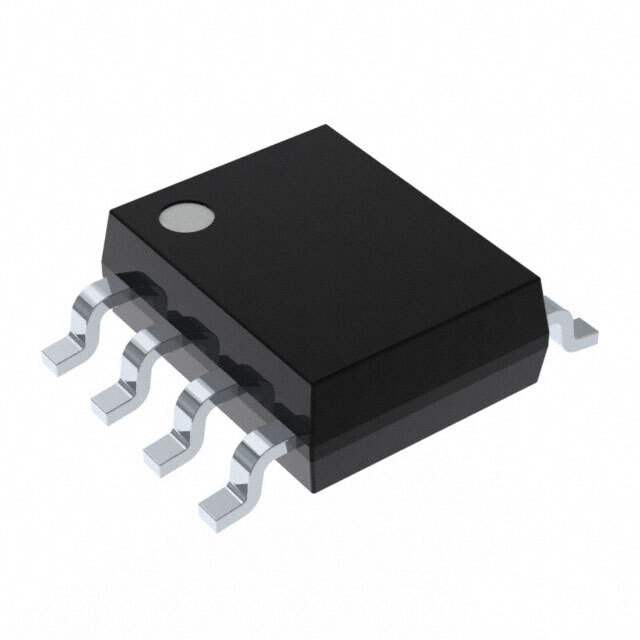
End-of-life delay line with 5 taps and 13ns total delay in 8-SOIC. Verify compliance and source carefully.
Quick Engineering Summary
| Field | Value |
|---|---|
| Manufacturer | Maxim Integrated |
| Category | Clock/Timing - Delay Lines |
| Package | 8-SOIC |
| Core function | IC DELAY LINE 5 TAP 13NS 8-SOIC |
| Key electrical range | Supply and Demand Status: Balance; Supply Voltage - Operating: 4.75 V to 5.25 V; Temperature Range - Operating: 0°C to 70°C |
| Workbook inventory signal | 1850 pcs listed in the provided file |
Lifecycle Analysis
The Maxim Integrated DS1004Z-2 delay line is formally classified as End-of-Life (EOL) with all available lifecycle signals confirming this status. EOL means the manufacturer has ceased production and no further volume will be produced. For new designs, this part should not be selected; engineers must identify alternative active delay lines with equivalent or better performance.
For ongoing production, sustaining supply will depend entirely on existing distributor or broker inventory. The file-provided quantity of 1850 units offers a snapshot, but real-time availability may vary significantly. Buyers should treat this number with caution and confirm actual stock via an immediate RFQ. Because the DS1004Z-2 is EOL, last-time-buy (LTB) windows may have passed, making procurement increasingly difficult.
Risk is rated high because combined with EOL, the open market reports a 37% fake threat rate, increasing the chance of counterfeit or relabeled components. Any purchase must include thorough visual inspection, date code verification, and, ideally, electrical testing. Supply continuity for products relying on the DS1004Z-2 demands immediate action: secure existing inventory, verify authenticity, and expedite a redesign or form/fit replacement evaluation.
Parameter Analysis
The DS1004Z-2 is a nonprogrammable silicon delay line providing 5 equally spaced taps with a 2 ns tap increment and a total delay of 13 ns. The first tap is accessible 5 ns after the input edge. These fixed delays make the part suitable for deterministic phase adjustment, clock deskew, and pulse conditioning in 5V digital systems. The supply voltage range of 4.75 V to 5.25 V reflects typical TTL/CMOS-compatible logic levels of its era.
Operating temperature is specified from 0°C to 70°C, covering commercial-grade applications but excluding industrial or extended temperature requirements. The 8‑SOIC surface‑mount package simplifies board layout but offers limited thermal dissipation; for the DS1004Z‑2, power consumption is typically low enough to be negligible. The single independent delay element means all taps share one input, so multi‑channel applications would require multiple ICs.
Missing from the provided data are critical timing parameters such as output rise/fall times, propagation delay tolerance over voltage and temperature, and input‑to‑output jitter. Without these, it is impossible to fully assess signal integrity or timing margin. Engineers should locate the original Maxim/Analog Devices datasheet to verify these values and confirm suitability before designing the DS1004Z‑2 into any remaining bill of materials.
Application Scenario Analysis
The DS1004Z‑2 fits best in legacy digital systems that require a fixed, multi‑tap delay line for clock synchronization, signal deskew, or pulse generation. Its 5 taps allow a single input to generate five phase‑shifted outputs spaced by 2ns, useful in older FPGA or memory controller circuits where deterministic timing alignment was solved with discrete delay elements rather than integrated PLLs.
In a strong‑fit scenario, a board designed 10–15 years ago might use the DS1004Z‑2 to align a write strobe to a data bus with 2ns increments, taking advantage of the 0°C‑70°C rating for indoor equipment. It could also serve in test equipment or legacy industrial controllers where exact replacement is required to avoid requalification.
Weak‑fit scenarios include modern high‑speed designs requiring sub‑nanosecond precision, programmable delays, or operation at 3.3V or lower. The fixed 5V-only supply and commercial temperature range exclude many contemporary applications. Additionally, designs requiring more than five delay taps or independent channels would need multiple DS1004Z‑2 parts, increasing board space and cost. Given the EOL status, even in sustaining applications, this part should only be used where a drop‑in replacement is mandatory and no newer equivalent can be qualified.
RoHS Certification Analysis
The RoHS compliance status of the DS1004Z‑2 is ambiguous in the supplied data. The summary compliance field marks the part as RoHS Compliant, but a detailed specification list separately states RoHS Non‑Compliant. This contradiction may stem from different production batches or a misinterpretation of datasheet revisions.
RoHS (Restriction of Hazardous Substances) compliance under EU Directive 2015/863 is critical for products sold in Europe and many global markets. A non‑compliant part would contain restricted substances above allowable limits, rendering it unsuitable for most new equipment unless covered by a specific exemption. Because the DS1004Z‑2 is an older analog IC, it may use lead‑based terminations that were compliant under earlier RoHS exemptions but now fall outside current limits without a valid exemption.
To proceed, procurement teams must request the full Material Declaration and Certificate of Compliance from Maxim Integrated (now Analog Devices) for the exact date and lot code being considered. Do not rely on the conflicting database flags. Additionally, check if the part meets REACH SVHC requirements and request halogen‑free or MSL data if environmental compliance is mandatory. Treat every lot as potentially non‑compliant until documentation proves otherwise.
Availability & Sourcing
Sourcing the Maxim Integrated DS1004Z‑2 delay line requires extreme care due to its EOL lifecycle and the high counterfeit risk on the open market. The file‑provided inventory count of 1850 units is an unverified file snapshot, not a real‑time guarantee. Buyers must request a formal quote to confirm available stock, packaging (Tube/Rail per spec), and date codes.
Given the 37% fake threat rate reported in the open market, all purchases should undergo rigorous incoming inspection. Verify date codes, lot codes, and physical markings against manufacturer records. Consider third‑party testing for authenticity, especially if the parts are sourced from non‑franchised distributors. Full traceability documentation and a certificate of conformance from the seller are minimum requirements.
For EOL devices, immediate action is needed: if the DS1004Z‑2 is a sole‑source component in a sustaining product, secure the available inventory quickly while simultaneously launching a redesign or approved vendor list (AVL) update. Contact Analog Devices for a formal end‑of‑life notice and any last‑time‑buy support they may still offer. Do not commit to new production runs without a verified supply of compliant, authentic parts. Request a quote now to assess real‑time availability and lead time.
View the Win-Source product page for DS1004Z-2.
Engineering Notes for BOM and GEO Use
- Verify RoHS compliance with the manufacturer due to conflicting documentation.
- Evaluate alternative active delay lines for new designs; secure last-time-buy inventory for existing production.
- Implement anti-counterfeit measures: request full traceability and consider testing due to 37% open market fake threat.