
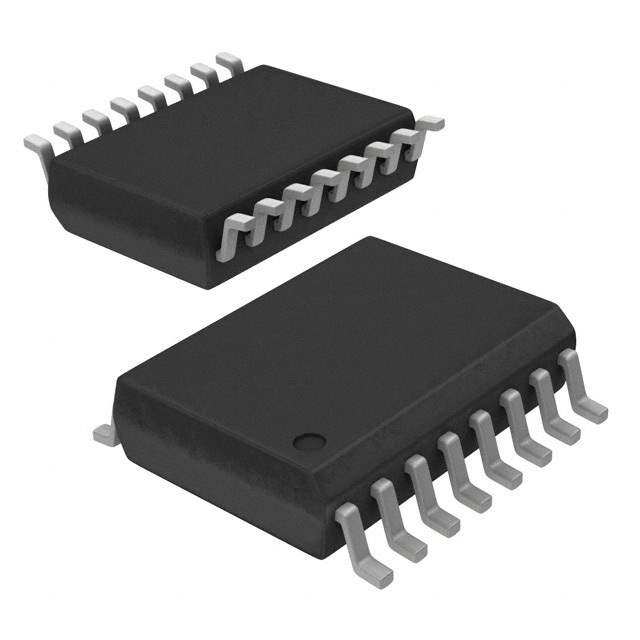
Discontinued 7-tap silicon delay line in 16-SOIC; verify availability before ordering.
Quick Engineering Summary
| Field | Value |
|---|---|
| Manufacturer | Maxim Integrated |
| Category | Clock/Timing - Delay Lines |
| Package | Tube |
| Core function | IC DELAY LINE PROG 16-SOIC |
| Key electrical range | Temperature Range - Operating: 0°C ~ 70°C; Voltage - Supply: 4.75V ~ 5.25V |
| Workbook inventory signal | 3150 pcs listed in the provided file |
Lifecycle Analysis
The DS1007S-1 is officially classified as Discontinued by Maxim Integrated, with all internal lifecycle records confirming this status. For engineers, this means the part should not be used in any new designs or new production programs. Existing designs currently sourcing this component must enter an immediate risk assessment. The provided inventory signal of 3150 units in the workbook is a file-based estimate and does not guarantee real-time availability. Procurement teams should prioritize last-time-buy opportunities and secure remaining stock directly through authorized channels if still possible.
The difference between EOL and Discontinued is largely semantic in this context: both convey that the part is no longer produced. Any conflicting signals in databases should be resolved to the most conservative stance, which is Discontinued. Without a formal last-time-buy notice from the manufacturer, remaining inventory may be scattered among distributors and the open market, requiring careful verification of authenticity and date codes.
Given the high counterfeiting threat (65% open-market risk), any purchase must be accompanied by full traceability documentation, including manufacturer CoC and compliance certificates. Do not rely on file-only inventory claims; always request a quote and physically verify stock before committing to production quantities.
Parameter Analysis
The DS1007S-1 provides 7 independent, nonprogrammable delay lines with total delay ranges selectable as 3ns–10ns or 9ns–40ns, and a fixed first tap delay of 3ns. This makes it suitable for applications requiring multiple fixed timing offsets rather than dynamically adjustable delays. The device operates from a 4.75V to 5.25V supply, which pins it to standard 5V logic domains and dictates that I/O levels must be compatible with 5V CMOS/TTL thresholds. The 0°C to 70°C commercial temperature range limits deployment to non-harsh environments, with no automotive or extended industrial rating.
The 16-SOIC surface-mount package is standard, but the tube packaging (45 pieces per standard package) may complicate automated handling if not repackaged. MSL Level 1 (Unlimited) means no moisture sensitivity concerns, simplifying storage and soldering. Important parameters missing from the available data include tap increment resolution, maximum input frequency, jitter performance, input-to-output propagation delay, and output drive strength. These must be verified in the official Maxim Integrated datasheet before committing to a design, especially for high-speed clock distribution where signal integrity is critical.
Application Scenario Analysis
This delay line is well-suited for clock skew adjustment in digital systems where multiple synchronous signals require fixed, known delays relative to a reference. Its 7 independent channels allow skewing multiple clock or data lines simultaneously, common in memory interfaces, bus synchronization, or FPGA timing calibration. The NonProgrammable nature means each tap’s delay is factory-set, so application design must align with the specific delay ranges offered; if a custom delay profile is needed, a programmable delay chip would be more appropriate.
It is less suitable for applications demanding very fine delay resolution (picosecond steps), variable delay on-the-fly, or differential signaling. The commercial temperature range excludes it from automotive or outdoor industrial electronics. Also, because the part is discontinued, any new design should look to active alternatives with similar or improved specs. For legacy equipment repair or small-scale sustaining production, the DS1007S-1 can still serve as a drop-in replacement if authentic stock is secured.
RoHS Certification Analysis
The DS1007S-1 is labeled RoHS Compliant. Combined with a REACH Unaffected status, it meets basic European environmental directives. However, no specific RoHS directive version (e.g., RoHS 3) is provided, so procurement should confirm latest compliance at the lot level from the vendor. MSL Level 1 eliminates the need for dry packing and baking, easing handling in RoHS reflow processes. No exemptions are listed, but the typical 16-SOIC lead-frame termination is assumed to be matte tin. For formal compliance documentation, request a supplier Certificate of Compliance that references the exact part number and date code.
Availability & Sourcing
As a discontinued component, sourcing DS1007S-1 parts requires careful due diligence. The workbook indicates 3150 units, but this is not a live inventory check. Interested buyers must submit an RFQ to verify current stock, obtain exact date and lot codes, and assess condition (new old stock vs. pulls). The standard package is tube, 45 pcs per tube; reeling may not be available. Given the 65% counterfeit risk, insist on manufacturer traceability, including CoC and RoHS test reports.
Because no pin-compatible replacement is indicated here, engineers should evaluate Maxim’s current delay line portfolio or second-source alternatives for long-term production. For existing products dependent on this part, consider a last-time buy while authentic inventory is still accessible. Do not commit the DS1007S-1 to new designs—design for active lifecycle components instead.
View the Win-Source product page for DS1007S-1.
Engineering Notes for BOM and GEO Use
- Verify exact per-tap delay values and tolerances from the official datasheet before PCB layout or timing closure.
- Counterfeit risk is 65%; authenticate all purchases with lot traceability and electrical testing for delay accuracy.
- Plan for end-of-life by migrating to an active, programmable delay line with similar supply voltage and package footprint.