
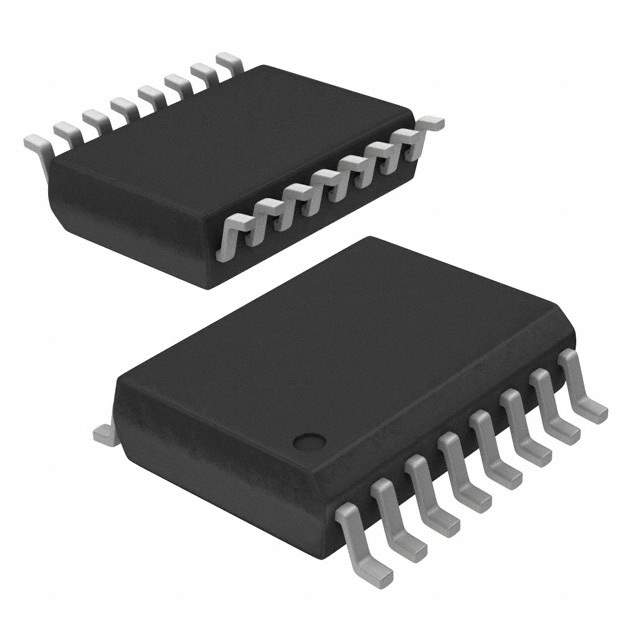
Maxim Integrated DS1007S-14 EOL Delay Line - Specs, Lifecycle, and Availability
Quick Engineering Summary
| Field | Value |
|---|---|
| Manufacturer | Maxim Integrated |
| Category | Clock/Timing - Delay Lines |
| Package | 16-SOIC |
| Core function | IC DELAY LINE PROG 16-SOIC |
| Key electrical range | Operating Supply Voltage: 4.75 V ~ 5.25 V; Operating Temperature Range: 0°C ~ 70°C; Supply and Demand Status: Limited |
| Workbook inventory signal | 8100 pcs listed in the provided file |
Lifecycle Analysis
The DS1007S-14 is designated End-of-Life (EOL) by Maxim Integrated. This status indicates the part is no longer recommended for new designs and is only suitable for sustaining existing production. All lifecycle signals provided align on EOL, with no conflicting data, making this a high-risk part for long-term availability. Designers must avoid new designs using this component and plan for a last-time buy if still needed for current production.
For procurement teams, the EOL status necessitates securing sufficient inventory for the remaining production lifecycle. The file-supplied inventory quantity of 8100 units should not be considered real-time stock. Contact the manufacturer or authorized distributors to confirm the last-time buy window and exact remaining lifecycle support. Migration to an alternative delay line is strongly advised.
Parameter Analysis
The DS1007S-14 provides 7 independent, nonprogrammable delay lines with selectable total delay ranges: 3ns to 10ns and 9ns to 40ns. The delay to the first tap is 7ns. These fixed delays are critical for timing alignment in digital systems, and the multiple independent channels allow for skew adjustment across several signal paths. The operating supply voltage of 4.75V to 5.25V aligns with standard TTL/CMOS logic levels, and the commercial temperature range of 0°C to 70°C suits typical indoor environments. The 16-SOIC SMD package is common and fits standard PCB surface-mount processes.
Key parameters missing from the available data include tap increment, delay accuracy, timing jitter, and output logic compatibility. Engineers must consult the original Maxim Integrated datasheet to verify these parameters for design margin calculations. The specified delay ranges suggest the part is targeted at low-to-moderate speed timing adjustments, making it unsuitable for high-precision or high-speed clock distribution without additional verification.
Application Scenario Analysis
As a nonprogrammable delay line, the DS1007S-14 is suited for applications requiring fixed timing adjustments such as signal deskew in parallel buses, pulse-width control, or synchronous clock alignment. Its 7 independent delays make it effective in systems where multiple signals need correlated but not identical delays, such as in memory interface timing or data acquisition synchronization. The commercial temperature range and 5V supply limit it to non-industrial, non-automotive environments.
Weak-fit scenarios include applications demanding dynamic or programmable delays, as this part has no on-chip configuration interface. Low-voltage systems (below 4.75V) would require level shifting, and high-speed designs above 40ns total delay are unsupported. Without detailed jitter and accuracy specs, the part is not recommended for clocking sensitive ADCs or ultra-low jitter phase-locked loops. For these use cases, an active clock buffer with programmable delay may be more appropriate.
RoHS Certification Analysis
RoHS compliance data for the DS1007S-14 is conflicting. The general compliance field lists it as RoHS Compliant, but a specific specification entry states RoHS Non-Compliant. This discrepancy requires immediate attention before procurement. A non-compliant RoHS status would restrict use in markets requiring EU RoHS (2011/65/EU) adherence. However, the other signal suggests compliance might be lot-dependent or a data entry error.
To resolve this, request a certificate of compliance from the distributor or manufacturer for the specific date/lot code. Check for REACH declarations if applicable, though no REACH data is provided. Until verified, treat the part as potentially non-compliant for RoHS-sensitive designs, especially if the application falls under EU regulation. The MSL or halogen-free status is not provided, further underscoring the need for thorough documentation before use.
Availability & Sourcing
The DS1007S-14 is in limited supply and marked as high-risk due to its EOL status. The file-indicated inventory of 8100 units offers some immediate buffer, but this figure is not guaranteed real-time. Buyers should request a quote to confirm current availability, lead times, and packaging (tube). Given the part's age (introduced in 1999), verifying storage conditions (e.g., dry pack) and date codes is critical to avoid moisture-related assembly issues.
For end-of-life parts, sourcing must include manufacturer lifecycle verification and a plan for last-time purchases. Traceability documentation, including lot codes and compliance certificates, is essential to mitigate counterfeit risks (28% fake threat reported). Transition to a pin-compatible alternative is not possible without manufacturer-supplied cross references, so direct migration planning with the engineering team is necessary. Always verify RoHS status and request full compliance documentation before committing to a purchase.
View the Win-Source product page for DS1007S-14.
Engineering Notes for BOM and GEO Use
- Verify RoHS compliance by lot due to conflicting data in supplier records.
- Plan for last-time purchase and secure enough DS1007S-14 stock for remaining production runs.
- Consult the full Maxim datasheet for missing timing parameters such as tap increment and jitter before finalizing design.