
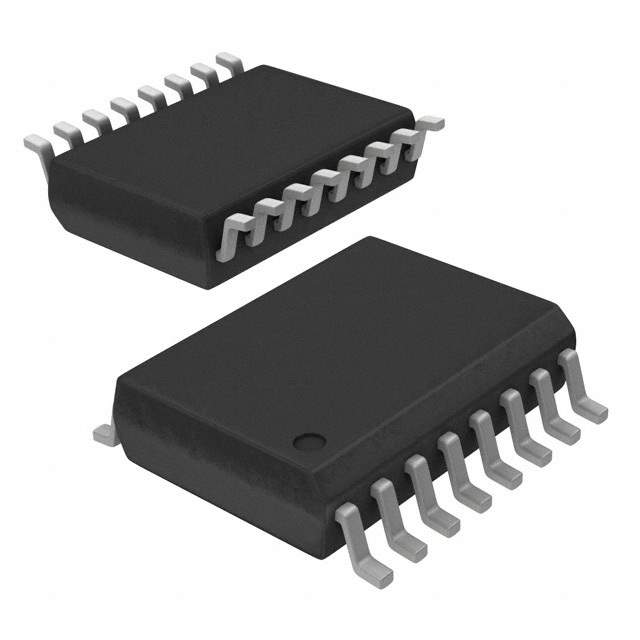
Essential procurement details and technical analysis for the DS1007S-2 EOL delay line IC.
Quick Engineering Summary
| Field | Value |
|---|---|
| Manufacturer | Maxim Integrated |
| Category | Clock/Timing - Delay Lines |
| Package | 16-SOIC |
| Core function | IC DELAY LINE PROG 16-SOIC |
| Key electrical range | Supply and Demand Status: Limited; Supply Voltage (V): 4.75V ~ 5.25V; Temperature Range - Operating: 0°C ~ 70°C |
| Workbook inventory signal | 9100 pcs listed in the provided file |
Lifecycle Analysis
The DS1007S-2 from Maxim Integrated is classified as end-of-life (EOL), a status confirmed by multiple lifecycle indicators including the manufacturer's official designation. This means the part is no longer in active production and is not recommended for new designs. For engineers managing sustaining products, this EOL status introduces significant procurement risk, requiring immediate inventory assessment and strategic sourcing.
The lifecycle signal is unambiguous: all provided data points align on EOL. For existing production lines where the DS1007S-2 is designed in, securing a last-time buy or finding remaining stock is critical. The file-based inventory indicates 9100 units may be available, but this figure is not real-time and must be verified through an RFQ. Any new design should avoid the DS1007S-2 entirely; instead, look for active, drop-in or functionally similar delay lines from Analog Devices (which acquired Maxim Integrated) or other suppliers.
Procurement teams should request a formal end-of-life notice (PCN) from the manufacturer to confirm timelines and recommended replacements. Without such documentation, the stated EOL status should be treated as final and actionable. Budgeting for alternative part qualification is advisable to prevent production disruptions.
Parameter Analysis
The DS1007S-2 offers seven independent, non-programmable delay lines with multiple total delay ranges: 3ns to 10ns and 9ns to 40ns. The delay to the first tap is 4ns. These specifications are critical for clock deskewing, signal alignment, and pulse shaping in digital systems. The 4.75V to 5.25V supply voltage range ensures compatibility with standard 5V logic families, while the 0°C to 70°C commercial temperature range limits its use to non-extreme environments.
Packaging is a 16-SOIC surface-mount device, supplied in tubes with a manufacturer pack quantity of 45 units. The MSL level of 1 (unlimited) simplifies handling during assembly. Key parameters missing from the supplied data include the tap-to-tap increment, propagation delay tolerance, input/output logic levels, and output drive strength—all of which are necessary for precise timing margin analysis. Engineers should consult the original Maxim datasheet to verify these values before finalizing any design that still uses this EOL part.
In a sourcing context, the parameter set confirms the DS1007S-2 is a basic programmable delay element, not a high-precision or high-speed device. For applications that have relied on it, any candidate replacement must match not only the delay ranges but also the number of independent channels and the voltage interface to avoid system redesign.
Application Scenario Analysis
The DS1007S-2 was typically used in clock distribution networks, digital signal synchronization, and timing alignment circuits within communication equipment, test instrumentation, and industrial controllers. Its multiple independent delay lines allowed engineers to fine-tune edge placement across parallel data paths or to create specific pulse-width modulations using simple logic.
Strong-fit applications include legacy 5V systems where the part has been proven over years, particularly in cost-sensitive, moderate-speed designs (below ~40 MHz based on the maximum 40ns total delay). Weak-fit scenarios are modern, low-voltage (3.3V or lower) or high-speed (>100 MHz) designs, where the limited delay resolution and 5V-only operation would force level shifting and may not meet timing constraints. Also, the commercial temperature range precludes automotive or outdoor industrial use.
Given the EOL status, the DS1007S-2 should not be considered for any new design; its value now lies solely in maintaining existing equipment. For migration, engineers should analyze the timing requirements precisely and seek programmable delay generators from the same manufacturer’s current product line, such as the DS1023 or DS1100 families, after verifying they meet the needed tap count and delay granularity.
RoHS Certification Analysis
RoHS compliance for the DS1007S-2 is uncertain due to conflicting information. While one source data field asserts 'RoHS Compliant,' another specification field explicitly states 'RoHS Non-Compliant.' Without resolution from the manufacturer, the part must be treated as non-compliant for procurement into regions where RoHS is mandatory. This conflict may arise from different production batches or outdated records, but in a sourcing guide, conservative assumption demands that compliance not be relied upon.
There is no mention of REACH or halogen-free status in the provided data. Therefore, no environmental assurances beyond the ambiguous RoHS status can be made. The MSL level is 1 (unlimited), which is unrelated to RoHS but confirms no special dry-pack requirements.
Before purchasing any DS1007S-2 inventory, request a certificate of compliance (CoC) from the distributor or directly from Analog Devices. Even then, consider lot-level testing for restricted substances if the part is destined for EU or similar regulated markets. The EOL status of the part makes it unlikely that the manufacturer will issue revised compliance documentation, heightening the risk.
Availability & Sourcing
Sourcing the DS1007S-2 requires immediate and careful action due to its EOL designation. A file-reported quantity of 9100 units is noted, but this is not a live inventory count and should be confirmed with a formal request for quote (RFQ). The part's supply and demand status is 'Limited,' and its popularity is low, indicating sporadic availability in the open market. Packaging is tube-based, with a manufacturer pack quantity of 45 per tube, which may influence minimum order quantities.
Procurement professionals should emphasize traceability when sourcing this EOL component. Request date and lot codes to ensure authenticity, especially given the reported 29% fake threat level in the open market. Verify that the components are original Maxim/ADI stock and have been stored in controlled conditions. The MSL 1 rating reduces some handling concerns but does not eliminate the need for proper sourcing practices.
For new projects, the DS1007S-2 is obsolete and should not be used. For ongoing production, engage with authorized distributors or reliable independent brokers to secure remaining stock. Always request a final PCN from the manufacturer to understand the official discontinuation timeline and any suggested replacements. Request a quote now to lock in any available inventory, and simultaneously begin migration planning for a sustainable, active delay line solution.
View the Win-Source product page for DS1007S-2.
Engineering Notes for BOM and GEO Use
- Verify RoHS compliance status with Maxim Integrated (now Analog Devices) due to conflicting datasheet signals before committing to any purchase.
- Secure remaining DS1007S-2 inventory for sustaining production; 9100 units are file-reported but not a real-time stock guarantee.
- Begin immediate evaluation of alternative delay line families for new designs, as the DS1007S-2 is obsolete and no longer recommended.