
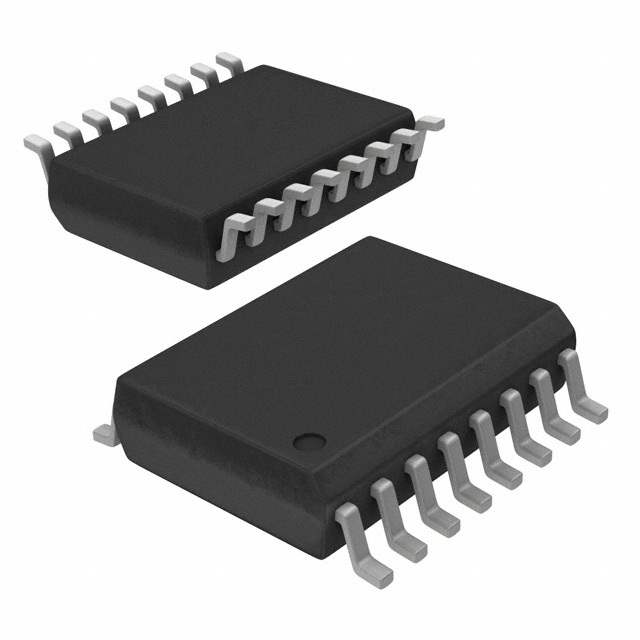
Maxim Integrated (Analog Devices) Clock/Timing - Delay Lines, EOL, Limited Stock
Quick Engineering Summary
| Field | Value |
|---|---|
| Manufacturer | Maxim Integrated |
| Category | Clock/Timing - Delay Lines |
| Package | 16-SOIC |
| Core function | IC DELAY LINE PROG 16-SOIC |
| Key electrical range | Supply and Demand Status: Limited; Supply Voltage - Operating: 4.75 V to 5.25 V; Temperature Range - Operating: 0°C to 70°C |
| Workbook inventory signal | 175 pcs listed in the provided file |
Lifecycle Analysis
The Maxim Integrated DS1007S-3 is classified as End-of-Life (EOL) by the manufacturer, with consistent signals across all available sources. This status indicates that the part is no longer recommended for new designs and is likely in the final stages of availability for existing production lines. The high risk level reflects the obsolescence of the component, meaning that supply may dry up without prior notice.
Design teams should immediately evaluate alternative parts or pin-compatible replacements if they are still sourcing this IC for new projects. For sustaining production, it is critical to verify current stock availability and plan last-time buys to avoid production gaps. The file-provided inventory of 175 units should be treated as a snapshot and not guaranteed real-time availability.
Engineers and buyers should request a formal last-time buy notice from the manufacturer or authorized distributors and reconfirm the lifecycle status before committing to procurement. Documentation such as product change notifications (PCNs) should be reviewed to understand any batch-specific variations that might affect compliance or performance.
Parameter Analysis
The DS1007S-3 offers two selectable total delay ranges: 3ns to 10ns and 9ns to 40ns, providing flexibility for different timing adjustment requirements. It features 7 independent, nonprogrammable delays, with a delay to the first tap specified at 3ns. The part operates from a 4.75V to 5.25V supply and within an ambient temperature range of 0°C to 70°C, making it suitable for commercial-grade applications.
Key parameters for integration include the SMD 16-SOIC package with a 7.50mm body width, which demands appropriate PCB layout for signal integrity. The multiple independent delays allow for parallel timing adjustments, useful in multi-channel clock distribution. However, critical missing parameters must be verified from the manufacturer's datasheet: tap-to-tap increment delay, delay accuracy and temperature stability, input signal voltage thresholds, and maximum operating frequency. Without these, precise timing margin analysis is not possible.
Procurement teams should confirm that the specified delay ranges meet the exact system requirements, especially when migrating from an older revision or similar part. Also, since the part is rated only for commercial temperature range, industrial or extended-range applications are not supported, which can be a disqualifier for many embedded designs.
Application Scenario Analysis
Given its function as a multiple-tap, nonprogrammable delay line, the DS1007S-3 is well-suited for clock de-skewing, signal synchronization, and pulse alignment in digital systems where a fixed set of delay values is adequate. Typical strong-fit scenarios include FPGA-based board designs that need to adjust clock phases to multiple peripherals, or legacy communication equipment that uses delay lines for protocol timing constraints.
The part is a weak fit for applications requiring programmability, high precision across temperature, or delays beyond 40ns. Additionally, its 0–70°C rating restricts use in harsh environments, making it unsuitable for automotive or outdoor industrial gear. The 5V-only operation also limits compatibility with modern low-voltage logic families, so level translation would be necessary in mixed-voltage designs.
When evaluating this part for a project, engineers should map the seven independent delays to their timing budget and confirm that the nonprogrammable nature does not conflict with system flexibility needs. For any new design, alternative programmable delay lines or all-digital solutions may offer greater adaptability.
RoHS Certification Analysis
The RoHS compliance status of the DS1007S-3 is inconsistent in the provided data. The product-level compliance field indicates 'RoHS Compliant,' but a separate specification attribute explicitly lists it as 'RoHS Non-Compliant.' This conflict likely arises from different data sources, assembly sites, or date codes.
Without a definitive manufacturer statement or batch-specific test report, the part cannot be unconditionally assumed RoHS compliant. Buyers should request current compliance certificates from the supplier, particularly for the exact lot being purchased. REACH status and halogen-free declarations are not provided and should also be confirmed if needed for the end market.
For shipping into the EU or regions requiring RoHS 3 (EU 2015/863) conformance, verify that the specific units meet the latest standards. Given the EOL status, older non-compliant stock may be circulating; therefore, insist on documentation for each shipment to avoid regulatory risk.
Availability & Sourcing
As an EOL component, the DS1007S-3 is only available through limited remaining stock. The file-based inventory shows 175 units, but this is not a real-time guarantee and must be confirmed with a request for quote (RFQ). The part is packaged in tube/rail, typical for 16-SOIC, and has a medium popularity rating, which suggests some residual demand.
Sourcing teams should prioritize traceability and authenticity, especially given a reported 56% fake threat in the open market. Procure only through authorized or reputable verified channels. Request date codes, lot codes, and RoHS certificates before placing any order. Storage conditions call for dry storage and humidity protection, so verify packaging integrity upon receipt.
Because the lifecycle status is EOL, any purchase should be considered a one-time buy. Validate with the manufacturer or an authorized distributor that no further supply is planned, and evaluate migration paths immediately. For critical production, consider partnering with a broker that offers inspection and testing to mitigate counterfeit risks.
View the Win-Source product page for DS1007S-3.
Engineering Notes for BOM and GEO Use
- Verify RoHS compliance on a lot-by-lot basis due to conflicting data; request current certificates before procurement.
- Secure remaining stock quickly for sustaining production, but plan a redesign using an alternative part for new designs.
- Confirm missing timing parameters (tap increment, accuracy, max frequency) from the official datasheet to ensure design compatibility.