
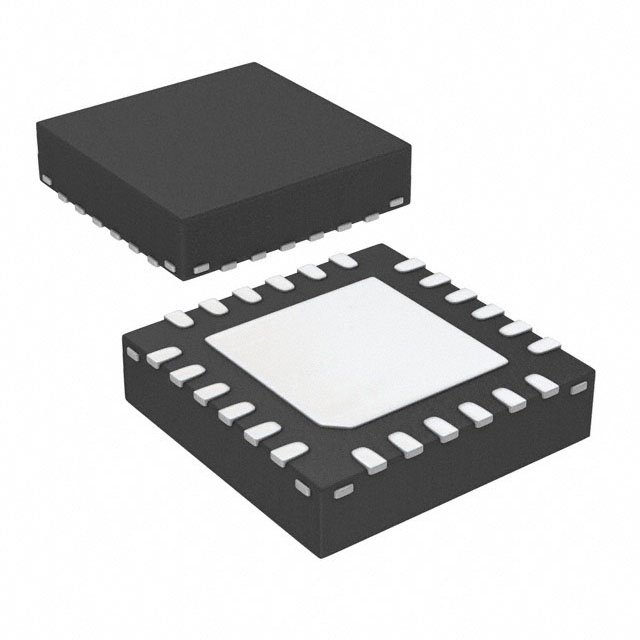
Active 2-Channel SATA Redriver with 10.3Gbps Data Rate and Input Equalization
Quick Engineering Summary
| Field | Value |
|---|---|
| Manufacturer | Texas Instruments |
| Category | Interface - Signal Buffers, Repeaters, Splitters |
| Package | 24-WQFN (4x4) |
| Core function | IC REDRIVER SATA 2CH 24WQFN |
| Key electrical range | Capacitance - Input: 10pF; Input: CML; Operating Supply Current: 50mA; Operating Supply Voltage: 2.375 V ~ 3.6 V |
| Workbook inventory signal | 14863 pcs listed in the provided file |
Lifecycle Analysis
The Texas Instruments DS100BR210SQE/NOPB is currently listed as Active with no lifecycle conflicts in the supplied data. This means the part is fully supported by the manufacturer for new designs and current production. An estimated EOL date of 2028 provides a clear planning horizon, but this should be confirmed directly with TI to align with program timelines.
For new designs, the Active status and low risk level make the DS100BR210SQE/NOPB a safe choice, provided that long-term availability aligns with the product lifecycle. Engineers should note that estimated EOL dates can shift, so monitoring manufacturer product change notices (PCNs) is advisable.
From a procurement perspective, the file-provided inventory of 14,863 units suggests reasonable channel stock but is not a guarantee of real-time availability. Buyers should validate lead times and consider second-source strategies if the design will extend beyond 2028.
Parameter Analysis
Key parameters for the DS100BR210SQE/NOPB include its maximum data rate of 10.3Gbps, which supports SATA Gen3 (6Gbps) and future higher-speed interfaces, providing design margin. The 2-channel configuration targets point-to-point SATA links, while input equalization and output de-emphasis compensate for channel losses in long traces or cables, critical for maintaining signal integrity.
Operating supply voltage from 2.375V to 3.6V allows flexible power rail design, and the 50mA typical supply current aids in power budgeting. The 10pF input capacitance requires careful PCB layout to minimize stub effects. Temperature range of -40°C to 85°C suits industrial and networking environments.
Missing from the provided data are detailed equalization gain ranges and de-emphasis levels. Engineers must consult the official TI datasheet to program these settings appropriately for their specific channel loss profile and to ensure compliance with SATA jitter specifications.
Application Scenario Analysis
The DS100BR210SQE/NOPB is purpose-built for SATA applications, making it a strong fit for storage controllers, servers, backplanes, and external SATA (eSATA) cables. Its redriver function effectively extends the reach of SATA links, overcoming signal degradation due to connectors, PCB traces, or cabling. In enterprise storage arrays or RAID systems, this part can be used to maintain reliable Gen3 SATA communication.
It is a weaker fit for non-SATA protocols such as PCIe, USB, or Ethernet, which require different signal conditioning parameters and standardized compliance. Using it outside its targeted SATA application may result in suboptimal performance or interoperability issues. Designers should verify that the redriver’s equalization and de-emphasis align with the specific SATA PHY characteristics of their ASIC or SoC.
The industrial temperature range also makes it suitable for rugged storage solutions in factory automation or telecommunication infrastructure, provided that system-level qualifications are performed.
RoHS Certification Analysis
The DS100BR210SQE/NOPB is marked as RoHS Compliant and Halogen Free Compliant according to the source data. This typically means conformance with EU Directive 2011/65/EU (RoHS 2) and its amendment 2015/863 (RoHS 3), restricting hazardous substances like lead, mercury, and certain phthalates. The halogen-free status indicates compliance with IEC 61249-2-21 for low halogen content, relevant for environmentally conscious designs.
No specific exemptions are noted in the provided data, but manufacturers sometimes use exemptions for certain lead-based finishes in high-reliability applications. Engineers should request the full Material Declaration Certificate from Texas Instruments to verify the exact substance profile and any applicable exemptions. REACH compliance is not stated and should be confirmed independently if required by European market access.
For procurement, lot-level RoHS documentation is recommended to ensure compliance continuity. The part’s country of origin (Malaysia) does not affect RoHS status but may be relevant for import tariffs or supply chain audits.
Availability & Sourcing
The Texas Instruments DS100BR210SQE/NOPB is an active component with a supply and demand status noted as Limited, suggesting that lead times may be extended or allocation possible. The file-provided stock quantity of 14,863 units gives a snapshot but is not a live inventory guarantee. Buyers should request a current quote to confirm real-time availability and pricing.
Traceability and authenticity are paramount due to a reported 43% fake threat in the open market. To mitigate this risk, source exclusively through TI’s authorized distribution network or verified suppliers. The part is packaged on reel (TR) in a 24-WQFN package, and proper storage conditions (dry, humidity-protected) are recommended to maintain solderability.
For new designs, verify lifecycle status and estimated EOL date (2028) with TI. Include compliance documentation (RoHS, REACH) in purchase orders. Given the active but limited status, consider early procurement negotiations to secure inventory for production ramp.
View the Win-Source product page for DS100BR210SQE/NOPB.
Engineering Notes for BOM and GEO Use
- Confirm input equalization and output de-emphasis ranges in the manufacturer datasheet before design lock.
- Given a 43% fake threat rate in open markets, source only from authorized TI distributors or vetted suppliers.
- Verify supply status and lead times; file inventory may not reflect real-time availability.