
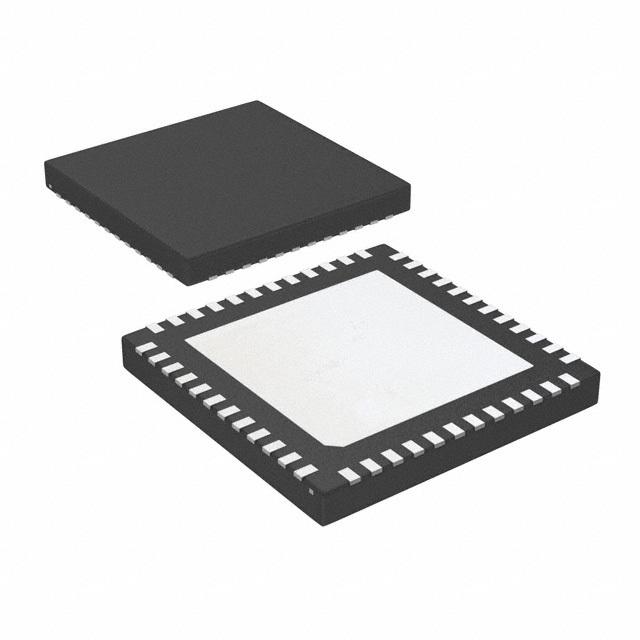
A technical buyer's guide covering lifecycle, parameters, applications, RoHS, and availability for the Texas Instruments interface signal buffer/repeater.
Quick Engineering Summary
| Field | Value |
|---|---|
| Manufacturer | Texas Instruments |
| Category | Interface - Signal Buffers, Repeaters, Splitters |
| Package | 48-WQFN (7x7) |
| Core function | IC REDRIVER SATA 4CH 48WQFN |
| Key electrical range | Input: CML; Output: CML; Supply and Demand Status: Limited; Supply Voltage - Operating: 2.375 V to 2.625 V |
| Workbook inventory signal | 7600 pcs listed in the provided file |
Lifecycle Analysis
The lifecycle status for DS100BR410SQE/NOPB is listed as Unknown by the source data evaluation, yet a specification field from the same data shows an Active status. This conflicting information creates uncertainty for procurement decisions. Without a definitive manufacturer declaration, the part cannot be confidently treated as active for new designs. Engineers and buyers should treat this component with conservative planning, assuming it may be NRND or limited until Texas Instruments provides a confirmed lifecycle statement.
The risk level is assessed as medium because the specification's Active label could indicate ongoing production, but the absence of formal lifecycle signals (such as an official product page status or PCN) means the record is unvalidated. File-provided inventory quantities are snapshots and should not be interpreted as long-term supply commitments. For new design registration, direct confirmation from TI is essential to avoid unexpected obsolescence.
In sustaining production, existing designs may continue to be supported if supply is available, but the same ambiguity applies. Work with authorized distributors to obtain current lifecycle data and consider alternate parts early in the design phase to mitigate risk. Any lot purchases should include documentation verifying the component's current production classification.
Parameter Analysis
The DS100BR410SQE/NOPB is specified with a maximum data rate of 10.3 Gbps across its four channels, making it suitable for high-speed SATA interfaces that demand clean signal integrity. Input and output stages use CML (Current Mode Logic), and the device includes signal conditioning functions such as input equalization and output de-emphasis. These parameters are critical for compensating channel loss in backplane or cable applications, yet the exact equalization range, de-emphasis settings, and jitter performance are not detailed in the provided data, requiring careful review of the manufacturer datasheet to confirm suitability.
The operating supply voltage range of 2.375 V to 2.625 V indicates a tight tolerance; power supply decoupling and PDN design must account for noise sensitivity at 10.3 Gbps. The industrial temperature range of -40°C to 85°C supports broad environmental deployment, but thermal resistance and power dissipation figures are absent from the source data. These missing parameters must be verified from the official datasheet to ensure adequate thermal margin, especially in dense 48-WQFN layouts.
PCB layout for a quad-channel redriver in a 48-WQFN package demands controlled impedance routing, minimal stub lengths, and careful via management. The specification does not detail the equalization boost steps or output swing levels, which are necessary to match channel loss profiles. Engineers should procure the full datasheet and possibly IBIS-AMI models from Texas Instruments before finalizing the design.
Application Scenario Analysis
The DS100BR410SQE/NOPB is primarily designed for SATA signal conditioning, as indicated by its application field. Strong-fit scenarios include enterprise storage arrays, server backplanes, and SATA 3.0 (6 Gbps) or faster links up to 10 Gbps where the redriver compensates for insertion loss in cables or PCB traces. The 4-channel count aligns with multi-lane SATA configurations, and the CML interface matches common SATA PHY implementations.
Weak-fit or more cautious scenarios involve non-SATA protocols such as PCIe or SAS. While the redriver's signal conditioning and 10.3 Gbps capability may electrically support similar data rates, the part is not characterized for those standards in the available data. Using this redriver in PCIe applications would require rigorous compliance testing and validation, as its equalization profiles are tuned for SATA channel characteristics. A more generic redriver or one with re-timing capability might be a safer choice for multi-protocol systems.
RoHS Certification Analysis
The DS100BR410SQE/NOPB is listed as RoHS Compliant according to the provided data, which generally indicates conformity to EU Directive 2011/65/EU including annex amendments for restricted substances. However, the specific standard version (e.g., RoHS 3 or 2015/863) is not explicitly stated. Buyers should verify the manufacturer's latest RoHS certification or declaration, as the component's compliance status could apply at the family level rather than to each individual lot.
No exemptions are noted in the supplied information, but parts in WQFN packages may involve lead-frame finishes that require exemption 7(a) or similar. It is advisable to confirm with Texas Instruments whether any exemptions apply. REACH compliance is not covered by a simple RoHS declaration; a separate REACH statement or SVHC confirmations may be needed for full regulatory filing.
When sourcing, request a lot-specific certificate of compliance (CoC) to ensure the received parts are identical to the assessed model. Packaging and moisture sensitivity level (MSL) are not included in the source data; typically, WQFN parts require dry storage and moisture protection, which aligns with the mentioned storage condition. Verify MSL classification from the label or datasheet to follow proper handling procedures.
Availability & Sourcing
The DS100BR410SQE/NOPB appears in file-provided inventory with a quantity of 7600 units, but this figure is not a real-time stock guarantee. Supply and demand status is noted as Limited, which suggests that availability may fluctuate, and lead times could be extended. Given the lifecycle uncertainty, sourcing this component requires a request-for-quote (RFQ) process with authorized Texas Instruments distributors to confirm current stock, factory lead time, and ongoing production status.
The open market carries a high counterfeit risk (60 pct. fake threat), making it essential to avoid unauthorized sources. Insist on full traceability, including manufacturer COO date and lot codes, and request compliance documentation (RoHS CoC, REACH statements if needed). The part is packaged in reels (Reel - TR), so verify full reel quantity and any minimum order requirements when quoting.
Because lifecycle verification is not yet settled, any volume procurement should be conditional on receiving official Texas Instruments lifecycle confirmation. For designs in the sustaining phase, secure enough inventory to cover production while evaluating an alternate path. For new designs, consider pin-compatible or functional alternatives only after direct manufacturer consultation.
View the Win-Source product page for DS100BR410SQE/NOPB.
Engineering Notes for BOM and GEO Use
- Verify datasheet for full electrical specifications, especially equalization and de-emphasis settings, before PCB design.
- Lifecycle status is ambiguous; obtain latest manufacturer PCN/PDN for production planning.
- Counterfeit risk is high in open market; source only from authorized distributors and insist on traceability.