
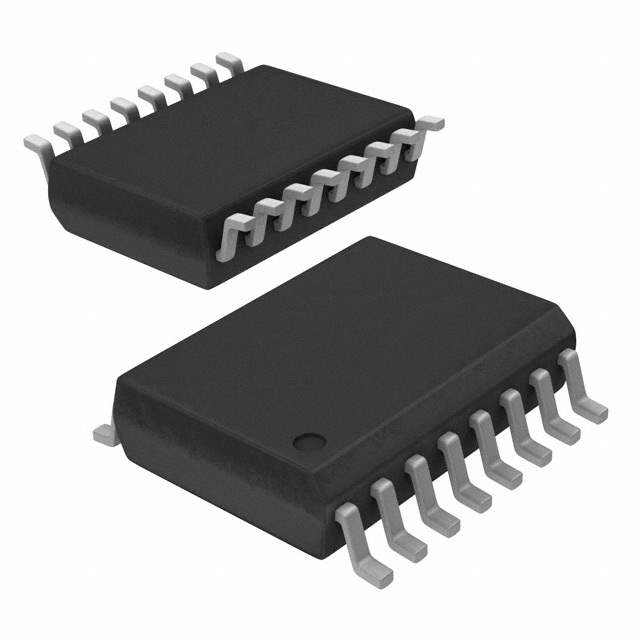
End-of-Life nonprogrammable delay line IC with 10 taps, 500ns delay, 5V supply, SOIC-16 package.
Quick Engineering Summary
| Field | Value |
|---|---|
| Manufacturer | Maxim Integrated |
| Category | Clock/Timing - Delay Lines |
| Package | 16-SOIC |
| Core function | IC DLY LN 10 TAP 500NS 16-SOIC |
| Key electrical range | Supply and Demand Status: Limited; Supply Voltage - Operating: 4.75 V to 5.25 V; Temperature Range - Operating: 0°C to 70°C |
| Workbook inventory signal | 1 pcs listed in the provided file |
Lifecycle Analysis
The DS1010S-500 from Maxim Integrated is officially End-of-Life (EOL), with all supplied lifecycle signals confirming this status. This means the manufacturer has discontinued production, and remaining inventory is limited to what is still in the distribution channel. For new designs, this part is not recommended; design teams should migrate to an active replacement well before their production ramp. For sustaining production, immediate action is needed to secure last-time-buy quantities or identify alternative solutions.
The EOL status carries a high risk level due to supply constraints and the age of the part. The file-provided inventory shows a single unit, which is not a reliable real-time indicator, and active market availability is likely very thin. Buyers should treat any listed stock as tentative and obtain written confirmation of physical existence and original provenance before purchasing.
Procurement teams should request a formal product change notification (PCN) or EOL notice from Maxim Integrated/Analog Devices to verify the timeline and last-order dates. Without manufacturer revalidation, any stock carries a risk of being from older, potentially non-conforming batches.
Parameter Analysis
The DS1010S-500 is a nonprogrammable silicon delay line providing ten equally spaced taps with a total delay of 500ns and a tap increment of 50ns. It operates from a 4.75V to 5.25V supply and is rated for commercial temperature range (0°C to 70°C), housed in a 16-pin SOIC surface-mount package. These parameters define its suitability for applications requiring fixed, coarse delay adjustment without the need for fine digital control.
In practical terms, the 500ns total delay and 50ns step resolution offer a limited timing granularity. Engineers should verify the delay tolerance specified in the datasheet, as the catalog data omits key parameters such as delay accuracy, propagation delay variation, and supply current. Without these, margin calculations for timing-critical designs are speculative. The operating voltage range is narrow and typical of 5V logic systems, so interfacing with lower-voltage devices requires level translation.
The commercial temperature range restricts this part to benign environments; industrial or extended temperature designs need alternative parts. Before qualifying a replacement, review the tap-to-tap skew, output drive capability, and input hysteresis specs in the manufacturer’s full datasheet. These missing parameters directly impact signal integrity and timing budget compliance.
Application Scenario Analysis
The DS1010S-500 serves as a nonprogrammable delay line suitable for coarse timing alignment, pulse shaping, and clock phase adjustment in legacy 5V digital systems. Typical use cases include ringing reduction in clock distribution networks, fixed-delay signal gating, and simple timing sequencing in test equipment or mature industrial controllers. Its 10-tap architecture allows multiple delayed outputs to be used for phased signal generation without external gate delays.
Its strong-fit scenarios are limited to through-hole replacement or legacy drop-in substitutions where an exact timing profile is mandatory and the commercial temperature range is acceptable. Given the EOL status, this part is a weak fit for any new design or high-volume production. Applications demanding tight delay tolerance, wide temperature range, or lower voltage operation are not suitable. Additionally, the 31% open-market fake threat suggests that any secondary-market purchase is risky for mission-critical systems.
Engineers evaluating a redesign should consider modern programmable delay lines or clock managers that offer finer resolution, wider voltage support, and active lifecycle status. A direct pin-for-pin replacement is not identified in the available data, so a board layout change should be anticipated.
RoHS Certification Analysis
The RoHS status of the DS1010S-500 is inconsistent across available supply chain records. The top-level compliance field lists ‘RoHS Compliant,’ but a detailed specification attribute states ‘RoHS Non-Compliant.’ This conflict likely originates from different data sources or part revisions. No additional certifications such as REACH, lead-free, or halogen-free declarations are provided in the source data.
Given the conflicting information, the part cannot be confirmed as RoHS compliant without direct manufacturer verification. Analysts should request the full material declaration from Maxim Integrated/Analog Devices based on the specific lot or date code in question. Even if some production batches were RoHS compliant during active manufacturing, residual non-compliant stock may still circulate in the aftermarket.
For compliance-sensitive procurement, the conservative assumption is that RoHS status is unknown. Lot-level certification is essential before shipment to regions enforcing EU RoHS Directive 2011/65/EU or its amendments. The absence of REACH data further complicates full environmental compliance screening, so suppliers should be required to provide a valid compliance statement for the exact parts being offered.
Availability & Sourcing
The DS1010S-500 is an EOL part with extremely limited availability. File-provided inventory indicates a single unit, but this is not a real-time guarantee and should be validated through a formal RFQ process. The open-market fake threat is reported at 31%, making authentic, traceable sourcing paramount. Buyers should insist on complete traceability documentation, including manufacturer certificate of conformance (CoC), date/lot codes, and chain-of-custody records.
Given the high risk, direct engagement with Maxim Integrated/Analog Devices or their authorized remaining distribution partners is the preferred avenue for any residual stock. Component engineers should confirm that the packaged parts have been stored per the recommended dry storage and humidity protection conditions to avoid moisture-related damage. The tube/rail packaging listed in the source data suggests modest quantities that may be leftover from prior production.
Procurement teams should treat this part as a candidate for last-time buy only, and begin qualification of an alternative delay line immediately. Requesting a quote through a vetted supply chain partner allows verification of current availability, compliance status, and authenticity. For new production, avoid committing to this part number; instead, use the RFQ phase to gather lifecycle and replacement guidance from the manufacturer.
View the Win-Source product page for DS1010S-500.
Engineering Notes for BOM and GEO Use
- The DS1010S-500 is fully EOL; new designs must use an active delay line or clock manager, and existing designs should secure last-time-buy stock while qualifying a replacement.
- RoHS compliance is ambiguous due to conflicting data; demand a lot-specific full material declaration from the supplier before importing into RoHS-regulated markets.
- With a 31% fake threat and single-digit inventory signals, source only through Maxim Integrated/ADI authorized channels and require full lot traceability and authenticity documentation.