
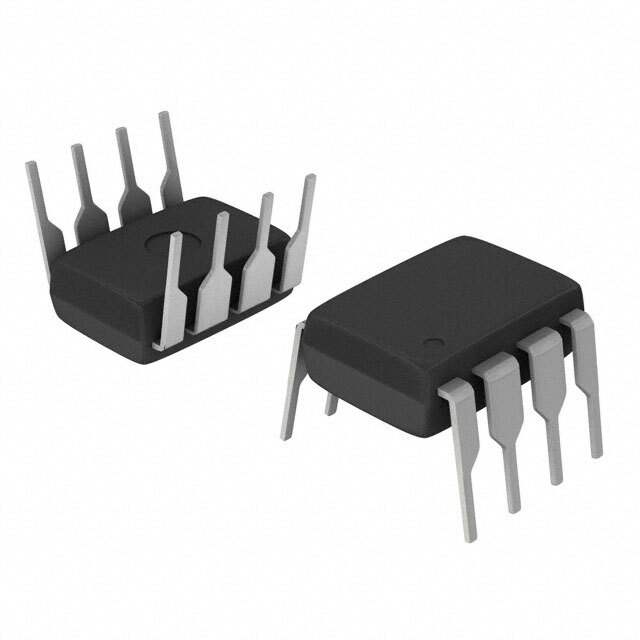
Technical specs and lifecycle guidance for the Maxim Integrated DS1013M-20 20ns delay line.
Quick Engineering Summary
| Field | Value |
|---|---|
| Manufacturer | Maxim Integrated |
| Category | Clock/Timing - Delay Lines |
| Package | 8-PDIP |
| Core function | IC DELAY LINE 20NS 8-DIP |
| Key electrical range | Supply and Demand Status: Limited; Supply Voltage - Operating: 4.75 V to 5.25 V; Temperature Range - Operating: 0°C to 70°C |
| Workbook inventory signal | 7000 pcs listed in the provided file |
Lifecycle Analysis
The DS1013M-20 from Maxim Integrated is confirmed End-of-Life (EOL), with all available lifecycle signals aligning on this status. This means the part is no longer recommended for new designs, and sustained procurement for production runs is at high risk. Engineers using this delay line in existing systems should immediately evaluate migration strategies or secure last-time-buy inventory, as remaining stock is finite and subject to rapid depletion.
Although a file-provided quantity of 7000 units exists, this is not a real-time guarantee. Buyers must verify actual availability and date codes directly with the supplier. The EOL status also implies that manufacturer support, including errata and reliability data, may become limited over time. Revalidation of qualification documents and material composition is advisable before committing to extended use.
For any new design or upgrade, the DS1013M-20 should be avoided. Conservative procurement practices now include registering for end-of-life notices from Maxim Integrated and seeking alternative parts that align with present-day lifecycle expectations.
Parameter Analysis
The DS1013M-20 offers a fixed available total delay of 20ns across three independent, non-programmable delay channels. This configuration suits applications requiring simple, deterministic timing adjustments without configuration overhead. The operating voltage of 4.75V to 5.25V aligns with legacy TTL-level digital systems, while the commercial temperature range of 0°C to 70°C restricts use to indoor equipment.
The 8-PDIP through-hole package is mechanically robust and suitable for prototyping or legacy PCB layouts that predate surface-mount adoption. However, mounting technology may limit miniaturization and thermal performance compared to modern SMT alternatives. Key missing parameters from the supplied data include delay tolerance, jitter, rise/fall times, and input/output logic levels. For precise timing closure, engineers must obtain the full Maxim Integrated datasheet to verify these characteristics.
Additionally, the 43% fake threat indicator for this part underscores the need for parameter conformance testing upon receipt. Counterfeit units may deviate from spec on delay accuracy or drive strength, presenting latent reliability risks in timing-critical paths.
Application Scenario Analysis
The DS1013M-20 fits legacy digital systems that require fixed-time pulse deskewing, clock distribution alignments, or signal propagation compensation. Its three independent delay lines make it useful in multi-channel setups, such as memory interface timing or parallel bus synchronization. Because it is non-programmable, it suits cost-sensitive, set-and-forget designs where delay tuning at production time is not required.
However, the EOL status disqualifies this part from new designs. Modern systems that demand higher precision, lower jitter, or field reconfigurability are better served by programmable delay lines or FPGA-based solutions. The commercial temperature range further limits outdoor or industrial deployments. For sustaining existing equipment, the DS1013M-20 may still be sourced, but design teams should plan a drop‑in replacement or board redesign for long‑term support.
Applications not suitable include high‑reliability aerospace or medical devices, where EOL and limited traceability introduce unacceptable supply‑chain risk. Similarly, systems requiring extended temperature operation or low‑voltage compatibility should seek alternative clock‑timing devices.
RoHS Certification Analysis
RoHS compliance data for the DS1013M-20 is contradictory. One source indicates RoHS Compliant, while the detailed specification explicitly states RoHS Non‑Compliant. Given the part’s EOL status and older through‑hole PDIP package, it is more likely to be non‑compliant under current EU RoHS directives (EU 2015/863).
No REACH or MSL data is provided beyond an MSDS access flag, so REACH does not substitute for RoHS certification. The lack of a definitive compliance statement means any EU or regulated market shipment requires additional due diligence. Lot‑level testing or an IPC‑1752 materials declaration from Maxim Integrated or an authorized distributor is recommended.
Until resolved, treat the DS1013M-20 as non‑compliant for new procurement. If compliance is mandatory, request a valid certificate of conformance and ensure the supplier can demonstrate that the specific stock being shipped meets RoHS restrictions. Without such evidence, the part should not be specified for products destined for RoHS‑regulated markets.
Availability & Sourcing
As an EOL component with a 43% fake threat rating, sourcing the Maxim Integrated DS1013M-20 demands a rigorous, risk‑averse workflow. The reported workbook quantity of 7000 units is file‑stated only; actual stock must be verified through a request‑for‑quote process that confirms date codes, lot traceability, and storage history. Packaging is tube/rail, and recommended storage is dry with humidity protection.
Buyers should require full traceability documentation, including original manufacturer certificate of origin and RoHS status clarification. Avoid open‑market brokers without proven authentication capabilities. The high counterfeit risk makes functional testing on arrival advisable, especially for delay accuracy and voltage tolerance.
Given the EOL lifecycle, the primary action is to secure remaining inventory for sustaining production while evaluating migration paths. Request a quote immediately to assess true availability, and ask the supplier about any accompanying compliance documentation. For any new production volumes, this part is not recommended, and design resources should be allocated to modern alternatives with active lifecycle status.
View the Win-Source product page for DS1013M-20.
Engineering Notes for BOM and GEO Use
- Confirm EOL status with Maxim Integrated; plan for migration and source last-time-buy opportunities.
- 43% fake threat in the open market demands sourcing only from authorized distributors with traceability.
- Verify 20ns delay accuracy and jitter specs in the official datasheet before integration.