
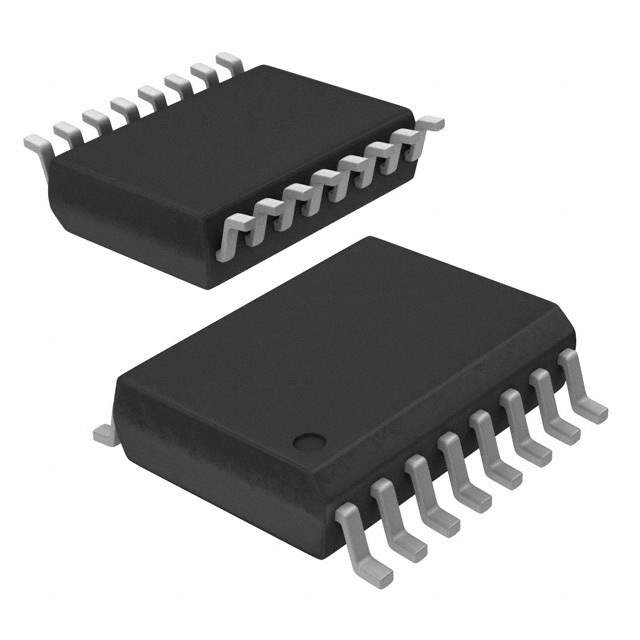
EOL part in 16-SOIC with 10ns delay. Verify RoHS compliance, limited stock, and lifecycle before design-in.
Quick Engineering Summary
| Field | Value |
|---|---|
| Manufacturer | Maxim Integrated |
| Category | Clock/Timing - Delay Lines |
| Package | 16-SOIC |
| Core function | IC DELAY LINE 10NS 16-SOIC |
| Key electrical range | Operating Supply Voltage: 4.75 V ~ 5.25 V; Operating Temperature Range: 0°C ~ 70°C; Supply and Demand Status: Limited |
| Workbook inventory signal | 6000 pcs listed in the provided file |
Lifecycle Analysis
The DS1013S-10 from Maxim Integrated is classified as end-of-life (EOL), meaning it is no longer recommended for new designs and is intended for legacy system support or repairs only. All supplied lifecycle signals, including the part status and estimated EOL date, align with this obsolete designation. The device was introduced in November 1999, and its long production history has now concluded.
For engineers maintaining existing products, the EOL status introduces high procurement risk. While the source data indicates a file-provided stock of 6000 units, this quantity is not guaranteed in real time. Buyers should confirm actual availability with authorized distributors and consider a last-time buy to secure needed volumes. No migration path or replacement part is specified in the provided data, so teams must independently identify alternatives for new designs.
Given the obsolete status, design changes should be planned to remove the DS1013S-10 from future builds. Documentation and manufacturer revalidation are essential to ensure continued support. Monitor manufacturer notices for any post-EOL obsolescence plans or final discontinuance.
Parameter Analysis
The DS1013S-10 is a triple, nonprogrammable delay line delivering a fixed total delay of 10 ns per channel. Its operating supply voltage range of 4.75 V to 5.25 V limits integration to 5 V logic systems, typically TTL-compatible designs. The commercial temperature range (0°C to 70°C) restricts use to indoor or non-industrial environments.
Key parameters for replacement decisions include the number of independent delays (three), the delay value (10 ns), and the surface-mount 16-SOIC package (7.50 mm width). The device is supplied in tubes, indicating it is not designed for automated tape-and-reel assembly; this may impact manufacturing efficiency. Important missing specifications are the delay accuracy, input-to-output propagation delay, rise/fall time, and power consumption—these must be obtained from the manufacturer’s datasheet to ensure timing closure and thermal management.
When qualifying an alternative, verify not only the nominal delay but also variability over voltage and temperature. The nonprogrammable nature means no in-system adjustment is possible, so the replacement must match the exact timing requirements of the original design.
Application Scenario Analysis
The DS1013S-10 is designed for clock distribution and timing adjustment in 5 V digital systems where fixed 10 ns delay increments are required. Typical strong-fit applications include legacy telecommunications equipment, industrial controllers, and test instrumentation that operate within the commercial temperature band. The three independent channels allow for phase alignment of multiple clock signals or pulse stretching in steady-state logic.
Weak-fit scenarios involve modern designs that demand programmable delays, extended industrial temperature ranges (-40°C to +85°C), or lower supply voltages (e.g., 3.3 V or 1.8 V). The obsolete status further disqualifies the part from new product introductions unless it is the only drop-in replacement for a critical repair. In high-speed or precision-timing applications, the lack of detailed timing specifications in this source data makes the DS1013S-10 a risky choice without full datasheet review.
Given the EOL lifecycle, this device should only be considered for sustaining existing equipment. Engineers should evaluate whether a silicon delay line is still needed or if a programmable logic or PLL-based solution can provide more flexibility and availability.
RoHS Certification Analysis
The RoHS status of the DS1013S-10 is ambiguous. A high-level compliance field states 'RoHS Compliant', but a detailed specification entry lists 'RoHS Non-Compliant'. This conflict means the true conformance to EU Directive 2015/863 cannot be confirmed without further investigation. No REACH or halogen-free statements are provided in the source data, leaving significant environmental compliance gaps.
For procurement, a family-level or datasheet-level RoHS declaration may not reflect lot-to-lot variations. Buyers must request an exact certificate of compliance for the specific date code and lot being purchased. If the non-compliant listing is accurate, the part may contain lead or other restricted substances, potentially excluding it from RoHS-mandated markets.
In the absence of definitive documentation, treat the DS1013S-10 as potentially non-RoHS. For designs that must meet RoHS requirements, either verify compliance through testing or select a confirmed RoHS-compliant alternative. This precaution is critical given the EOL status, as non-compliant legacy stock may be the only remaining inventory.
Availability & Sourcing
The DS1013S-10 is an obsolete delay line with limited availability. A file-provided stock of 6000 units appears in the source data, but this figure is not a real-time guarantee. The supply-and-demand status is listed as 'Limited', and the open-market counterfeit threat is assessed at 35 percent, so purchasers must exercise strict sourcing controls.
To secure parts, submit an RFQ to authorized Maxim Integrated distributors or reputable excess-inventory sources. Request date codes, lot codes, and original packaging verification. The device ships in tubes, and proper dry-storage conditions are essential to maintain solderability. Insist on a certificate of conformance and, if RoHS compliance is needed, a specific material declaration.
For EOL components like the DS1013S-10, the recommended procurement strategy is to lock in a last-time buy immediately for all future production needs. Also begin engineering evaluation of a pin-compatible or functionally equivalent replacement. Do not commit to this part for new production without confirming lifecycle status directly with the manufacturer and validating that sufficient stock exists to cover repair and warranty commitments.
View the Win-Source product page for DS1013S-10.
Engineering Notes for BOM and GEO Use
- Verify RoHS compliance given conflicting data (supplier says compliant but spec says non-compliant).
- With EOL status and high risk, plan for last-time buy or alternative sourcing.
- Inspect for counterfeit risk (35% fake threat) and request date/lot code verification.