
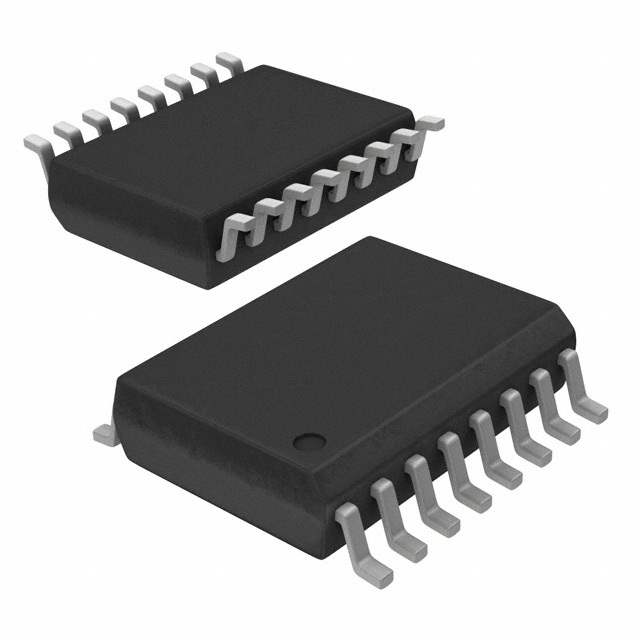
EOL 20ns delay line with 3 independent delays in 16-SOIC package. Verify lifecycle and RoHS before procurement.
Quick Engineering Summary
| Field | Value |
|---|---|
| Manufacturer | Maxim Integrated |
| Category | Clock/Timing - Delay Lines |
| Package | 16-SOIC |
| Core function | IC DELAY LINE 20NS 16-SOIC |
| Key electrical range | Supply and Demand Status: Limited; Supply Voltage - Operating: 4.75 V to 5.25 V; Temperature Range - Operating: 0°C to 70°C |
| Workbook inventory signal | 8600 pcs listed in the provided file |
Lifecycle Analysis
The DS1013S-20 from Maxim Integrated is classified as End-of-Life (EOL). This status means the part is no longer recommended for new designs and the manufacturer has likely ceased production. Procurement should be limited to sustaining existing systems or repair needs. Engineers must verify the last-time buy (LTB) date and any end-of-support notifications directly with Maxim Integrated (now Analog Devices) before committing to this part in a bill of materials. The provided inventory quantity of 8600 units reflects a file snapshot and is not a guarantee of real-time availability. Inventory levels should be revalidated with suppliers, and excess stock should be inspected for date codes and storage conditions before purchase.
No lifecycle conflicts are present in the supplied data; all signals indicate EOL. However, because the part is obsolete, sourcing carries elevated risk. Buyers should anticipate limited supply, higher pricing pressures, and potential counterfeit activity. A proactive migration to an active alternative is advised for any volume production. For board-level repairs or prototype completion with limited quantities, verifying authenticity and traceability is critical.
Parameter Analysis
The DS1013S-20 provides a fixed total delay of 20 nanoseconds distributed across three independent, nonprogrammable delay lines. Operating from a single 4.75V to 5.25V supply and rated for 0°C to 70°C commercial temperature range, it is packaged in a surface-mount 16-SOIC. These parameters make it suitable for legacy 5V TTL/CMOS systems. The nonprogrammable nature means the delay value is fixed at manufacture; there is no tap selection or digital interface for adjustment. Key missing specifications from the available data include tap increment resolution, input-to-output propagation delays, rise/fall times, jitter, and output drive strength. Without these, timing margin calculations and signal integrity analysis are incomplete. Engineers should consult the full Maxim datasheet to confirm switching characteristics and loading requirements.
For fit and function, the 16-SOIC package demands a typical PCB footprint; thermal considerations are minor given the low power nature of CMOS delay lines. However, the supply voltage tolerance of ±5% suggests that power supply regulation and decoupling are important. The commercial temperature range limits use to indoor or climate-controlled environments. When qualifying this part for a design, verification of delay accuracy over temperature and voltage is essential, as the specified 20ns is nominal and actual delay may vary with operating conditions. Because the device is nonprogrammable, application flexibility is limited, but it provides simple, cost-effective timing alignment in circuits where a fixed delay is acceptable.
Application Scenario Analysis
The DS1013S-20 fits applications that require signal timing adjustment, such as clock skew compensation, pulse stretching, or aligning data strobes in digital systems. Its three independent delay channels allow multiple signals to be delayed separately, useful in parallel bus interfaces or multi-channel timing correction. Strong-fit scenarios include legacy industrial controllers, test equipment, and communication boards running at moderate speeds where a 20ns delay provides sufficient granularity. The 5V operation and commercial temperature range align with older TTL-based designs.
Weak-fit scenarios involve modern low-voltage (<3.3V) systems, precision applications requiring variable or programmable delays, or high-speed designs where 20ns is insufficient or where jitter performance is critical. The nonprogrammable nature rules out adaptive timing schemes, and the EOL status makes it unsuitable for new product introductions. For one-off lab prototypes or repairs of existing equipment, the DS1013S-20 can still be useful if authentic stock is obtained. However, for any volume production, a pin-compatible or functional alternative from active delay line families should be evaluated.
RoHS Certification Analysis
The RoHS compliance status of the DS1013S-20 is ambiguous. The source data includes both 'RoHS Compliant' and 'RoHS Non-Compliant' labels. This conflict likely arises because different manufacturing lots or sub-variants may have differing compliance. Maxim Integrated (Analog Devices) may have transitioned to RoHS-compliant materials during the product lifecycle, but the part is now EOL, and documentation may be inconsistent. The absence of explicit RoHS exemption details means that compliance cannot be assumed. A conservative procurement approach is to treat the part as RoHS non-compliant unless the supplier provides a valid certificate of analysis for the specific lot.
If RoHS compliance is mandatory for the application, request a compliance statement from the distributor, including RoHS 3 (EU 2015/863) and, if needed, REACH SVHC declarations. The part is not noted as halogen-free. For products destined for the EU market, ensuring compliance is critical to avoid market access issues. Given the EOL status, obtaining such documentation may be difficult, and most available stock could be older, non-compliant inventory. Verification before shipment is essential, and buyers should consider this risk when deciding whether to use the DS1013S-20 in a design that must meet environmental regulations.
Availability & Sourcing
The DS1013S-20 is an EOL device, and procurement requires careful due diligence. The file-provided quantity of 8600 units is a snapshot and not a guarantee of real-time availability. Buyers should request a formal quote from franchised or authorized distributors to confirm current stock levels, date codes, and packaging (Tube/Rail). Because the part is obsolete, many sources may offer surplus or aftermarket inventory, increasing counterfeit risk, which is flagged with a 32% fake threat level in the open market. Traceability documentation, including certificates of conformance and manufacturer test reports, should be requested for each lot to mitigate this risk.
For legacy maintenance where the DS1013S-20 is the only approved component, consider buying enough stock to cover the product's remaining life. Since the lifecycle is EOL, no new production should rely on this part. If an alternative search is needed, evaluate Maxim/Analog Devices' active delay lines or second-source options. When requesting a quote, specify compliance requirements such as RoHS and storage conditions (dry pack). Due to limited supply and demand status, expect potential fluctuations in inventory. To secure the most reliable stock, work with suppliers that specialize in obsolete and hard-to-find components and demand rigorous anti-counterfeit inspection protocols.
View the Win-Source product page for DS1013S-20.
Engineering Notes for BOM and GEO Use
- EOL part—only use for sustaining existing designs; avoid new production use.
- Conflicting RoHS data requires lot-level verification before EU shipment.
- High counterfeit risk (32% fake threat) mandates strict supplier qualification and inspection.