
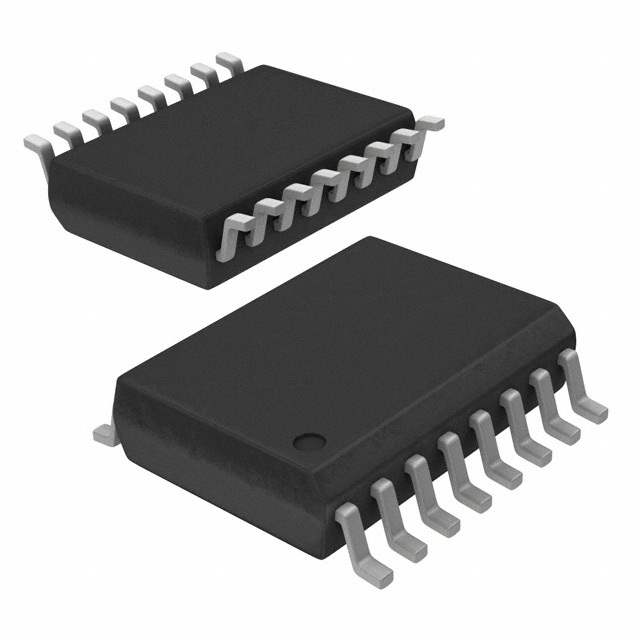
30ns, 3-channel nonprogrammable delay line in 16-SOIC. End-of-life part with high counterfeit risk. Request quote for current availability.
Quick Engineering Summary
| Field | Value |
|---|---|
| Manufacturer | Maxim Integrated |
| Category | Clock/Timing - Delay Lines |
| Package | 16-SOIC |
| Core function | IC DELAY LINE 30NS 16-SOIC |
| Key electrical range | Supply and Demand Status: Limited; Supply Voltage - Operating: 4.75 V to 5.25 V; Temperature Range - Operating: 0°C to 70°C |
| Workbook inventory signal | 4000 pcs listed in the provided file |
Lifecycle Analysis
The DS1013S-30 is officially designated End-of-Life (EOL) by Maxim Integrated. This status means the manufacturer has ceased or will cease production, and no new designs should incorporate this part. For existing production, sustaining engineers must evaluate the remaining pipeline and secure adequate inventory to cover the product’s remaining lifetime.
EOL parts carry a high procurement risk, especially when counterfeit rates are elevated—the open market fake threat for this component is reported at 61%. The file-provided inventory of 4000 units offers a potential source, but quantities are not guaranteed real-time and may deplete quickly. Buyers should verify with Maxim’s product change notifications (PCN) and last-time-buy (LTB) dates before committing to long-term supply.
Parameter Analysis
Key parameters define the DS1013S-30’s fit in a timing circuit. The total available delay is fixed at 30ns, with three independent, nonprogrammable delays—meaning each channel provides exactly 30ns with no tap increments or programming capability. The operating voltage range of 4.75V to 5.25V makes it suitable for 5V TTL/CMOS systems, and the 0°C to 70°C commercial temperature range restricts use to benign environments.
The 16-SOIC SMD package requires standard surface-mount assembly and offers a footprint width of 7.50mm. Critical datasheet parameters not provided here—such as delay accuracy, jitter, rise/fall time, and temperature stability—must be verified from the original manufacturer’s documentation. These missing specs directly affect timing margin analysis and signal integrity. Without them, derating and qualification for high-reliability applications remain speculative.
Application Scenario Analysis
The DS1013S-30 is best suited for legacy digital systems requiring precise 30ns fixed delays—typical in clock deskew, pulse generation, and signal synchronization within 5V logic domains. Its commercial temperature range fits indoor consumer electronics, test equipment, and moderate-speed data paths where jitter tolerances are relaxed.
Weak-fit scenarios include automotive, industrial extended-temperature, or high-speed new designs. The EOL status and lack of programmability make it unsuitable for platforms expecting long-term availability or flexibility. In addition, the reported counterfeit risk demands extra scrutiny for any safety-critical or high-reliability deployment. For such applications, consider a pin-compatible alternative only after verifying it against the original datasheet.
RoHS Certification Analysis
A discrepancy exists in the available RoHS data: the top-level compliance field indicates RoHS Compliant, while an embedded specification states RoHS Non-Compliant. This conflict may stem from different manufacturing periods or lot-level variations. For procurement, assume neither value is definitive without supporting documentation.
To resolve compliance, request the manufacturer’s material declaration or test reports for the specific date/lot code. If the part proves non-compliant, European Union distribution may be restricted, and importers must assess RoHS 3 (EU 2015/863) applicability. Verify also REACH and conflict minerals status if the end market requires it. Without clarification, design authorities should treat RoHS status as uncertain and plan accordingly.
Availability & Sourcing
As an EOL part, DS1013S-30 availability is strictly limited to existing stock in the channel. The file-provided quantity of 4000 units suggests some remaining inventory, but it is not a live market feed. Buyers must request a quote to confirm current stock levels, date codes, and packaging (tube/rail).
Given the 61% fake threat rate, sourcing through unauthorized channels is risky. Mandate full traceability documentation, including manufacturer certificate of conformance, lot code verification, and third-party visual/x-ray inspection if possible. For sustaining production, secure inventory now and simultaneously evaluate migration to a recommended replacement if Maxim Integrated has published one. Always verify lifecycle status directly with the manufacturer before committing to a buy.
View the Win-Source product page for DS1013S-30.
Engineering Notes for BOM and GEO Use
- Verify RoHS compliance directly with Maxim Integrated despite conflicting signals; lot-level certification is essential.
- Due to the 61% fake threat rate on the open market, insist on full traceability and third-party authentication for every shipment.
- The 30ns delay is fixed and nonprogrammable; confirm timing requirements precisely before purchasing, as deviation may require a different delay line.