
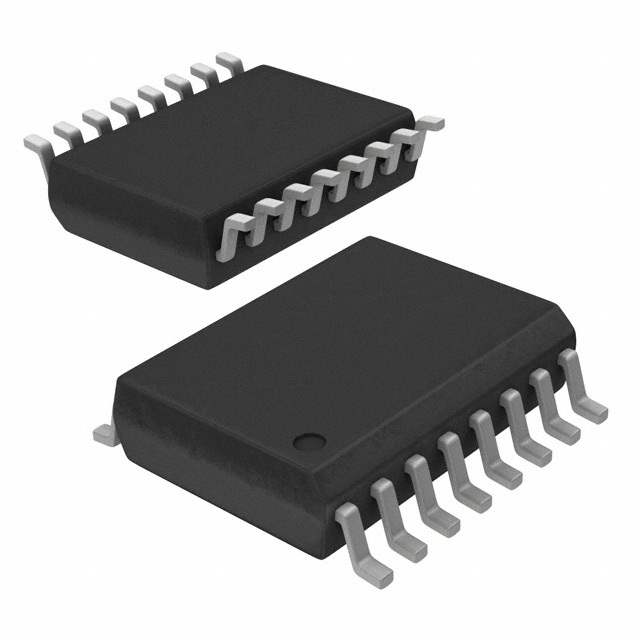
EOL status – verify availability and compliance before new design
Quick Engineering Summary
| Field | Value |
|---|---|
| Manufacturer | Maxim Integrated |
| Category | Clock/Timing - Delay Lines |
| Package | 16-SOIC |
| Core function | IC DELAY LINE 50NS 16-SOIC |
| Key electrical range | Supply and Demand Status: Limited; Supply Voltage - Operating: 4.75 V to 5.25 V; Temperature Range - Operating: 0°C to 70°C |
| Workbook inventory signal | 7000 pcs listed in the provided file |
Lifecycle Analysis
The DS1013S-50 has been designated End‑of‑Life (EOL) by Maxim Integrated. For new designs, this part is not recommended; engineering teams should select an alternative delay line or a different timing solution. For existing production, the EOL status creates high supply risk because available stock is finite and last‑time buy windows may have passed.
All lifecycle signals in the provided data align on EOL, eliminating ambiguity. However, the manufacturer (now part of Analog Devices) may have formal discontinuation documentation that should be obtained to confirm the exact obsolescence timeline. Without that notice, procurement planning remains uncertain.
The file‑listed inventory of 7000 units appears encouraging but must not be treated as real‑time stock. Such quantities can deplete rapidly once EOL is widely recognized. Engineers and buyers should secure needed quantities immediately and simultaneously begin evaluating pin‑compatible replacements or functional equivalents if long‑term production is required.
Parameter Analysis
The DS1013S-50 offers three independent, non‑programmable delay lines each providing a fixed 50ns total delay. With an operating supply voltage of 4.75V to 5.25V, it fits 5V logic systems and requires a regulated rail within tight tolerance. The commercial temperature range (0°C to 70°C) limits deployment to controlled indoor environments.
The 16‑SOIC surface‑mount package is common and easy to handle, but its thermal performance should be checked against worst‑case power dissipation. Unfortunately, many parameters critical for precise timing design are missing from the available data: tap increments, tap‑to‑tap skew, propagation delay variation, and input transition thresholds are essential for timing closure. Obtain the full Maxim datasheet before completing design integration, and characterize the delay under target voltage and temperature conditions.
Without those details, designers must apply generous timing margins and consider in‑circuit calibration. The part’s simplicity reduces integration risk, but the lack of programmability means delay adjustments must be made through external routing or component changes.
Application Scenario Analysis
The DS1013S-50 is a fixed‑delay silicon timing element suited for generating precise time shifts in digital circuits. Typical strong‑fit applications include legacy clock deskewing where three independent channels align rising edges of multiple clock domains. It can also serve in pulse‑width control by adjusting one‑shot trigger paths, or in simple data‑valid windows for parallel interfaces.
Weak‑fit scenarios arise when adaptive timing is required. Because the delays are non‑programmable, any need for software‑controlled or on‑the‑fly delay adjustment excludes this part. Similarly, high‑speed signals beyond a few tens of MHz may encounter excessive uncertainty due to uncharacterized propagation delay variation. New designs leaning on programmable delay lines or FPGA‑based timing generators should avoid the DS1013S-50.
In sustaining production of mature boards, the part may be an exact drop‑in, but purchasers must verify that alternative sources do not introduce subtle timing differences that could violate setup/hold margins. Given the EOL status, even replacement boards should migrate to a newer solution as soon as feasible.
RoHS Certification Analysis
RoHS compliance information for the DS1013S-50 presents a conflict. The structured compliance field indicates ‘RoHS Compliant’, yet a separate specification entry tags the part as ‘RoHS Non‑Compliant’. The most plausible explanation is that different production lots or data sources reflect different manufacturing periods, possibly before the full transition to lead‑free processes.
For any procurement, it is mandatory to request a lot‑specific certificate of compliance that explicitly states conformity to EU RoHS Directive 2011/65/EU and its amendments, including 2015/863. Buyers should also verify whether lead‑finish or other restricted substances are present, and if any exemptions (e.g., lead in glass of electronic components) apply. Without this documentation, the part cannot be assured for EU market placement.
REACH information is not provided in the source data; nonetheless, REACH compliance does not substitute for RoHS certification. Because of the conflicting signals, procurement should incorporate a compliance‑verification gate in the incoming inspection workflow. If the part is intended for a RoHS‑mandated application, direct confirmation from Analog Devices or an authorized distributor is essential before purchase.
Availability & Sourcing
As an EOL part, the DS1013S-50 presents sourcing challenges. The workbook indicates a stock quantity of 7000, but this is a file‑based snapshot and cannot guarantee real‑time availability. Customers must request a formal quote to confirm current inventory, lead time, and lot‑specific details.
Given the high counterfeit threat level (71 pct. reported), rigorous anti‑counterfeit measures are mandatory. Insist on traceability documentation, including date/lot codes and a verifiable chain of custody. Packaging should arrive in manufacturer‑original tubes with intact moisture‑barrier seals, stored per the specified dry cabinet condition. Visual inspection, x‑ray, and functional testing of samples are recommended before bulk acceptance.
Because lifecycle status is EOL, the usual buying channels (authorized distributors) may have exhausted their allocation. It is prudent to source from suppliers that specialize in EOL and hard‑to‑find components, but always verify their certification and test protocols. For long‑term production, immediate action to identify and qualify a replacement is critical to avoid line‑down risk.
View the Win-Source product page for DS1013S-50.
Engineering Notes for BOM and GEO Use
- Verify RoHS compliance directly – datasheet conflict requires lot‑level confirmation.
- Given EOL status, secure inventory and test samples early; migration planning is essential.
- High counterfeit risk (71%) demands rigorous incoming inspection and traceability checks.