
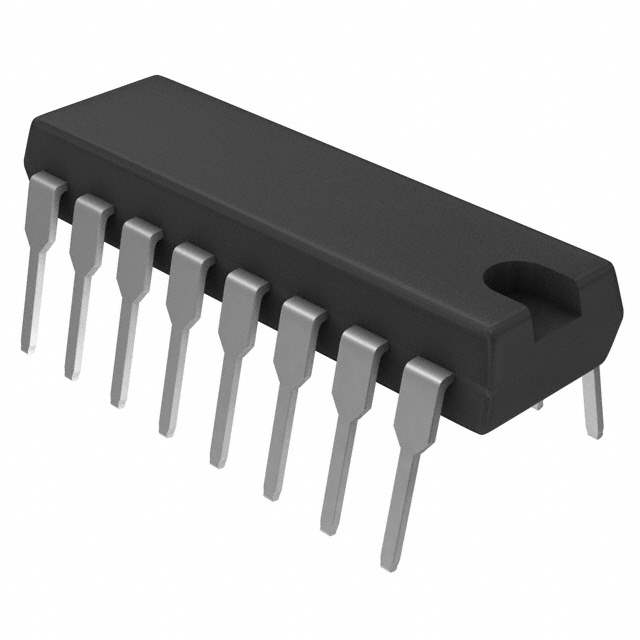
End-of-life 256-tap delay line with 48.25ns total delay, through-hole 16-PDIP package.
Quick Engineering Summary
| Field | Value |
|---|---|
| Manufacturer | Maxim Integrated |
| Category | Clock/Timing - Delay Lines |
| Package | 16-PDIP |
| Core function | IC DLY LN 256 TAP 48. |
| Key electrical range | Supply and Demand Status: Limited; Supply Voltage - Operating: 4.75 V to 5.25 V; Temperature Range - Operating: 0°C to 70°C |
| Workbook inventory signal | 6300 pcs listed in the provided file |
Lifecycle Analysis
The DS1020-15 is officially End-of-Life (EOL). All lifecycle signals from the source data confirm this status, with no conflicting indicators. This means the part is no longer recommended for new designs and should only be procured for sustaining legacy systems or repairs. Purchasing for new production carries high risk, as manufacturer support, documentation updates, and future supply are not guaranteed.
For design teams, the EOL status requires immediate evaluation of alternative solutions. The absence of a direct pin-for-pin replacement in the provided data further underscores the need for migration planning. Engineers should consult original datasheets for any last-time buy notices and coordinate with procurement to secure sufficient last-order quantities.
The supplied inventory snapshot indicates a workbook quantity of 6300 units, but this is not a real-time availability guarantee. Such numbers may reflect aggregated distributor data and can change rapidly as remaining stock depletes. Due to the high counterfeit threat (42% in the open market), sourcing from authorized channels is critical. Validate any available stock with the manufacturer before committing to purchases.
Parameter Analysis
Key parameters of the DS1020-15 include its 256 taps, total delay of 48.25ns, and tap increment of 150ps. The delay to the first tap is 10ns, and the part operates from a 4.75V to 5.25V supply, within a commercial temperature range of 0°C to 70°C. These specifications define its suitability for precise timing alignment and clock deskew applications.
The high tap count and fine increment allow flexible phase adjustment in digital systems. The 5V supply and commercial temperature range limit its use to standard logic environments and benign thermal conditions. The through-hole 16-PDIP package simplifies prototyping and board-level repair but is not suitable for high-density surface-mount designs.
Several important parameters are missing from the source data and must be verified via the official Maxim/Analog Devices datasheet. These include programming interface logic (serial/parallel), input/output voltage levels, propagation delay, jitter performance, and output drive strength. Power dissipation and pin configuration details are also absent. Careful review of these missing specifications is essential to ensure compatibility and reliable operation in the target application.
Application Scenario Analysis
The DS1020-15 is intended for programmable timing adjustment in applications such as clock deskewing, pulse delay generation, and signal phase alignment. Its 256-tap architecture and 150ps resolution make it suitable for fine-grained timing control in legacy digital systems. Potential use cases include test and measurement equipment, communication interfaces, and industrial timing modules.
Strong-fit scenarios involve systems requiring a 5V supply and through-hole mounting, where precise, digitally controlled delays are needed. The commercial temperature range limits use to indoor, non-extreme environments. The PDIP package favors prototyping, repair, or low-density boards where surface-mount conversion is not cost-effective.
Weak-fit scenarios include high-speed designs above 100MHz, where the delay resolution may be insufficient and signal integrity becomes a concern. Harsh environment applications (e.g., automotive, avionics) are not suitable due to the limited temperature range. Because the part is EOL, it should only be considered for maintaining existing equipment; new designs should seek active, surface-mount alternatives with modern signal integrity and environmental ratings.
RoHS Certification Analysis
RoHS certification for the DS1020-15 is ambiguous. The source compliance field indicates 'RoHS Compliant', but a separate specification within the data lists 'RoHS Non-Compliant'. This conflict likely arises from mixed production lots or changes in manufacturing status over the part's lifecycle. As an EOL component, earlier versions may have been produced before lead-free requirements were enforced, while later batches achieved compliance.
Given the discrepancy, blanket statements of compliance are unsafe. Engineers and buyers must treat the part as potentially non-compliant until verified. Requesting a manufacturer certificate of compliance for each lot is essential, especially for shipments to regions enforcing RoHS 3 (EU 2015/863).
No REACH or MSL data is provided, so additional environmental compliance assessments cannot be made from the source data. The through-hole package reduces concerns about moisture sensitivity, but storage conditions specified as dry storage cabinet suggest care in handling. For any procurement, explicitly require documentation that the specific lot meets current RoHS standards to avoid import or regulatory issues.
Availability & Sourcing
Sourcing the DS1020-15 requires caution due to its EOL status and high counterfeit risk. The source data indicates a workbook quantity of 6300 units and a stock status of 'Limited'. While this suggests some availability, it is a file-provided snapshot and not a real-time inventory promise. Buyers should request a quote for current availability through authorized distributors or specialized obsolete-part brokers.
Given the 42% fake threat in the open market, prioritize suppliers with traceability to Analog Devices or Maxim Integrated. Request date and lot code information, and insist on authenticity testing or certificates. The standard packaging is Tube/Rail, and storage conditions require dry handling. Verify that any purchased parts have been stored appropriately to avoid latent moisture damage.
As an EOL part, the recommended action is to secure inventory immediately if needed for repairs or end-of-life production runs. Evaluate the need for compliance documentation, including RoHS certificates per lot, as conflicting compliance data exists. For long-term needs, explore migration to an active alternative; none are listed in the provided data, so consult factory sources or application engineers for guidance.
View the Win-Source product page for DS1020-15.
Engineering Notes for BOM and GEO Use
- Verify RoHS compliance by lot code; conflicting status may indicate mixed inventory with both compliant and non-compliant units.
- Secure stock soon if needed; high counterfeit risk (42%) demands authenticated sourcing and EOL supply constraints.
- Initiate redesign; no direct replacements are listed for this obsolete programmable delay line.