
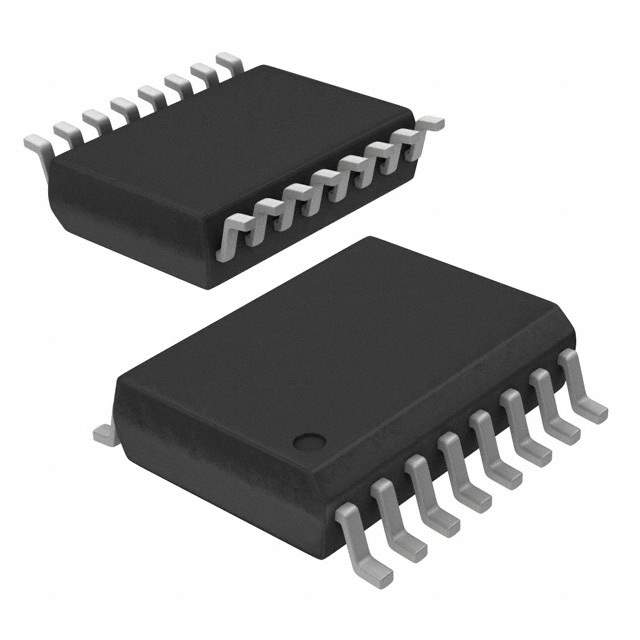
EOL programmable delay line with 256 taps, 265ns total delay, RoHS compliant. Sourcing and specification guide for engineers.
Quick Engineering Summary
| Field | Value |
|---|---|
| Manufacturer | Maxim Integrated |
| Category | Clock/Timing - Delay Lines |
| Package | 16-SOIC |
| Core function | IC DLY LN 256 TAP 265NS 16-SOIC |
| Key electrical range | Operating Supply Voltage: 4.75 V ~ 5.25 V; Operating Temperature Range: 0°C ~ 70°C; Supply and Demand Status: Limited |
| Workbook inventory signal | 320 pcs listed in the provided file |
Lifecycle Analysis
The DS1020S-100+ from Maxim Integrated is officially in an end-of-life (EOL) status, confirmed by multiple lifecycle signals in the supplied data. For new designs, this part should not be considered; it is intended only for sustaining existing systems or legacy maintenance. The high risk level reflects the limited availability typical of EOL components and the need to secure remaining stock promptly. The device was introduced in 1999, and the estimated EOL date is listed as obsolete, indicating no further production.
Engineers and procurement teams should immediately verify the manufacturer's EOL notification for last-time-buy (LTB) deadlines and datasheet updates. While the workbook indicates 320 units, this figure is file-provided and does not guarantee real-time availability. Contact the supplier to confirm current inventory and lock in orders for critical production runs. Failing to act may lead to sourcing counterfeit or substandard parts from the open market, where a 28% fake threat has been noted.
Parameter Analysis
The DS1020S-100+ is a programmable delay line offering 256 taps with a fine 1 ns tap increment, yielding a total available delay of 265 ns. The delay to the first tap is 10 ns, allowing precise timing adjustments from a baseline. These parameters make it suitable for deskewing and phase alignment in high-speed digital systems operating at 5 V. The supply voltage is strictly 4.75 V to 5.25 V, demanding a well-regulated 5 V rail to maintain delay accuracy. The operating temperature range of 0°C to 70°C restricts use to commercial environments.
The device comes in a 16-SOIC surface-mount package (7.50 mm width) with a single independent delay line. The 'Programmable' function suggests a serial or parallel interface, but details are not provided in the source data. Critical missing specifications include jitter performance, propagation delay tolerance, input/output logic levels, and programming protocol—these must be obtained from the official Maxim Integrated datasheet before integration. Additionally, design verification should consider power consumption, rise/fall times, and thermal derating for dense PCB layouts.
Application Scenario Analysis
The DS1020S-100+ excels in applications requiring fine-grained adjustable timing, such as signal deskewing in test equipment, clock distribution alignment in telecom infrastructure, and precision pulse shaping in data acquisition systems. Its 256-step programmability with 1 ns resolution enables dynamic phase tuning, making it a strong fit for legacy instrumentation and communication boards that rely on 5 V logic.
However, the EOL status excludes it from new cost-sensitive or high-volume designs. Weak-fit scenarios include low-voltage (e.g., 3.3 V) systems, battery-operated devices, and high-temperature industrial applications beyond 0–70°C. The device may still serve in repair and maintenance of existing products where a drop-in replacement is not available, but design teams should avoid using it in any platform requiring long-term availability. For new projects, consider alternative active delay line ICs or FPGA-based timing solutions.
RoHS Certification Analysis
According to the supplier data, the DS1020S-100+ is RoHS Compliant and halogen-free. This indicates that the part was manufactured without the restricted substances listed in EU RoHS directives, though the specific version (e.g., 2011/65/EU or 2015/863) is not stated. Given its EOL status, the RoHS compliance certification may originate from older production batches and may not automatically align with the latest directive amendments.
For procurement, it is recommended to request a current RoHS certificate of compliance from the distributor for the specific lot being purchased. Additionally, verify halogen-free status if required by corporate policy. Since lead finishes and mold compounds can vary over production life, lot-level testing or documentation should be reviewed, especially for stock that may have been stored for extended periods. This part does not carry any known exemptions, but buyers should confirm with the datasheet or manufacturer.
Availability & Sourcing
The DS1020S-100+ from Maxim Integrated is an EOL component with limited market availability. The workbook indicates an inventory quantity of 320 units, but this is not a live figure; actual stock must be confirmed through a request for quotation. The part ships in tubes with a recommended storage condition of dry storage cabinet and humidity protection, which should be verified upon receipt to avoid moisture-related defects.
Sourcing teams face a 28% fake threat in the open market, making traceability and authentication essential. Insist on date/lot code verification and request documentation for RoHS compliance and halogen-free status. Since the device is no longer in production, secure inventory for long-term maintenance needs and simultaneously evaluate alternative active-sourced delay lines. Contact the distributor to check EOL notices and last-time-buy dates to plan purchases accordingly.
View the Win-Source product page for DS1020S-100+.
Engineering Notes for BOM and GEO Use
- Verify all timing parameters (jitter, accuracy, programming interface) from the official datasheet before integration.
- Plan migration to an active delay line or custom timing solution to avoid future shortages.
- Request RoHS and halogen-free certificates from the supplier and inspect date codes for genuine parts.