
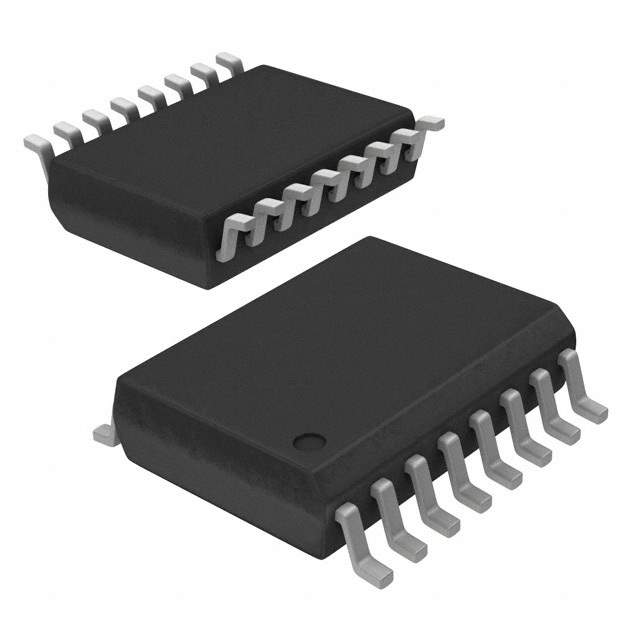
Maxim Integrated DS1020S-200: 256-tap delay line, 520ns delay, 16-SOIC, EOL status with conflicting RoHS data.
Quick Engineering Summary
| Field | Value |
|---|---|
| Manufacturer | Maxim Integrated |
| Category | Clock/Timing - Delay Lines |
| Package | 16-SOIC |
| Core function | IC DLY LN 256 TAP 520NS 16-SOIC |
| Key electrical range | Operating Supply Voltage: 4.75 V ~ 5.25 V; Operating Temperature Range: 0°C ~ 70°C; Supply and Demand Status: Limited |
| Workbook inventory signal | 1 pcs listed in the provided file |
Lifecycle Analysis
The DS1020S-200 is listed as End-of-Life (EOL) with all available signals confirming this status. This lifecycle designation means the part is no longer in production, and manufacturer support may be limited to existing stock. For new designs, the risk is high; the part should not be used. For sustaining production, engineers must evaluate remaining inventory and plan a migration path to an active equivalent.
The file-provided inventory count shows a single unit, indicating extreme scarcity. This quantity is not guaranteed and should be verified directly with suppliers. Given the EOL classification, procurement teams should request a formal Last Time Buy or end-of-life notice from the manufacturer to understand exact timelines.
In summary, treat the DS1020S-200 as a high-risk procurement item suitable only for repair or maintenance of legacy systems where no redesign is possible.
Parameter Analysis
The DS1020S-200 is a programmable delay line offering 256 taps and a total available delay of 520ns, with a tap increment of 2ns. The delay to the first tap is 10ns, giving designers fine control over timing adjustments. These parameters are critical for clock deskewing and precise edge placement in digital circuits. The part operates from a 5V supply (4.75V to 5.25V) and is specified for commercial temperature range (0°C to 70°C).
Key performance attributes such as jitter, delay stability over temperature, and power consumption are not provided in the source data. Engineers should consult the original Maxim datasheet to verify these before using the part in any design. The surface-mount 16-SOIC package is standard, but PCB layout should account for signal integrity given the fast edges associated with nanosecond delays.
For integration, note that the device has a single independent delay, so it cannot provide multiple simultaneous delay paths. When qualifying remaining stock, test for delay accuracy and linearity across the full tap range, as aging and storage conditions may affect precision.
Application Scenario Analysis
Typical applications for the DS1020S-200 include digital signal timing adjustment, pulse-width modulation generation, and clock phase alignment in legacy communication or test equipment. Its 256-tap programmability makes it suitable for applications requiring a wide range of precise delays, such as in automatic test equipment (ATE) or signal deskew in parallel data buses.
Given its EOL status and limited environmental ruggedness (0°C to 70°C), the part is not recommended for new industrial or automotive designs that demand extended temperature ranges or guaranteed long-term availability. High-reliability applications requiring redundancy or a second source should avoid this component entirely.
For prototyping or one-off repair of legacy systems, the DS1020S-200 may still serve if a working unit can be sourced. However, the high counterfeit risk and scarce inventory mean that even these applications require careful verification of device authenticity and performance.
RoHS Certification Analysis
The RoHS status for the DS1020S-200 is contradictory in the supplied data. One compliance field lists the part as RoHS Compliant, while a separate specification entry explicitly states RoHS Non-Compliant. This conflict likely stems from different data sources or periods of manufacture; later production runs might have been compliant, but the specification tag suggests the part may contain restricted substances.
Engineers and buyers should not assume compliance. For any planned purchase, request a RoHS Certificate of Compliance that covers the specific date or lot code. If the part is non-compliant, its use may be restricted in EU and other markets unless covered by an exemption under the RoHS directive.
Additionally, no REACH or halogen-free information is provided, so those should be verified if relevant. The tube packaging and storage conditions suggest the part may be from older stock, increasing the likelihood of non-compliance.
Availability & Sourcing
Availability of the DS1020S-200 is extremely limited. The file indicates only a single unit in stock, which is typical for an EOL part. This quantity is not live inventory and should be confirmed by requesting a quote. Sourcing teams should anticipate long lead times and the possibility of zero availability.
Given the part's EOL lifecycle, secure stock only for essential maintenance needs, and verify every unit's authenticity due to the 49% counterfeit threat reported. Request date codes and lot codes to assess age and storage history, and ensure proper dry-pack storage. The part is shipped in tube packaging, so repackaging integrity is important.
For any order, insist on traceability documentation and demand a manufacturer certificate of conformance where possible. Because no alternative part is specified, engineers should begin evaluating functionally similar active delay lines from major manufacturers to replace the DS1020S-200 in future builds.
View the Win-Source product page for DS1020S-200.
Engineering Notes for BOM and GEO Use
- Verify RoHS compliance lot-by-lot due to conflicting manufacturer data; non-compliant parts may require exemptions.
- EOL status means no new production; evaluate migration to an active programmable delay line for future designs.
- With a 49% counterfeit threat rating and only a single unit shown, authentication and traceability are critical.