
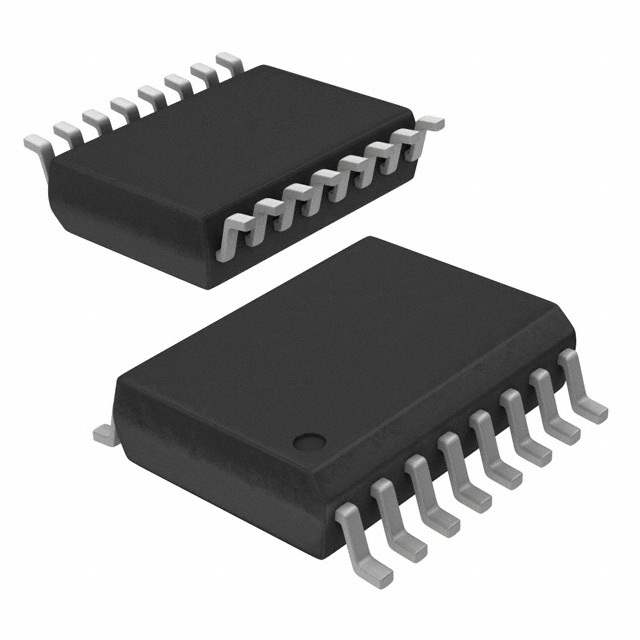
EOL delay line with 73.75ns total delay and 256 taps in 16-SOIC; verify lifecycle and RoHS before procurement.
Quick Engineering Summary
| Field | Value |
|---|---|
| Manufacturer | Maxim Integrated |
| Category | Clock/Timing - Delay Lines |
| Package | 16-SOIC |
| Core function | IC DLY LN 256 TAP 73. |
| Key electrical range | Supply and Demand Status: Balance; Supply Voltage - Operating: 4.75 V to 5.25 V; Temperature Range - Operating: 0°C to 70°C |
| Workbook inventory signal | 7700 pcs listed in the provided file |
Lifecycle Analysis
The Maxim Integrated DS1020S-25 is classified as End-of-Life (EOL), with all available lifecycle signals—including the manufacturer's status, Win Source lifecycle parameter, and product status—aligning on this designation. This EOL status is accompanied by high procurement risk, as no further production or last-time buy windows are active. For new designs, this part is not recommended; engineers should select an alternative delay line IC from current active production. For sustaining production, any remaining inventory must be verified directly with suppliers, as the file-provided quantity of 7,700 units is not guaranteed real-time and may reflect cached data. A revalidation of the manufacturer's official PCN (Product Change Notification) is advised to confirm the exact discontinuance date and any migration options.
Parameter Analysis
The DS1020S-25 offers a programmable delay with 256 taps and a 250ps tap increment, yielding a 73.75ns total delay range, plus a 10ns delay to the first tap. These parameters make it suitable for fine-grained timing adjustments in digital systems. The device requires a supply voltage of 4.75V to 5.25V and operates within a commercial temperature range of 0°C to 70°C, restricting its use to indoor, controlled environments. Its 16-SOIC surface-mount package enables automated assembly and compact PCB layouts. Critical missing specifications in the provided data include timing jitter, propagation delay consistency, and I/O logic levels—these must be obtained from the manufacturer's original datasheet to ensure signal integrity. Additionally, a reported 68% fake threat rate in the open market underscores the need for traceable sourcing from authorized distributors to avoid counterfeit devices.
Application Scenario Analysis
As a programmable delay line, the DS1020S-25 is designed for applications requiring precise time-delay generation, such as clock skew adjustment, pulse shaping, and signal synchronization in digital circuits. Its 256-step resolution and 250ps increment allow micro-adjustments in high-resolution timing systems like automatic test equipment (ATE) and data acquisition systems. The commercial temperature range (0–70°C) and 5V supply make it a strong candidate for industrial controllers and bench-top instrumentation. However, it is ill-suited for automotive or outdoor equipment demanding extended temperature ranges, or for low-voltage battery-powered designs operating below 4.75V. The lack of jitter specifications means it should be critically evaluated for high-speed serial links where timing uncertainty matters. Engineers should also verify that the 73.75ns maximum delay meets their required timing window; applications needing longer delays would need cascading or a different device.
RoHS Certification Analysis
The supplied data presents conflicting RoHS compliance information for the DS1020S-25: one field lists RoHS Compliant while another marks it as RoHS Non-Compliant. This discrepancy suggests that the part may have been manufactured in both compliant and non-compliant variants, or that the data compiled from different sources is inconsistent. For procurement, it is essential to request the specific lot's RoHS certificate and test reports. Without a unified manufacturer declaration, the part cannot be assumed to meet EU RoHS (2015/863) requirements. Additionally, no information on REACH, halogen-free status, or MSL was provided; these should also be confirmed with the supplier to ensure full compliance for target markets.
Availability & Sourcing
With an EOL lifecycle, sourcing the Maxim Integrated DS1020S-25 requires careful verification and risk management. The file-provided inventory of 7,700 units is a snapshot and may not reflect actual stock; engineers and buyers must submit a quote request to Win Source or check authorized distributors for current availability. The 16-SOIC tube/rail packaging is standard for through-hole or automated SMT processes, but parts should be stored in dry conditions to avoid moisture damage. Given the high counterfeit threat (68%), buyers should insist on documentation including date/lot codes, manufacturer certificates of authenticity, and RoHS compliance statements for the specific shipment. For new production, EOL status makes this part unsuitable; alternative programmable delay lines from Maxim Integrated or other vendors should be evaluated. For existing sustaining lines, secure remaining stock only after confirming authenticity, and plan a redesign to eliminate dependency on this obsolete device.
View the Win-Source product page for DS1020S-25.
Engineering Notes for BOM and GEO Use
- Do not use DS1020S-25 for new designs; it is EOL and may have no future availability. Evaluate active alternatives.
- Due to conflicting RoHS data, request lot-specific compliance certificates before purchase to avoid non-compliant inventory.
- High counterfeit risk (68%) demands sourcing only through traceable channels with full inspection on receipt.