
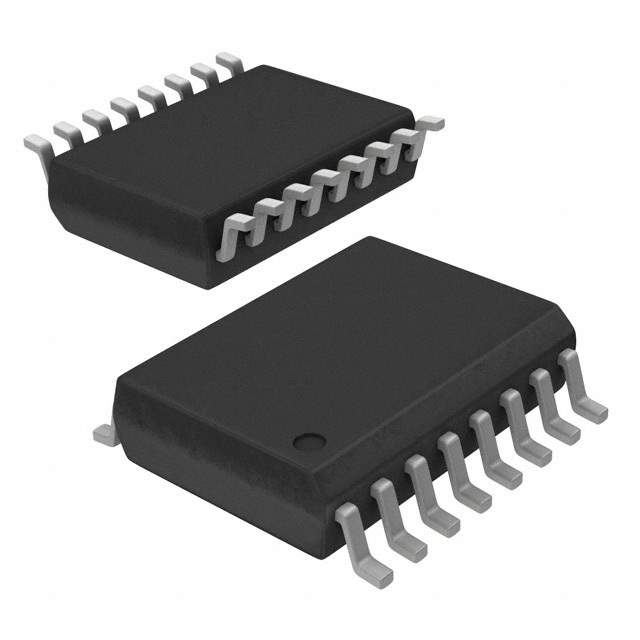
EOL programmable delay line with 256 taps, 137.5ns delay in 16-SOIC package.
Quick Engineering Summary
| Field | Value |
|---|---|
| Manufacturer | Maxim Integrated |
| Category | Clock/Timing - Delay Lines |
| Package | 16-SOIC |
| Core function | IC DLY LN 256 TAP 137. |
| Key electrical range | Operating Supply Voltage: 4.75 V ~ 5.25 V; Operating Temperature Range: 0°C ~ 70°C; Supply and Demand Status: Limited |
| Workbook inventory signal | 1 pcs listed in the provided file |
Lifecycle Analysis
The DS1020S-50+ from Maxim Integrated is officially classified as End-of-Life (EOL) with a high-risk lifecycle status. All available lifecycle signals confirm this, indicating the device is no longer recommended for new designs and is potentially in the final stages of availability for ongoing production. Engineers must interpret EOL as a hard stop for new projects; using this part in new designs could lead to immediate procurement obstacles and long-term supply chain instability. For sustaining production, revalidation of existing stock and immediate planning for a migration path to an active alternative are essential.
The part was introduced in November 1999, and its EOL status suggests it has been in a decline phase for some time. The file-provided inventory quantity of 1 unit is not a real-time reflection of global stock and should be treated as an indicative, non-guaranteed signal. Buyers should contact authorized distributors or the manufacturer (now Analog Devices) directly to confirm any remaining factory stock or last-time buy (LTB) opportunities. Without an official LTB announcement, the risk of sudden unavailability is high. Documentation from the manufacturer should be obtained to clarify the exact EOL timeline, including the last order date and last shipment date if applicable. In the absence of such data, conservative inventory management dictates immediate alternative sourcing or redesign.
Parameter Analysis
The DS1020S-50+ is a programmable delay line offering 256 taps with a total available delay of 137.5ns and a tap increment of 500ps. These parameters define the timing resolution and range, making it suitable for coarse and fine delay adjustments in digital systems. The device operates from a 4.75V to 5.25V supply, indicating 5V TTL/CMOS compatibility, which must be verified against the system’s logic levels. The delay to the first tap is specified as 10ns, a critical value for applications requiring minimum offset. The operating temperature range of 0°C to 70°C limits it to commercial environments, precluding its use in industrial or extended-temperature designs without additional testing.
Key parameters not supplied in the source data but critical for integration include: propagation delay matching between taps, jitter performance, input frequency range, and output drive strength. Engineers should consult the original Maxim datasheet for detailed timing diagrams, absolute maximum ratings, and characterization curves. The 500ps tap increment suggests a decent resolution for 5V-era delay lines, but modern alternatives may offer finer steps and lower voltage operation. The device’s programmable nature allows dynamic delay selection, which can be leveraged via digital control interfaces, though the exact programming mechanism (parallel, serial, etc.) is not detailed here and must be confirmed.
Application Scenario Analysis
The DS1020S-50+ is designed for applications requiring precise, programmable timing delays, such as clock phase alignment, edge placement, pulse width manipulation, and signal synchronization in legacy 5V systems. Its 256-tap architecture with 500ps resolution is particularly useful in test and measurement equipment, where fine-grained delay control is needed. The device can also serve in digital calibration circuits, time-domain reflectometry (TDR) interfaces, or as a part of pulse generators. Given its EOL status, it is most relevant for maintaining existing equipment or supporting legacy products where a direct replacement is not feasible.
Weak-fit scenarios include modern low-voltage systems (e.g., 3.3V or 1.8V), high-temperature industrial environments, or compact designs where the 16-SOIC footprint is too large. The limited total delay of 137.5ns may be insufficient for long-range synchronization tasks, and the commercial temperature range excludes it from automotive or outdoor applications. For new projects, designers should consider active alternatives with wider supply ranges, higher resolution, and larger delays available from Analog Devices or other suppliers in the delay line and clock generation category.
RoHS Certification Analysis
The DS1020S-50+ is listed as RoHS Compliant, and additionally claims halogen-free compliance. These environmental certifications are essential for meeting regulatory requirements in many markets. However, since the part is EOL, the RoHS status may be based on family-level declarations rather than specific lot testing. The exact RoHS directive (e.g., EU 2015/863) is not explicitly stated in the source data; buyers should request a certificate of compliance from the supplier to confirm conformity, especially if the end equipment must meet specific regional standards. The commercial temperature range and lead finish details are not provided, so verifying the absence of lead and other restricted substances per the directive is recommended.
For new procurement, it is critical to ensure that any purchased stock is from RoHS-compliant production lots and that the storage conditions (dry, humidity-protected) have been maintained to avoid solderability issues. In open market sourcing, the risk of non-compliant or relabeled parts increases, so documentation traceability becomes paramount. The halogen-free statement is an additional assurance but should be corroborated with test reports when possible.
Availability & Sourcing
As an EOL component, the DS1020S-50+ suffers from severely constrained availability and a high risk of counterfeit parts, with a reported fake threat percentage of 49% in the open market. The file-provided quantity of a single unit is not a reliable stock indicator and must be treated as provisional. Buyers should immediately request a quote from authorized distributors to determine if any factory allocation remains, and simultaneously explore migration paths to active replacements. The manufacturer (Maxim Integrated, now under Analog Devices) may have officially transferred the product to their obsolete portfolio, so monitoring their lifetime buy notifications is critical.
To mitigate sourcing risks, insist on traceable date and lot codes, full RoHS compliance documentation, and original packaging (tube per spec). The part’s storage condition calls for dry storage and humidity-protected packaging, which must be verified upon receipt; this is especially important for EOL parts that may have been sitting in non-controlled environments. For legacy system support, consider authorized aftermarket suppliers or redesign with pin-compatible alternatives if available. In all cases, lifecycle verification directly with the manufacturer is the most prudent next step before committing to any procurement action.
View the Win-Source product page for DS1020S-50+.
Engineering Notes for BOM and GEO Use
- Verify last-time buy availability directly with Maxim Integrated (now Analog Devices) to secure remaining stock.
- Check original datasheet for jitter, propagation delay, and input frequency specifications critical for precision designs.
- Open market purchases carry 49% counterfeit risk; insist on traceable lot codes, RoHS documentation, and test samples.