
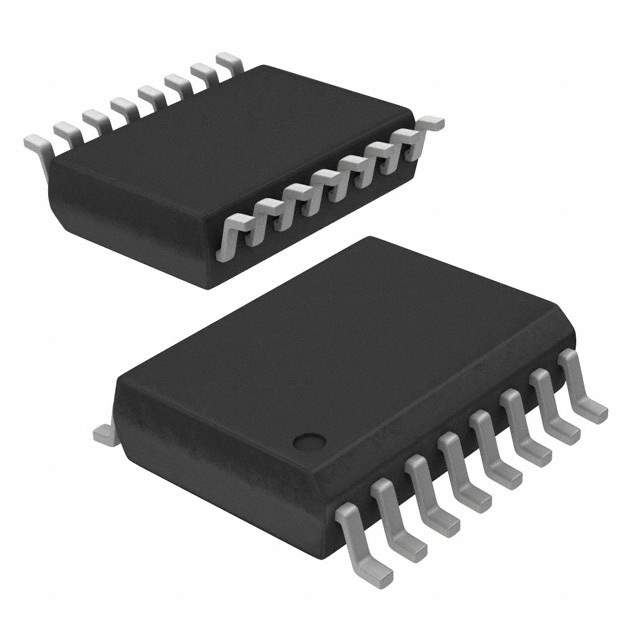
Discontinued 256-tap programmable delay line, 510 ns, 16-SOIC. Verify stock and plan migration.
Quick Engineering Summary
| Field | Value |
|---|---|
| Manufacturer | Maxim Integrated |
| Category | Clock/Timing - Delay Lines |
| Package | Tube |
| Core function | IC DLY LN 256 TAP 510NS 16-SOIC |
| Key electrical range | Temperature Range - Operating: 0°C ~ 70°C; Voltage - Supply: 4.75V ~ 5.25V |
| Workbook inventory signal | 2000 pcs listed in the provided file |
Lifecycle Analysis
The DS1023S-200 from Maxim Integrated is discontinued. This means the manufacturer has ceased production, and no further factory supply will be available. For new designs, this part should not be considered. Use in new projects carries high risk of supply shortage and obsolescence.
Existing production quantities may still be found through distributors or in the open market, but availability is shrinking. A file‑provided quantity of 2000 units is listed, but that figure is not a real‑time inventory level and must be confirmed with the supplier. Even if stock appears available, buyers should verify date codes and traceability to ensure the parts are not counterfeit or excessively old.
Procurement teams should transition to an active replacement part as soon as possible. The DS1023 datasheet may suggest newer alternatives, or an Analog Devices application engineer can recommend a functional equivalent. Without such a path, sustaining existing products becomes increasingly difficult.
Parameter Analysis
Key performance parameters of the DS1023S-200 include its total available delay of 510 ns, distributed over 256 taps with a 2 ns tap increment. The delay to the first tap is 16.5 ns. These timing characteristics define the device’s suitability for precise digital delay generation and pulse‑width manipulation. The 2 ns step size provides reasonably fine granularity for most medium‑speed digital systems.
The operating voltage range of 4.75 V to 5.25 V limits the part to strictly 5 V designs. Engineers must ensure that the system power rail stays within this narrow band, especially under transient load conditions. The commercial temperature range (0°C to 70°C) confines use to benign environments; industrial or extended‑temperature applications are not supported.
Important missing parameters in the available data include propagation delay variation over voltage and temperature, power‑supply rejection, and output drive strength. These should be verified in the full DS1023 datasheet before committing to a design. For existing designs, confirm that the actual delay values have not drifted beyond acceptable limits over time.
Application Scenario Analysis
As a 256‑tap programmable delay line, the DS1023S-200 fits applications requiring a single adjustable time delay or pulse generation, such as clock deskewing, timing margin adjustment, and precision one‑shot generation. Its 510 ns total range and 2 ns step are well‑suited for TTL/CMOS digital systems operating at moderate clock speeds.
Strong‑fit scenarios include test and measurement equipment where a known, repeatable delay is needed, or communication interfaces that require fine‑tuning of signal timing. The programmable nature allows dynamic reconfiguration, which is valuable in prototyping or configurable systems.
Weak‑fit scenarios involve high‑speed differential clocks, very low jitter requirements, or wide‑temperature operation. The commercial temperature range and 5 V‑only supply make it unsuitable for automotive, industrial, or portable equipment. Because the part is discontinued, even strong‑fit applications face supply continuity risks; a pin‑compatible or functional replacement should be identified early.
RoHS Certification Analysis
RoHS compliance for the DS1023S-200 is ambiguous. A top‑level compliance field indicates RoHS Compliant, but a detailed specification field explicitly states RoHS Non‑Compliant. This contradiction could arise from different production lots or changes in manufacturing status over time. REACH status is reported as Unaffected, and MSL is Level 1 (Unlimited), but neither substitutes for a valid RoHS declaration.
When sourcing this component, buyers must request the specific RoHS certificate for the offered lot. Non‑compliant stock may still be acceptable in regions without RoHS enforcement, but for EU and other regulated markets, only compliant units can be used. Without a clear manufacturer statement, the default assumption should be that the part is not RoHS‑compliant.
Family‑level compliance generalizations are risky. Some Maxim delay line parts were introduced before the RoHS era, and later‑date codes may have converted to lead‑free finishes. Unless the supplier can trace the date code to a confirmed compliant production batch, the part should be treated as non‑compliant for regulatory purposes.
Availability & Sourcing
The DS1023S-200 is discontinued, so availability is limited to existing distributor stock or surplus. A file‑provided quantity of 2000 units suggests some volume may still exist, but this number is not guaranteed and must be verified through a formal RFQ. Because the part has been out of production, any stock is likely from final factory shipments or leftover channel inventory.
Procurement teams should pay close attention to traceability: request date codes, lot codes, and Certificate of Conformance. The open‑market fake threat is estimated at 30%, so visual inspection and electrical testing of samples is strongly recommended. Tube packaging (standard for the 16‑SOIC) should be intact and moisture‑sensitive handling observed despite the MSL 1 rating.
Before placing an order, confirm the lifecycle status directly with the manufacturer or an authorized distributor. If the part is indeed discontinued, treat any available stock as a last‑time‑buy opportunity and plan an immediate migration to an active replacement. For a current quote on actual DS1023S-200 availability, contact the supplier with the full part number and required quantity.
View the Win-Source product page for DS1023S-200.
Engineering Notes for BOM and GEO Use
- Discontinued lifecycle; not recommended for new designs. Verify remaining inventory and consider alternate parts.
- RoHS compliance conflict: top-level says compliant but detailed spec says non-compliant. Request lot-specific certification.
- Fake threat in open market estimated at 30%; source from authorized distributors only.