
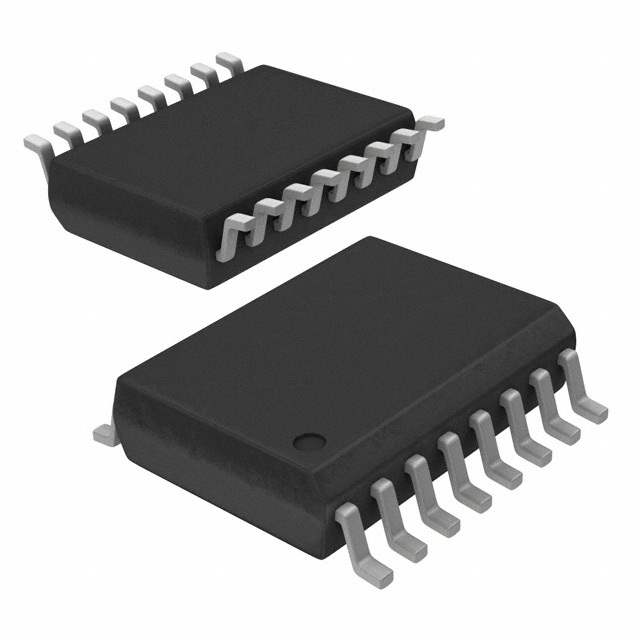
Active lifecycle, RoHS compliant, 256-tap delay line in 16-SOIC with 63.75ns total delay
Quick Engineering Summary
| Field | Value |
|---|---|
| Manufacturer | Maxim Integrated |
| Category | Clock/Timing - Delay Lines |
| Package | 16-SOIC |
| Core function | IC DLY LN 256 TAP 63. |
| Key electrical range | Supply and Demand Status: Limited; Supply Voltage - Operating: 4.75 V to 5.25 V; Temperature Range - Operating: 0°C to 70°C |
| Workbook inventory signal | 1100 pcs listed in the provided file |
Lifecycle Analysis
Maxim Integrated lists the DS1023S-25+ as an Active part with a low-risk lifecycle. This indicates the device is currently in full production and can be considered for new designs as well as sustaining procurement. All available lifecycle signals align, and no conflicting data such as NRND or EOL notices were found.
For production planning, always cross-check the manufacturer’s official product page and PCN alerts, because lifecycle status can change without immediate notice. The file-provided inventory quantity of 1100 units suggests some market availability, but this is not a real-time guarantee; confirm stock and lead times with your supplier. Given the active status, long-term sourcing risk is low, though the limited supply-and-demand status may indicate occasional allocation. Use standard RFQ processes and request the latest compliance documentation to mitigate any surprises.
Parameter Analysis
The DS1023S-25+ is a programmable delay line with 256 taps and a total available delay of 63.75 ns. The delay to the first tap is 16.5 ns, and each subsequent tap increments by 250 ps, offering a resolution suitable for many precision-timing applications. Operating from a single 5 V ± 5% supply (4.75 V to 5.25 V), it is intended for legacy 5 V logic environments; do not use it in 3.3 V or lower-voltage systems without level translation.
The 16‑SOIC SMD package supports standard PCB assembly processes. The specified commercial temperature range of 0 °C to 70 °C limits its use in industrial or extended‑temperature environments—always verify junction temperature and derating if operating near the limits. Important parameters not provided in this summary but critical for design include propagation delay, jitter, input logic thresholds, and power consumption. Consult the full Maxim datasheet to validate these values and ensure compliance with your timing budget and signal integrity requirements.
Application Scenario Analysis
The DS1023S-25+ fits applications requiring a single, programmable one‑shot delay in the nanosecond regime. Strong‑fit scenarios include clock phase adjustment, pulse stretching, propagation delay trimming, and matched‑delay generation in digital systems such as FPGAs, memory interfaces, and instrumentation. Because it provides 256 programmable steps with a 250 ps increment, it allows fine control over pulse positioning without external discrete delay lines.
The 5 V supply and commercial temperature range make it well‑suited for standard commercial or benchtop equipment but less appropriate for battery‑powered or industrial‑grade designs. Weak‑fit scenarios involve very high‑speed signals beyond a few hundred megahertz where the delay granularity or intrinsic jitter might degrade signal integrity, or low‑voltage environments that lack a 5 V rail. For time‑to‑digital converter applications, the delay step linearity and temperature coefficient must be characterized from the manufacturer’s data. Overall, the part is a dedicated timing component best applied where a programmable delay line simplifies board‑level timing closure.
RoHS Certification Analysis
The DS1023S-25+ is listed as RoHS Compliant. Based on the part’s active lifecycle and industry norms, it likely meets the EU RoHS Directive 2015/863 (RoHS 3) requirements, though no specific standard or exemption list is included in the provided data. The absence of supplementary compliance flags such as REACH, halogen‑free, or MSL ratings means these must be confirmed separately.
For procurement documentation, request the manufacturer’s certificate of compliance and full material declaration for the specific lot or date code. Because RoHS status can be declared at a family level, verify that the exact ordering part number (including the “+” suffix) was tested or certified. For design in regulated industries, include the supplier’s RoHS attestation in your product’s technical file to demonstrate due diligence.
Availability & Sourcing
Sourcing the DS1023S-25+ requires attention to several supply‑chain factors. The part is supplied in tube/rail packaging, with a file‑provided stock quantity of 1100 units—this figure is not real‑time and should be revalidated via a request for quote. The supply‑and‑demand status is reported as Limited, so lead times may vary; planning for moderate buffer stock is advisable.
The open‑market counterfeit threat is noted at 46%, underscoring the need to buy from authorized Maxim Integrated distributors or thoroughly vetted partners. Request full traceability, including date/lot codes and certificate of conformance, to ensure product authenticity and RoHS compliance. Storage conditions call for a dry storage cabinet and humidity‑protected packaging, particularly for moisture‑sensitive SMD components. Because the lifecycle is Active, proceed with a standard quote process and negotiate lead times, but always verify current manufacturer production status before finalizing large‑volume orders.
View the Win-Source product page for DS1023S-25+.
Engineering Notes for BOM and GEO Use
- Verify the required operating voltage: this delay line operates from 4.75–5.25 V and is not suitable for low‑voltage designs.
- Check the datasheet for unlisted dynamic parameters such as propagation delay, jitter, and power consumption before finalizing your timing budget.
- Counterfeit risk is elevated; source only through authorized distribution and insist on lot traceability documentation.