
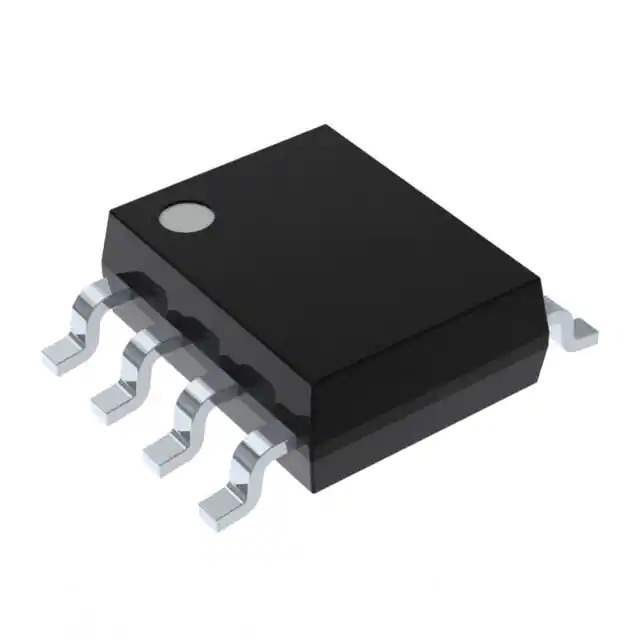
Discontinued 3.3V 10ns Triple Delay Line for Clock Distribution Networks
Quick Engineering Summary
| Field | Value |
|---|---|
| Manufacturer | Maxim Integrated |
| Category | Clock/Timing - Delay Lines |
| Package | Tube |
| Core function | IC DELAY LINE 10NS 8-SOIC |
| Key electrical range | Temperature Range - Operating: 0°C ~ 70°C; Voltage - Supply: 2.7V ~ 3.6V |
| Workbook inventory signal | 7800 pcs listed in the provided file |
Lifecycle Analysis
The Maxim Integrated DS1033Z-10 delay line is classified as Discontinued. This lifecycle status means the component is no longer manufactured and should not be designed into new products. For sustaining production, only existing inventory or authorized last-time-buy clearances are appropriate. The file indicates 7800 units on hand, but this is not a real-time quantity and must be confirmed through a direct quote.
Given the high risk of obsolescence, engineers must plan for a migration to an alternative timing solution. Maxim Integrated (now part of Analog Devices) may have a functional replacement, but no direct substitute is listed in the provided data. Any procurement should include verification of the part’s date/lot code to avoid aged or counterfeit stock.
Discontinued parts carry increased supply chain risk. Buyers should expect limited availability, potential long lead times, and higher scrutiny from quality assurance teams. Requesting a certificate of conformance from the distributor is advised when purchasing DS1033Z-10 units.
Parameter Analysis
The DS1033Z-10 provides three independent, nonprogrammable delays with a total delay of 10ns per tap. This fixed delay value is critical for timing alignment and clock deskew applications where precision timing is required. The supply voltage range of 2.7V to 3.6V makes it compatible with standard 3.3V logic, and the operating temperature specification of 0°C to 70°C limits use to commercial environments.
Surface mount packaging in an 8-SOIC facilitates automated assembly, and the MSL Level 1 rating indicates unlimited floor life, simplifying storage. However, many second-level parameters such as delay tolerance, rise/fall time, output logic levels, and power consumption are not provided in the source data. Engineers must refer to the original Maxim Integrated datasheet to derive these values for thorough design margin analysis.
For integration into existing boards, verify that the footprint matches the 8-SOIC (0.154″, 3.90mm width) package. The nonprogrammable nature means the delay is fixed, so any adjustment would require external circuitry or a different delay line. When redesigning, consider programmable delay lines that offer greater flexibility.
Application Scenario Analysis
The DS1033Z-10 is purpose-built for clock distribution and timing adjustment in digital systems. Its 10ns fixed delay and 3.3V operation suit applications such as synchronous data bus timing, phase alignment of clock signals, and pulse shaping where a consistent, small delay is needed. The multiple independent delays allow three separate signals to be delayed equally.
Given its commercial temperature range and nonprogrammable function, the part is less suited for industrial or automotive environments requiring extended temperature performance or dynamic delay adjustment. It is also not ideal for high-precision scientific instruments where delay accuracy and jitter specifications are critical and must be tightly controlled.
As a discontinued component, the DS1033Z-10 is only applicable in legacy system maintenance or repair. New design activity should migrate to an active delay line from Analog Devices or another manufacturer. When evaluating replacement parts, match the delay resolution, supply voltage, and number of taps to ensure functional compatibility.
RoHS Certification Analysis
RoHS compliance data for the DS1033Z-10 is contradictory. The high-level compliance field states “RoHS Compliant,” but the detailed specifications list “RoHS Non-Compliant.” This discrepancy must be resolved before certifying the final product. The REACH status is listed as “REACH Unaffected,” which does not substitute for RoHS compliance.
Because the part is discontinued, obtaining up-to-date compliance certificates from the manufacturer (Maxim Integrated/Analog Devices) may be challenging. Lot-level documentation is essential to confirm the exact material composition of any purchased units. Without such documentation, the part cannot be assumed to meet EU RoHS 3 (2015/863) requirements.
In practice, a non-compliant RoHS status would preclude its use in products sold in the EU and other RoHS-adopting regions unless exemptions apply. Buyers should request a full material declaration from the supplier and cross-reference with the original manufacturer’s compliance database before proceeding.
Availability & Sourcing
The DS1033Z-10 is a discontinued Maxim Integrated component, so availability is limited to residual distributor stock. The sourcing data file lists an inventory of 7800 pieces, but this figure is not guaranteed real-time. Customers must request a quote to obtain current stock levels, pricing, and delivery terms.
Due to the high fake threat rate (35%) in the open market, sourcing should be restricted to authorized or franchised distributors. Verify the part’s traceability through date codes, lot numbers, and original packaging (tube). Demand that the supplier provides a Certificate of Conformance and, if possible, test reports to ensure authenticity.
For buyers, the recommended next step is to submit an RFQ through a reliable platform like Win Source or Analog Devices’ official distribution channels. In the RFQ, explicitly request compliance documentation, lead time, and minimum order quantity. Because the part is no longer produced, also explore whether a pin-compatible or functionally equivalent active part is available for future builds.
View the Win-Source product page for DS1033Z-10.
Engineering Notes for BOM and GEO Use
- Verify RoHS compliance directly with manufacturer or authorized distributors, as conflicting data exists between top-level and specification fields.
- Scrutinize date codes and traceability for discontinued inventory to avoid counterfeit risks (open market fake threat estimated at 35%).
- Confirm datasheet parameters such as delay tolerance, output drive strength, and jitter performance before integrating the DS1033Z-10 into existing designs.