
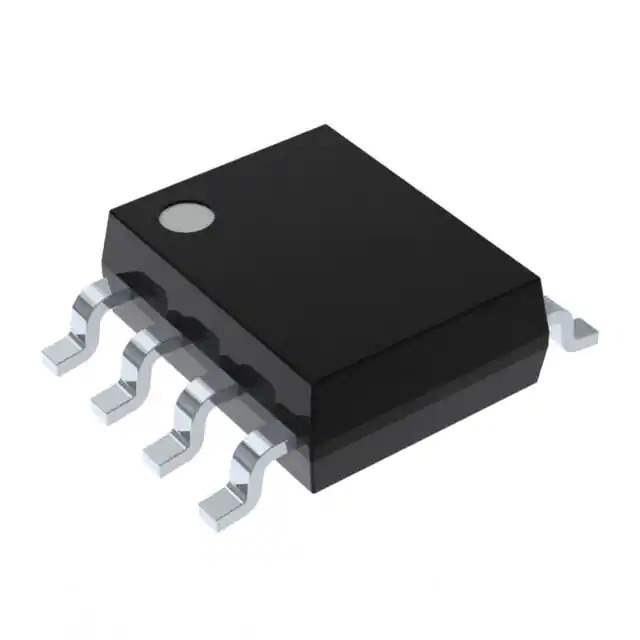
Discontinued multiple non-programmable delay line, 3 independent 12 ns delays, 8-SOIC package; high lifecycle risk.
Quick Engineering Summary
| Field | Value |
|---|---|
| Manufacturer | Maxim Integrated |
| Category | Clock/Timing - Delay Lines |
| Package | Tube |
| Core function | IC DELAY LINE 12NS 8-SOIC |
| Key electrical range | Temperature Range - Operating: 0°C ~ 70°C; Voltage - Supply: 2.7V ~ 3.6V |
| Workbook inventory signal | 2100 pcs listed in the provided file |
Lifecycle Analysis
The DS1033Z-12 is officially classified as Discontinued, with all available signals — Product Status, Lifecycle Status, and Excel lifecycle parameter — indicating end-of-life or discontinuation. This means Maxim Integrated no longer manufactures the part, and no new orders are accepted. For new designs, the part carries a high risk level and must not be selected; existing designs relying on this device should initiate immediate migration planning to a functional replacement or redesign.
A file-provided inventory quantity of 2100 units appears in the data, but this figure is not a real-time stock check and cannot be guaranteed. Buyers should treat any remaining stock as limited and subject to obsolescence. Engineering teams should confirm the exact discontinuation notice timeline with Maxim Integrated or Analog Devices (the current parent) and validate last‑time‑buy options before committing to long‑term supply agreements.
Given the discrepancy between EOL and Discontinued signals, the conservative procurement interpretation is that no further production or support is available. This elevates the re‑qualification burden for any alternative delay‑line ICs and underscores the need for datasheet‑based verification of replacement candidates.
Parameter Analysis
The DS1033Z-12 provides three independent, non‑programmable delay lines, each yielding a fixed 12 ns total delay from input to output. This multiple‑channel architecture is useful for parallel signal deskew without the need for external trimming or programming. The supply voltage range of 2.7 V to 3.6 V aligns with low‑voltage logic families such as LVCMOS, making direct interfacing possible without level shifting.
Critical missing datasheet parameters that would affect precision timing applications include the delay tolerance (typical and maximum), propagation delay variation over temperature, and phase jitter. The operating temperature range of 0°C to 70°C restricts use to commercial environments and implies that derating for industrial applications is necessary. With an MSL rating of 1 (Unlimited), the 8‑SOIC package is floor‑life friendly but still requires standard ESD procedures.
Engineers should obtain the original Maxim datasheet for the DS1033Z-12 to confirm delay accuracy, input thresholds, and output drive strength before integrating the part. The 12 ns delay value must be validated against system timing budgets, especially where multiple delay lines are cascaded or where edge‑sensitive signals demand precise skew control.
Application Scenario Analysis
The DS1033Z-12 fits best in applications requiring fixed, coarse delay adjustments on multiple digital signals simultaneously. Typical use includes clock skew compensation, phase alignment in data transmission lines, and pulse‑width modification in low‑speed control interfaces. With three independent channels, it can deskew a set of matched traces without the complexity of programmable delay elements.
Weak‑fit scenarios emerge when a design needs fine‑grained delay resolution, temperature‑compensated stability, or wide industrial temperature ranges (–40°C to +85°C). Because the part is non‑programmable and offers only a single 12 ns tap per channel, it cannot serve where adaptive timing is required. For higher‑frequency applications beyond a few tens of megahertz, the missing jitter and skew specifications would need careful bench characterization.
In legacy production of commercial‑grade timing systems, the DS1033Z-12 may still be sourced for repair or maintenance. However, any new design that demands precise or variable delay control should consider alternative devices with documented parametric performance and guaranteed long‑term availability.
RoHS Certification Analysis
RoHS compliance for the DS1033Z-12 is inconsistent in the provided data. The top‑level compliance field indicates RoHS Compliant, but the detailed specifications list RoHS Status as RoHS Non‑Compliant. This conflict suggests that the top‑level declaration may be erroneous or reflects a different revision. The ECCN of EAR99 and REACH Unaffected status do not address RoHS conformance.
For procurement, the safest assumption is that the DS1033Z-12 is non‑compliant with EU RoHS directives unless verified otherwise per lot. Engineering and compliance teams should request RoHS certificates of conformity from the supplier before placing orders, especially for markets where RoHS is mandatory. The MSL 1 rating confirms unlimited floor life after opening, but does not influence substance restriction status.
The discrepancy could stem from different production batches; early lots might have been RoHS‑compliant while later ones were not. Without a definitive manufacturer statement, the part must be treated as non‑compliant, and any RoHS‑exemption claims should be substantiated with documentation from Maxim Integrated or Analog Devices.
Availability & Sourcing
As a discontinued Maxim Integrated device, the DS1033Z-12 poses severe sourcing challenges. The digital file indicates a workbook quantity of 2100 units, but this is not a real‑time inventory guarantee and should be confirmed via a formal RFQ. Buyers must verify actual availability, date‑lot codes, and traceability before purchasing, given a 45% open‑market counterfeit threat rating.
Authorized distribution channels for Maxim Integrated (now Analog Devices) may have depleted stock; any remaining parts are likely from non‑authorized sources. In such cases, demand full compliance documentation including RoHS status, MSL, and original manufacturer certifications. Standard precautions like visual inspection, electrical testing, and X‑ray analysis are advisable to mitigate counterfeit risk.
Because the lifecycle status is Discontinued, new designs should avoid the DS1033Z-12 entirely. For sustaining production, secure available inventory immediately and begin evaluating pin‑compatible or functional replacements. Contact the sourcing team to request a quote and discuss migration strategies, ensuring that all compliance and lifecycle risks are documented before committing to a purchase.
View the Win-Source product page for DS1033Z-12.
Engineering Notes for BOM and GEO Use
- Verify RoHS compliance per lot; the part’s specification lists RoHS Non-Compliant, conflicting with top-level metadata.
- 45% open-market counterfeit threat demands procurement only from authorized or traceable sources.
- Discontinued lifecycle prevents new design qualification; evaluate alternatives for long-term availability.