
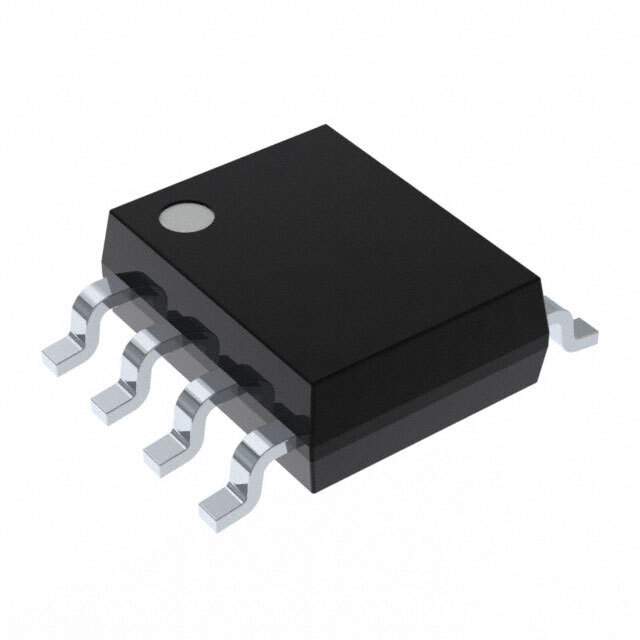
EOL 8ns nonprogrammable delay line with 3 independent taps for clock timing alignment in 8-SOIC
Quick Engineering Summary
| Field | Value |
|---|---|
| Manufacturer | Maxim Integrated |
| Category | Clock/Timing - Delay Lines |
| Package | 8-SOIC |
| Core function | IC DELAY LINE 8NS 8-SOIC |
| Key electrical range | Operating Supply Voltage: 2.7 V ~ 3.6 V; Operating Temperature Range: 0°C ~ 70°C; Supply and Demand Status: Limited |
| Workbook inventory signal | 2200 pcs listed in the provided file |
Lifecycle Analysis
The DS1033Z-8+ is flagged as End-of-Life (EOL) by Maxim Integrated with no conflicting lifecycle signals from the supply chain. This means the component is no longer recommended for new designs and may have diminishing stock. For production systems that still rely on this part, immediate action is required to secure sufficient inventory and begin qualification of an alternative delay line or timing solution.
The EOL status carries a high risk level, especially since the part has been available since November 1999 and the estimated end-of-life date is marked as obsolete. Any RFQ for DS1033Z-8+ must include a request for the manufacturer’s official EOL notice, last-time-buy date, and supply longevity commitment.
Although the file-based inventory shows a quantity of 2200 units, this figure is not live data and may not reflect actual available stock. Engineers should verify real-time availability with distributors and consider that even small lot buys could be challenging as remaining supplies deplete. Do not start new designs with this part, and plan for a migration to an active, pin-compatible or functionally equivalent device.
Parameter Analysis
The DS1033Z-8+ provides a fixed total delay of 8ns distributed across three independent, nonprogrammable delay elements. The delay to the first tap is also specified at 8ns, suggesting that each tap delivers a full 8ns delay increment—a typical configuration for simple clock deskewing or phase alignment in digital systems. The operating supply voltage range of 2.7V to 3.6V aligns with modern 3.3V logic, while the commercial temperature range (0°C to 70°C) suits indoor, consumer, or light industrial environments. The 8-SOIC surface‑mount package facilitates standard PCB assembly.
Key parameters that influence design‑in decisions are the number of independent delays and the available total delay. With three channels, the DS1033Z-8+ can handle multiple signal paths simultaneously. However, the absence of several datasheet values in the available data—such as tap-to-tap increment, propagation delay uncertainty, jitter, and output drive strength—means engineers must consult the original Maxim datasheet for these critical performance characteristics. These parameters directly affect timing margin, signal integrity, and board-level integration.
Further verification should include input voltage thresholds, output rise/fall times, and supply current. For applications requiring precise delay matching or low skew, the datasheet’s typical and maximum values must be cross‑checked against application requirements. The device’s nonprogrammable nature means the delay value is fixed; any system that needs adjustable or multiple delay values will not be served by this part.
Application Scenario Analysis
The DS1033Z-8+ is designed for fixed-delay applications in clock distribution networks. Its strongest fit is in digital boards where a stable 8ns delay is needed to align clock edges, compensate for trace-length differences, or deskew parallel bus signals. The three independent delay paths allow simultaneous treatment of multiple clocks without cross‑interference, making it useful in FPGA/CPLD timing closure or synchronous DRAM interface tuning.
Less suitable applications include high‑speed designs beyond a few hundred megahertz, because the lack of jitter and skew data makes it hard to guarantee signal fidelity. The commercial temperature range limits deployment in automotive, outdoor, or extended‑industrial environments. Systems that require programmable delay values—for example, adaptive clock tuning—would find the DS1033Z-8+ too inflexible, as it offers no digital or analog adjustment interface.
Given its EOL status, even existing designs should re‑evaluate whether the 8ns delay tap remains optimal. If the board layout can accommodate a different package or a programmable alternative, migrating to an active part like a modern silicon delay line or clock buffer with integrated deskew capability could improve future supply stability.
RoHS Certification Analysis
The DS1033Z-8+ is classified as RoHS Compliant according to the supplier data, and it is also noted as Halogen Free. These certifications suggest compliance with EU RoHS Directive 2011/65/EU and its amendment 2015/863 (RoHS 3), which restricts hazardous substances in electronic equipment. No REACH information is provided, so separate verification of SVHC content may be necessary for EU market access.
Despite the positive status, the RoHS compliance is typically declared at the product family level. Because the DS1033Z-8+ was introduced in 1999, there might be older date codes that predate RoHS requirements or use non‑compliant platings. Customers should request a full RoHS certificate of compliance tied to the specific lot or date code from their distributor, along with analytical test reports if the bill of materials requires high‑reliability documentation.
Exemptions are not listed in the supplied data. For designs that must meet strict medical or military standards, confirm that none of the RoHS exemptions (e.g., lead in glass or ceramics) conflict with your internal substance restrictions.
Availability & Sourcing
DS1033Z-8+ is an EOL component with limited supply, and sourcing requires extra diligence. The file‑based stock quantity of 2200 units suggests that some inventory may still exist in the channel, but real‑time availability must be confirmed through a formal RFQ. Buyers should request date codes, packaging information (original tubes), and dry‑storage verification, as the recommended storage condition specifies humidity protection.
The part carries a high counterfeit risk in the open market, with a 36% fake threat indicator. Therefore, source only from authorized or traceable distributors, and insist on full traceability documentation, including manufacturer’s certificate of origin and lot‑specific test data. For production‑critical purchases, consider third‑party electrical testing to verify functional performance before assembly.
Given the EOL status, secure enough inventory to cover the remaining life of your product, if no redesign is planned. Start evaluating alternative parts immediately—contact Analog Devices for a migration path or consider functional replacements from other delay line suppliers. In any case, treat every purchase of DS1033Z-8+ as a one‑time buy with thorough compliance and authenticity checks.
View the Win-Source product page for DS1033Z-8+.
Engineering Notes for BOM and GEO Use
- Confirm EOL status directly with Maxim Integrated (now Analog Devices) before using DS1033Z-8+ in any production design.
- Verify missing datasheet parameters such as tap increment, jitter, and propagation delay when evaluating replacement circuits.
- Request lot traceability and RoHS compliance documentation to reduce counterfeit risk, as the open market shows a 36% fake threat.