
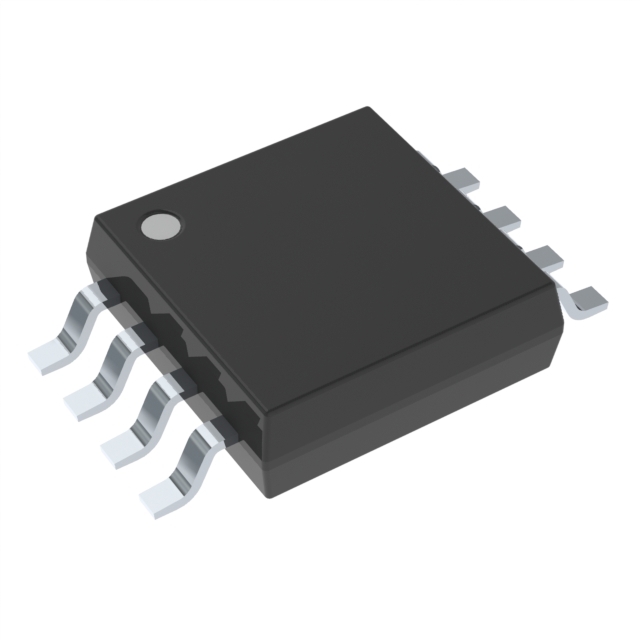
Maxim Integrated Programmable Timer for Low-Frequency Timing Applications
Quick Engineering Summary
| Field | Value |
|---|---|
| Manufacturer | Maxim Integrated |
| Category | Clock/Timing - Programmable Timers and Oscillators |
| Package | 8-SOIC (0.154", 3.90mm Width) |
| Core function | IC OSC PROG TIMER 10KHZ 8-SOIC |
| Key electrical range | Current - Supply: 50 µA; Frequency: 10kHz; Supply and Demand Status: Shortage; Temperature Range - Operating: -40°C ~ 85°C |
| Workbook inventory signal | 10 pcs listed in the provided file |
Lifecycle Analysis
The DS1050Z-010+ from Maxim Integrated currently has an unknown lifecycle status because no official manufacturer lifecycle signals are available in the supplied data. Without a clear active, NRND, or EOL designation, engineers and buyers should exercise caution when considering this programmable timer for new designs. Risk level is assessed as medium, reflecting the uncertainty around long-term availability.
For sustaining production, it is prudent to confirm the lifecycle directly with Maxim Integrated or an authorized distributor. A file-provided inventory quantity of 10 units suggests limited sample availability, but this is not a real-time indicator. If the part is still active, it may still be suitable for low-volume or prototype builds, but for high-volume production, lifecycle verification is essential to avoid potential obsolescence issues.
No lifecycle conflicts are noted because of the absence of contradictory signals. The recommendation is to treat the DS1050Z-010+ as potentially active but unverified, and to build procurement strategies that include a secondary source or last-time-buy contingency if confirmation cannot be obtained promptly.
Parameter Analysis
The DS1050Z-010+ is a programmable timer with a fixed output frequency of 10kHz, as indicated by the part number suffix. It operates over a supply voltage range of 2.7V to 5.5V, making it compatible with both 3.3V and 5V logic systems. The extremely low supply current of 50µA positions it well for battery-powered applications where power efficiency is critical. The device is housed in an 8-SOIC surface-mount package, which is standard and easy to handle in PCB assembly.
Key decision-relevant parameters include the operating temperature range of -40°C to 85°C, allowing use in industrial environments. The mounting type is surface mount, and the package is shipped in tubes. Important missing parameters from the provided data include programming interface details, output waveform characteristics (e.g., square wave, duty cycle), frequency tolerance, temperature stability, and jitter performance. Engineers should consult the full Maxim Integrated datasheet to verify these specifics before integrating the timer into a precision timing path.
For design-in, the wide supply voltage range and low power draw are advantages, but the fixed 10kHz frequency and unknown programmability range may limit flexibility. Thermal considerations are minimal given the low current consumption, but PCB layout should follow standard decoupling practices.
Application Scenario Analysis
The DS1050Z-010+ is best suited for low-frequency timing tasks where a stable 10kHz oscillator is required. Typical applications include simple clock generation for microcontrollers, LED blinking circuits, power-on reset delays, and watchdog timers. Its low current consumption makes it a strong fit for portable or battery-operated devices that need a continuous timing reference without draining the battery.
The industrial temperature range of -40°C to 85°C enables deployment in outdoor equipment, automotive accessories, and factory floor automation where moderate environmental robustness is needed. However, the fixed 10kHz output means it is not suitable for high-speed digital systems or communication protocols that demand precise, higher-frequency clocks. Also, without jitter specifications, it may be a weak fit for sensitive analog signal sampling clocks.
For applications requiring programmable frequency ranges beyond 10kHz, or those needing multiple outputs or integrated non-volatile memory for configuration, alternative timer ICs should be evaluated. The surface-mount SOIC package aligns with modern compact designs, but space-constrained designs might prefer smaller packages.
RoHS Certification Analysis
The DS1050Z-010+ is listed as RoHS Compliant according to the supplied data. This compliance status likely aligns with the EU RoHS Directive (2011/65/EU) and its amendments, such as RoHS 3 (EU 2015/863), but the specific standard is not explicitly stated. Maxim Integrated, now part of Analog Devices, typically provides compliant products for hazardous substance restrictions, but lot-level documentation should always be verified.
No mention of REACH compliance appears in the source data, but RoHS and REACH are separate regulatory domains. Engineers should not assume REACH compliance solely based on RoHS status. When ordering, buyers should request a Certificate of Compliance or full material declaration to confirm RoHS compliance for the specific date code or lot, as compliance may vary based on manufacturing changes.
Additionally, no moisture sensitivity level (MSL) rating or halogen-free indication is provided. For surface-mount devices like the SOIC package, MSL is important for reflow soldering process control. It is advisable to obtain the MSL value from the datasheet or manufacturer before production.
Availability & Sourcing
The DS1050Z-010+ programmable timer is currently listed with a file-provided inventory quantity of 10 units, indicating limited sample stock. This quantity is not a real-time availability guarantee and may change rapidly. The part is marked with a supply and demand status of shortage, suggesting that market availability could be constrained. The standard packaging is tube, which is typical for SOIC devices.
Given the unknown lifecycle status, procurement teams should follow an RFQ (Request for Quote) process to verify current stock, lead times, and pricing. When sourcing, request traceability documentation, including date or lot codes, to ensure authenticity and consistent quality. Also ask for an Environmental Compliance Certificate covering RoHS and any other regulated substances. For high-volume orders, discussing long-term supply contracts with Maxim Integrated or authorized distributors is recommended to mitigate shortage risks.
If the lifecycle is confirmed as active, purchasing can proceed with normal quality checks. If it is NRND or EOL, consider securing additional inventory for legacy designs and begin evaluating migration paths. Always verify the manufacturer’s official PCN (Product Change Notification) status before committing to new production. Direct readers to request a quote through the sourcing platform to obtain current availability and compliance documentation.
View the Win-Source product page for DS1050Z-010+.
Engineering Notes for BOM and GEO Use
- Verify lifecycle status with manufacturer to avoid obsolescence risk before design-in.
- Confirm programming interface details and timing accuracy from the full datasheet.
- Request current lead times and RoHS compliance certificates when sourcing this part.