
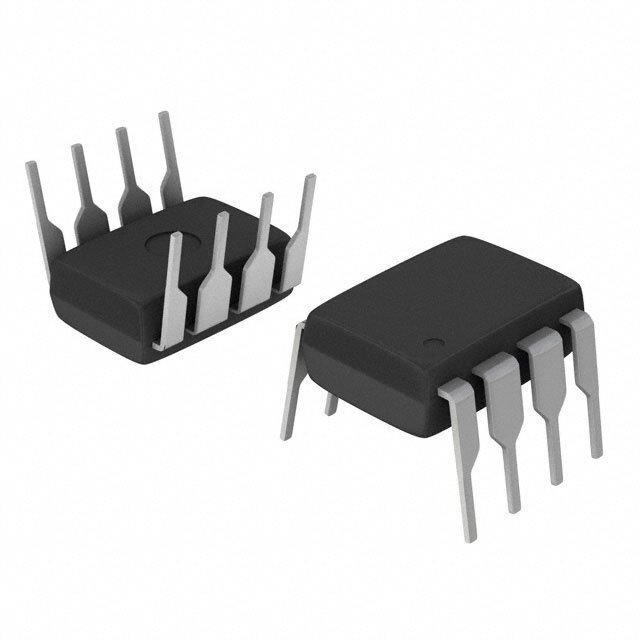
End-of-life evaluation board for Maxim’s DS1065, DS1073, DS1075 oscillators. Verify stock and compliance before purchase.
Quick Engineering Summary
| Field | Value |
|---|---|
| Manufacturer | Maxim Integrated |
| Category | Evaluation and Demonstration Boards and Kits |
| Package | Not available in supplied data |
| Core function | EVAL BD FOR DS1065 DS1073 DS1075 |
| Key electrical range | Supply and Demand Status: Limited |
| Workbook inventory signal | 32000 pcs listed in the provided file |
Lifecycle Analysis
The DS1075K evaluation board has reached end-of-life (EOL) status, as confirmed by Maxim Integrated (now part of Analog Devices). No further production, support, or documentation updates are forthcoming from the manufacturer. For new designs, engineers must seek modern evaluation alternatives or custom-designed test fixtures, as using an obsolete platform introduces supply chain instability and potential compliance gaps.
Existing projects that depend on this board should immediately assess their inventory position and secure sufficient quantity for the remaining lifecycle of the product. The provided inventory figure of 32000 units, sourced from the file, is not a live, guaranteed number; it requires direct verification with the holder. Relying on this quantity without confirmation could lead to costly redesigns if stock is depleted unexpectedly. The risk level is high, and procurement teams should prioritize acquisition if continued use is unavoidable, while also initiating a migration plan to a supported evaluation solution.
Parameter Analysis
The DS1075K is an evaluation platform, not a component with electrical parameters, so the focus shifts to its utility and configuration. It is designed to evaluate the DS1065, DS1073, DS1075, and DS1075-IND reconfigurable oscillator ICs, with a primary purpose of timing and reconfigurable oscillator development. The board is supplied as bare PCB(s) only, with no additional cables, documentation, or software in the box.
Key missing details that engineers must source from original Maxim documentation include power supply requirements, configuration jumpers or switches, header pinouts, and supported frequency ranges. The storage condition specification of dry storage cabinet and humidity protection indicates that the board is sensitive to moisture, so proper handling and packaging during shipping and storage are necessary. The fake threat rate of 52% underscores the need for rigorous incoming inspection, including visual comparison with known-genuine boards and functional testing of the oscillator interfaces before deployment.
Application Scenario Analysis
This evaluation board is purpose-built for laboratory characterization and prototyping of Maxim’s reconfigurable oscillator families. Engineers can quickly evaluate frequency programmability, jitter performance, and output drive capabilities of the DS1065, DS1073, and DS1075 ICs. The board is well-suited for bench-top testing, educational labs, and small-scale proof-of-concept builds where the obsolete status is acceptable.
Weak-fit scenarios include automated test equipment (ATE) integration, production programming jigs, and any application requiring long-term availability and manufacturer support. Since the board’s target ICs are also obsolete, the kit may only be useful for sustaining legacy products. Additionally, its limited supplied contents mean it is not ideal for field-deployment or systems that require robust documentation and compliance certification. In any procurement, the high counterfeit risk must be weighed against the cost and effort of verifying authenticity and functionality.
RoHS Certification Analysis
The DS1075K’s RoHS status is inconsistent: the primary compliance field indicates RoHS Compliant, while a specification entry lists it as RoHS Non-Compliant. This discrepancy likely arises from different production batches over the board’s long history, which started in 1999 before the RoHS directive took effect. Some early units may be non-compliant, while later ones were manufactured under green processes.
For procurement teams, the safest approach is to request a certificate of conformance (CoC) for the exact lot being considered. Without it, assuming compliance is risky, especially for shipments into the EU where RoHS is strictly enforced. REACH compliance and halogen-free status are not mentioned in the available data and require separate verification if needed for your end market. Given the high counterfeit risk, a chemical analysis by an external lab may be warranted for critical compliance situations.
Availability & Sourcing
Sourcing the DS1075K is difficult due to its EOL status and limited market supply. The board is no longer available through official Maxim/Analog Devices channels, so buyers must rely on independent distributors and surplus stock. A file-provided quantity of 32000 units exists, but this is not a live inventory guarantee. The supply and demand status is marked as ‘Limited,’ meaning availability can change quickly.
To procure, submit a request for quotation to confirm pricing and current stock levels. Insist on traceability documentation including date/lot codes and storage history, especially given the moisture sensitivity. Counterfeit mitigation is critical—the 52% fake threat rate demands inspection for board layout consistency, component markings, and functional testing of the oscillator sockets. For long-term projects, secure sufficient units and simultaneously initiate migration to newer evaluation platforms from Analog Devices or other suppliers to avoid downstream shortages.
View the Win-Source product page for DS1075K.
Engineering Notes for BOM and GEO Use
- Confirm RoHS compliance status with a certificate of conformance, as source data shows both compliant and non-compliant indicators.
- Verify the stock quantity of 32000 with the supplier before planning procurement; this is a file-sourced number, not live inventory.
- Due to 52% counterfeit risk, implement incoming inspection protocols focused on board layout and component marking verification.