
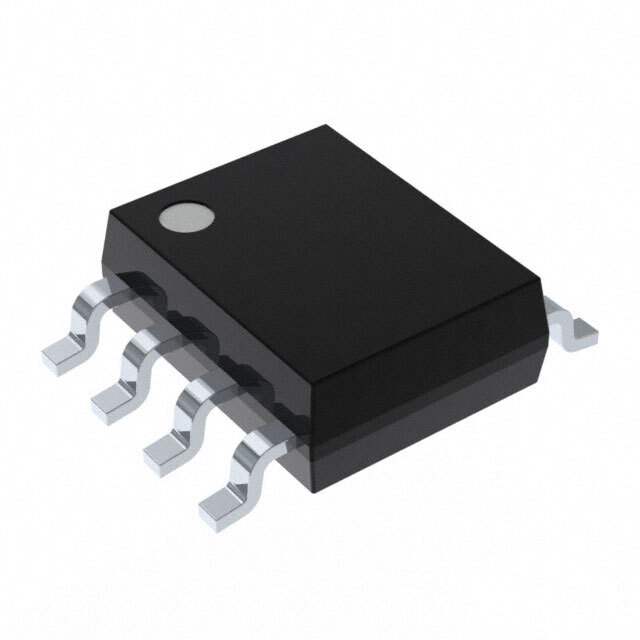
Obsolete dual fixed-frequency oscillator; verify stock and compliance before procuring for legacy designs.
Quick Engineering Summary
| Field | Value |
|---|---|
| Manufacturer | Maxim Integrated |
| Category | Clock/Timing - Programmable Timers and Oscillators |
| Package | 8-SOIC |
| Core function | IC OSC DUAL FX FREQ 803MHZ 8SOIC |
| Key electrical range | Frequency: 803MHz; Operating Supply Current: 35mA; Supply and Demand Status: Balance; Supply Voltage - Operating: 4.75 V to 5.25 V |
| Workbook inventory signal | 1160 pcs listed in the provided file |
Lifecycle Analysis
The Maxim Integrated DS1075Z-803 is flagged as Obsolete (EOL) based on a specification entry, although the lifecycle metadata reports 'Unknown'. This contradiction requires careful attention. For engineers maintaining legacy products, this means the part may no longer be procurable through standard distribution channels. New designs should avoid this component entirely and instead select an active, production-ready alternative.
The reported inventory of 1160 units from file data is not real-time and may not reflect actual available stock. Before committing to a design or ordering materials, confirm the current lifecycle status and remaining availability directly with the manufacturer or an authorized distributor. Given EOL status, a last-time buy may be the only reliable procurement path. Plan for end-of-life management and begin evaluating a functional replacement if ongoing production is required.
Parameter Analysis
The DS1075Z-803 operates at a fixed frequency of 803MHz with dual outputs, as indicated in the brief description. The supply voltage range is 4.75V to 5.25V, and the typical operating current is 35mA, resulting in roughly 175mW power dissipation. The 8-SOIC package is surface mount and widely compatible with standard PCB assembly processes. The commercial temperature range (0°C to 70°C) limits the part to non-industrial environments without special cooling.
Critical parameters missing from the provided data include output logic type (CMOS, LVDS, or other), jitter performance, frequency stability, rise/fall times, and duty cycle. These specifications are essential for signal integrity analysis and for qualifying a replacement part. Without the full Maxim datasheet, an accurate fit-form-function substitution cannot be assured. Engineers should retrieve the original datasheet to verify these details before committing the part to a design.
Application Scenario Analysis
As a fixed-frequency oscillator, the DS1075Z-803 is designed to provide a stable 803MHz clock signal, likely for driving high-speed digital logic, communication interfaces, or data converters. The dual output suggests it can distribute the clock to two separate loads without external buffering. The part is well-suited for legacy telecom equipment, networking hardware, or test instrumentation that originally specified this exact oscillator.
Given its obsolete status, the DS1075Z-803 is not recommended for new product introductions. Its fixed frequency eliminates any software configurability, making it less flexible than modern programmable oscillators. For a repair or low-volume sustaining build, it may still be viable if genuine stock can be located. However, the high counterfeit risk (69% open market threat) and scarce compliance data make it a weak fit for any high-reliability or new-compliance project. Engineers should consider migrating to an active programmable oscillator that can be programmed to 803MHz if a drop-in replacement is unavailable.
RoHS Certification Analysis
RoHS compliance information for the DS1075Z-803 is contradictory. The structured compliance field indicates 'RoHS Compliant', but a specification attribute explicitly states 'RoHS Non-Compliant'. This discrepancy must be resolved before incorporating the part into products destined for the EU or other regulated markets. The part does not carry explicit MSL, lead-free, or halogen-free data, so environmental conformance cannot be assumed.
Since the component is from an older generation (obsolete), it is possible that it was manufactured before RoHS directives were fully enforced, or that later qualified lead-free variants exist. To mitigate risk, request a valid RoHS certificate, such as a test report or manufacturer declaration, from the supplier. Also verify REACH compliance if needed. Without such documentation, treat the part as non-compliant for new designs. For legacy repairs in non-regulated regions, compliance may be less critical, but it remains a procurement risk.
Availability & Sourcing
Stock availability for the DS1075Z-803 is limited. The provided inventory of 1160 units is a file-level snapshot and not a real-time guarantee. The part is shipped in tube/rail packaging, stored under dry conditions with humidity protection. The open market for this part carries a high counterfeit risk rating of 69%, so sourcing from unauthorized or unverified suppliers is strongly discouraged.
To obtain this component, submit a request for quote (RFQ) through a reputable distributor who can verify date codes, lot codes, and traceability back to Maxim Integrated (now Analog Devices). Stress the need for compliance documentation (RoHS, REACH) and request photos of the physical stock if possible. Given the EOL status, act promptly to secure what may be the last available units. For ongoing production, parallel development of a replacement solution should be a priority. Direct all inquiries to a trusted sourcing partner.
View the Win-Source product page for DS1075Z-803.
Engineering Notes for BOM and GEO Use
- Confirm EOL status and last-time buy date directly with Maxim Integrated (now Analog Devices) before committing to procurement.
- Request a valid RoHS certificate from the distributor; supplier data shows contradictory compliance information.
- Verify clock output specifications (jitter, output type, duty cycle) from the original datasheet when considering replacement options.