
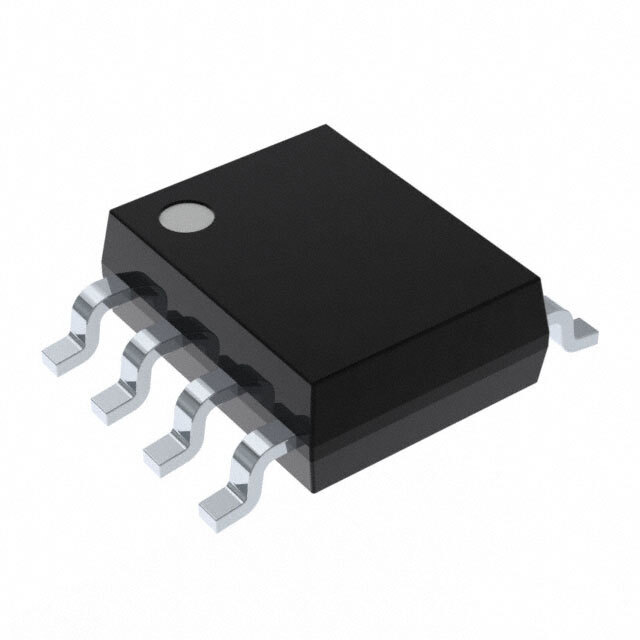
Dual Fixed-Frequency Oscillator – 6.09kHz to 50MHz, Surface Mount, 2.7V–3.6V
Quick Engineering Summary
| Field | Value |
|---|---|
| Manufacturer | Maxim Integrated |
| Category | Clock/Timing - Programmable Timers and Oscillators |
| Package | 8-TSSOP, 8-MSOP (0.118", 3.00mm Width) |
| Core function | IC OSC DUAL FX FREQ 50MHZ 8TSSOP |
| Key electrical range | Current - Supply: 20 mA; Frequency: 6.09kHz ~ 50MHz; Supply and Demand Status: Shortage; Temperature Range - Operating: -40°C ~ 85°C |
| Workbook inventory signal | 185 pcs listed in the provided file |
Lifecycle Analysis
The lifecycle status of the DS1077LU-50+ from Maxim Integrated is currently unknown based on the supplied data. No lifecycle signals, such as active, NRND, EOL, or discontinued, were provided. This ambiguity introduces medium procurement risk. Engineers evaluating this part for new designs must treat it with caution: request a formal lifecycle confirmation from Maxim Integrated or an authorized distributor before design-in. Without a clear active status, long-term availability is not assured.
For sustaining production, the lack of lifecycle information means you should consider qualification of an alternate source or functionally compatible device in parallel. The file-provided inventory quantity of 185 units is a static snapshot and cannot be relied upon as real-time availability. Any existing stock should be verified through a quote request.
Where lifecycle conflicts exist—even if not surfaced here—conservative procurement language is essential. The manufacturer may have consolidated part numbers or shifted focus to newer families. Always cross-reference with the latest Maxim Integrated product roadmap and PCN alerts to avoid unexpected last-time-buy situations.
Parameter Analysis
The DS1077LU-50+ is a dual fixed-frequency oscillator with a programmable frequency range from 6.09 kHz to 50 MHz. This wide span makes it suitable for generation of both low-speed and moderate-speed clock references. The maximum frequency of 50 MHz defines the upper timing bound, but designers must verify the actual output frequency accuracy and the method of frequency setting (e.g., internal dividers, external pins) from the manufacturer datasheet.
Supply voltage ranges from 2.7 V to 3.6 V, compatible with typical 3.3 V logic systems but requiring precise regulation to avoid jitter degradation. Supply current is listed at 20 mA, which is moderate for a dual-output oscillator; thermal considerations in the 8‑TSSOP package should be evaluated, especially at elevated ambient temperatures up to +85 °C. The 8‑uMAX/uSOP (MSOP) surface-mount package demands careful PCB layout to minimize lead inductance and crosstalk between the two output channels.
Critical missing parameters that must be verified from the Maxim Integrated datasheet include: output logic type (CMOS, LVCMOS, etc.), output drive strength, rise/fall times, cycle-to-cycle jitter, phase noise, startup time, and the exact programming interface. Without this data, integration into high‑reliability or EMI‑sensitive designs carries risk.
Application Scenario Analysis
As a dual fixed-frequency oscillator in the clock/timing category, the DS1077LU-50+ fits applications requiring two independent but synchronized clock references from a single IC. Strong-fit scenarios include: providing master clock and a divided clock for microcontrollers and peripherals, generating dual sample rates in data converters, and clocking multiple digital logic blocks in embedded systems where board space is constrained. The 50 MHz upper limit supports moderate-speed SPI, I2C, and UART baud rate generation, as well as basic FPGA or CPLD clocking.
Weak-fit scenarios involve jitter‑sensitive communication links (e.g., Gigabit Ethernet, PCIe) where phase noise and jitter specifications are paramount and the DS1077LU-50+ datasheet must be critically reviewed. Also, if only a single frequency output is needed, a simpler single‑output oscillator may be more cost‑effective. Applications requiring spread‑spectrum modulation or very low power (<1 mA) are not clearly supported by the provided data.
Industrial temperature range qualifies it for use in outdoor, automotive (non-safety), and factory-floor equipment. Always confirm that the output voltage levels and loading match the target logic family; the 8‑uMAX/uSOP package is suitable for automated assembly but may be less common than larger packages, which could affect second‑source availability.
RoHS Certification Analysis
The DS1077LU-50+ is listed as RoHS Compliant according to the provided data. However, the specific RoHS directive revision (e.g., EU 2011/65/EU, EU 2015/863) is not stated. In the absence of a standard version, engineers should request the manufacturer’s Certificate of Compliance or a full material declaration to ensure it meets the latest RoHS 3 requirements, which include the four additional phthalates.
No REACH, lead-free, halogen-free, or MSL (Moisture Sensitivity Level) data is supplied. While RoHS compliance does not automatically imply REACH SVHC‑free status, the part is typically considered safe for general EU market entry. For high‑reliability or medical applications, obtain an IPC-1752 material declaration.
Lot‑level compliance may differ: a declaration that covers the part family does not guarantee every batch is identical. If your assembly process is lead‑free, confirm that the termination finish is compatible (e.g., matte tin) and that the peak reflow temperature aligns with the package limits. For obsolete or unknown‑lifecycle parts, compliance documentation may be harder to obtain; inquire before procurement.
Availability & Sourcing
The DS1077LU-50+ is file‑listed with a quantity of 185 units; this figure is a static workbook entry and not a real‑time stock guarantee. For current availability, request a quote through authorized channels. Given the lifecycle is unknown, any purchase should be preceded by a formal lifecycle verification directly from Maxim Integrated or an authorized distributor. The part is supplied in tube packaging (standard for 8‑TSSOP), and traceability should be confirmed to avoid counterfeit risk, particularly for non‑active parts.
Sourcing teams should request date/lot code information and a Certificate of Conformance with each order. For production builds, evaluate whether 185 units is sufficient to cover your forecast, and consider last‑time‑buy strategies if the part is later confirmed as NRND or EOL. The shortage status noted in the data suggests demand may outpace supply in the open market; therefore, secure inventory quickly if the design must use this exact oscillator.
Because the part number includes a “+” suffix, it may denote a lead‑free or RoHS‑compliant variant; confirm with the manufacturer that this is the correct ordering code. When requesting a quote, specify full part number, required quantity, target price range (without sharing actual budget), and compliance documentation needs. Do not commit to new production use until lifecycle and compliance are validated.
View the Win-Source product page for DS1077LU-50+.
Engineering Notes for BOM and GEO Use
- Verify oscillator startup time and phase noise/jitter performance from the DS1077LU-50+ datasheet before finalizing timing-critical designs.
- Supply current is 20 mA typical; design power rails with adequate headroom and verify across the –40°C to +85°C operating range.
- Ensure PCB layout follows Maxim Integrated recommendations for the 8‑uMAX/uSOP package to minimize parasitic capacitance on high‑frequency outputs.