
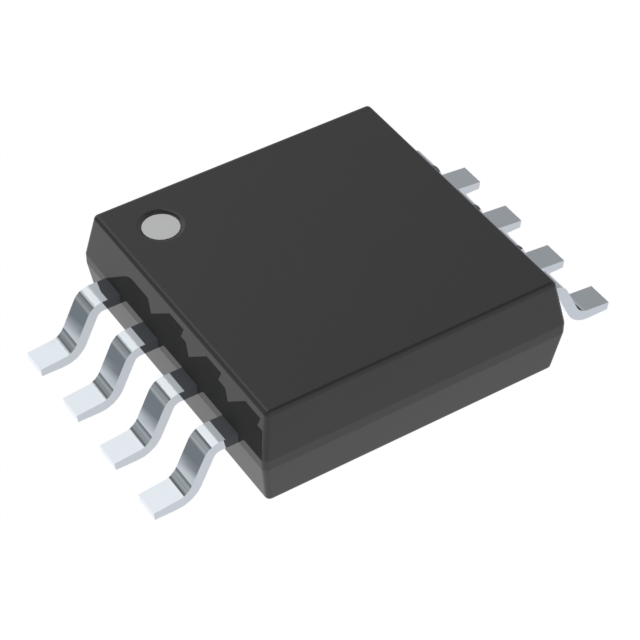
Dual Fixed Frequency Oscillator, 15.2 kHz to 125 MHz, 5V, 8‑SOIC – Maxim Integrated
Quick Engineering Summary
| Field | Value |
|---|---|
| Manufacturer | Maxim Integrated |
| Category | Clock/Timing - Programmable Timers and Oscillators |
| Package | 8-SOIC (0.154", 3.90mm Width) |
| Core function | IC OSC DUAL FX FREQ 125MHZ 8SOIC |
| Key electrical range | Current - Supply: 50 mA; Frequency: 15.2kHz ~ 125MHz; Supply and Demand Status: Shortage; Temperature Range - Operating: -40°C ~ 85°C |
| Workbook inventory signal | 1 pcs listed in the provided file |
Lifecycle Analysis
The lifecycle of the DS1077Z-125+ is not defined in the supplied data. No active, NRND, or EOL signals were found, leaving the status unknown. This creates significant risk for new designs, as the part may be discontinued or subject to long lead times without notice. Engineers must contact Maxim Integrated (now part of Analog Devices) to obtain an official lifecycle statement before including the DS1077Z-125+ in a bill of materials.
For sustaining production, the unknown status demands revalidation. Even if the device is still available, limited file-provided inventory and a shortage designation suggest supply constraints. This may point to a mature product that could transition to NRND or EOL in the near term. Procurement teams should request a last-time-buy notice or a product roadmap from the manufacturer.
Designers of new systems should weigh the risk of using a component with an unconfirmed future. Unless the application is a legacy replacement where no alternative exists, it is prudent to search for actively supported programmable oscillators that offer pin‑compatible footprints or similar functionality with guaranteed long‑term availability.
Parameter Analysis
The DS1077Z-125+ provides two fixed-frequency outputs, with the master oscillator selectable between 15.2 kHz and 125 MHz. This frequency range covers many common clock rates, but the part is not user‑programmable in‑circuit. The required 5 V supply (4.75 V to 5.25 V) limits its use to 5 V logic systems, making it unsuitable for low‑voltage 3.3 V or 1.8 V designs. Supply current is specified at 50 mA, which is moderate; power‑sensitive applications may need to account for thermal dissipation in small enclosures.
Package and mounting are critical for PCB layout. The 8‑SOIC surface‑mount package is widely used, but designers must ensure pad patterns match the datasheet footprint. Operating temperature range of –40 °C to +85 °C is adequate for industrial environments, but derating may be necessary near the extremes if frequency stability is a concern.
Key datasheet parameters are absent from the available data: output waveform type (CMOS, TTL, etc.), frequency accuracy, jitter, rise/fall times, and initial tolerance. These directly affect timing margins and signal integrity. Before integrating the DS1077Z-125+, verify start‑up time, duty cycle, and output drive strength from the full manufacturer datasheet. Also confirm that the dual output frequencies are independent or derived from a single PLL if synchronization matters.
Application Scenario Analysis
The DS1077Z-125+ fits best in legacy 5 V systems that need two fixed clock frequencies. Strong candidates include microcontroller‑based industrial controllers, UART baud rate generators, and timing references for serial communication interfaces. In test equipment, it can provide stable dual‑tone references for calibration or signal generation. Its industrial temperature grade also supports field‑deployed instrumentation.
However, modern battery‑powered or portable designs will find the 5 V requirement and 50 mA current draw problematic. The lack of programmability means it cannot replace configurable clock generators that adjust frequencies via I²C or pin strapping. High‑speed digital designs with strict jitter budgets may need to evaluate phase noise performance beyond the basic frequency range.
Engineers should also consider weak‑fit scenarios: if a design requires only a single clock, the second output may go unused, adding cost. For new 3.3 V systems, alternative parts from the same manufacturer or competitors offer similar functionality with lower voltage operation. Always compare the fully specified DS1077Z-125+ datasheet against application requirements before selection.
RoHS Certification Analysis
The DS1077Z-125+ is listed as RoHS Compliant, indicating compliance with the EU Directive on hazardous substances. The standard is assumed to be EU RoHS (2011/65/EU) or its amendment RoHS 3 (EU 2015/863), though no exact version is stated. This classification typically means the leads are lead‑free and the component does not contain restricted substances above threshold levels.
No additional environmental data is provided, such as REACH SVHC declarations, halogen‑free status, or Moisture Sensitivity Level (MSL). Engineers planning for European markets should request a full material declaration from the supplier to confirm REACH compliance. For high‑reliability applications, lot‑level RoHS certificates are recommended because fabrication process changes can occasionally alter material composition.
If the source data includes no exemptions, it is safe to assume none are claimed, but this should be validated. In multi‑source procurement, verify that the “RoHS Compliant” marking is authentic and not a generic database default. Ask for the manufacturer’s official RoHS statement, especially when the part comes from independent distributors.
Availability & Sourcing
File‑provided inventory shows only one unit of the DS1077Z-125+ available, and the status is flagged as shortage. This figure is not a real‑time stock level; it indicates limited supply at the time of data collection. Engineers and buyers should treat this as a warning that the part may be difficult to source in volume or could be approaching discontinuation.
To procure the DS1077Z-125+, submit a request for quote to verify current lead time, available quantity, and packaging (Tube). Confirm the device’s date and lot codes to ensure shelf‑life compliance if the part has been stored for an extended period. Given the unknown lifecycle, ask for any manufacturer notices such as end‑of‑life announcements or reliability alerts.
For design‑in or production replenishment, first secure confirmation of active lifecycle status. If the part is NRND or EOL, evaluate alternate oscillators that fit the same footprint and electrical specifications. For critical legacy systems, consider a last‑time‑buy while inventory is still accessible. Always request compliance documentation with each batch to avoid counterfeit or non‑RoHS stock.
View the Win-Source product page for DS1077Z-125+.
Engineering Notes for BOM and GEO Use
- Verify lifecycle status with the manufacturer before committing to high-volume production; lifecycle is not confirmed in available data.
- The 5V supply and wide frequency range are ideal for legacy systems, but lack of programmability limits use in modern reconfigurable designs.
- File-provided inventory shows only one unit and a shortage status; secure stock and validate date codes before relying on this part.