
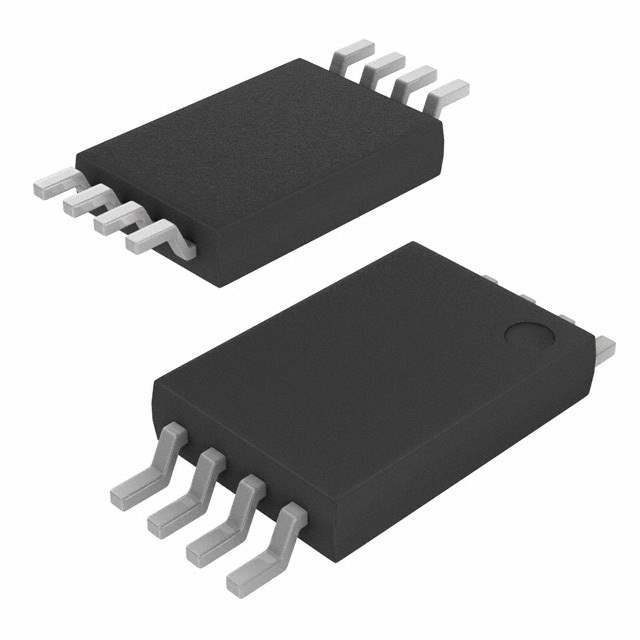
Maxim Integrated DS1081LE+T: EOL spread-spectrum clock generator for LCD panels in 8-TSSOP package.
Quick Engineering Summary
| Field | Value |
|---|---|
| Manufacturer | Maxim Integrated |
| Category | Clock/Timing - Application Specific |
| Package | 8-TSSOP |
| Core function | IC SPREAD SPECT LCD PNL 8-TSSOP |
| Key electrical range | Input: Clock; Maximum Input Frequency: 134MHz; Output: LVCMOS; Supply and Demand Status: Sufficient |
| Workbook inventory signal | 5960 pcs listed in the provided file |
Lifecycle Analysis
The Maxim Integrated DS1081LE+T is confirmed as End-of-Life (EOL) based on multiple lifecycle indicators, including an explicit EOL status and an estimated obsolete date. This alignment increases confidence that the part is no longer recommended for new designs. Engineers should treat the DS1081LE+T as unsuitable for new projects and must instead select functionally equivalent alternatives that are in active production.
For existing production lines that depend on this spread-spectrum clock generator, procurement teams should immediately verify the manufacturer's product discontinuance notice (PDN) to understand last-time buy (LTB) windows and final shipment dates. The high-risk classification reflects the limited availability window and the need to secure sufficient inventory to cover the remaining product lifecycle. Any buffer stock should be purchased only after confirming the LTB terms directly with Maxim Integrated or authorized distributors.
The file-provided quantity of 5,960 units offers a snapshot of potential availability but does not guarantee real-time stock. Actual inventory levels can change rapidly for EOL components, so a formal RFQ is essential to lock in quantities and delivery schedules. Avoiding gray market sources is critical due to the part's elevated counterfeit risk rating.
Parameter Analysis
The DS1081LE+T is a one-circuit spread-spectrum clock generator primarily aimed at reducing EMI in LCD panel applications. It accepts a clock input up to 134 MHz and provides an LVCMOS output, making it compatible with standard digital logic interfaces. The operating supply voltage range of 3 V to 3.6 V and the extended industrial temperature range of -40°C to 125°C allow deployment in harsh environments, provided the system power rail stays within the narrow 3.3 V nominal window. The 8-TSSOP surface-mount package offers a compact footprint suitable for space-constrained display driver boards.
Engineers must pay close attention to the maximum input frequency of 134 MHz, as exceeding this can cause functional failure or degraded spread-spectrum performance. Since the part uses a PLL, parameters such as cycle-to-cycle jitter, output duty cycle, and lock time are critical for signal integrity, but these are not included in the available specifications. The spread-spectrum modulation profile (center versus down-spread, modulation rate) also directly impacts EMI reduction effectiveness and should be verified in the full datasheet before finalizing a design.
Missing datasheet parameters that require verification include jitter specifications, output rise/fall times, power supply rejection ratio (PSRR), and electrostatic discharge (ESD) ratings. Without these, qualifying the part in high-reliability applications or mixed-signal environments introduces risk. It is strongly recommended to obtain the manufacturer’s original datasheet and application notes to close these gaps.
Application Scenario Analysis
The DS1081LE+T is purpose-built for LCD panel applications where spread-spectrum clocking is used to mitigate electromagnetic interference. Its strong-fit scenarios include LCD monitor timing controllers, television display boards, and notebook panel driver electronics, where reducing EMI helps pass regulatory compliance without additional shielding or filtering. The LVCMOS output and industrial temperature range also make it suitable for automotive displays or outdoor digital signage that must operate across wide temperature swings.
The part is less appropriate in systems that require high-frequency accuracy or low jitter, such as high-speed data converters, precision instrumentation, or communication infrastructure. Because spread-spectrum modulation intentionally dithers the clock frequency, it can introduce deterministic jitter that degrades timing margins in sensitive synchronous interfaces. Additionally, applications outside the LCD domain may find limited value in the part’s specific modulation characteristics unless EMI reduction is the primary concern.
Engineers should evaluate whether the spread-spectrum profile of the DS1081LE+T aligns with the target EMI standards (e.g., CISPR, FCC). In multi-rail systems, the 3.3 V supply requirement may necessitate a dedicated regulator, adding cost and board space. Overall, the part’s best fit remains its originally intended role in LCD panel clock generation.
RoHS Certification Analysis
The Maxim Integrated DS1081LE+T is marked as RoHS Compliant according to available supplier data, alongside a halogen-free designation. This indicates that the device meets the fundamental requirements of the EU RoHS directive by restricting hazardous substances such as lead, mercury, cadmium, hexavalent chromium, and certain brominated flame retardants. The halogen-free claim further supports compliance with voluntary industry standards for low-halogen electronics, which is important for environmentally conscious procurement.
However, the exact RoHS directive version is not specified in the provided records. Engineering and compliance teams should verify whether the certification aligns with the current RoHS 3 (EU 2015/863) requirements, which include additional phthalate restrictions. Since the part was introduced in 2007 and is now EOL, it may have been certified under earlier RoHS versions. Where market access or corporate policy mandates RoHS 3, a manufacturer’s certificate of compliance should be obtained for the specific lot.
Lot-level traceability is critical for EOL components because compliance status can drift across different production batches or date codes. Buyers should request full material declarations (FMD) or IPC-1752 reports from the distributor or directly from Maxim Integrated to confirm that the units being sourced meet all applicable environmental regulations. Absent a valid compliance document, alternative sources or substitute parts should be considered.
Availability & Sourcing
Sourcing the DS1081LE+T requires careful due diligence given its EOL status and a reported open-market counterfeit threat rating of 36%. Authorized distributors may still hold limited inventory, but the majority of available stock is likely in the aftermarket. The file-provided quantity of 5,960 units suggests some availability, but this figure is not a real-time guarantee; actual stock levels must be confirmed via a formal request for quotation (RFQ) with detailed batch and date code information.
To mitigate counterfeit and quality risks, procurement teams should mandate full traceability documentation, including original manufacturer certificates of conformance (CoC), date/lot code verification, and evidence of proper storage conditions. The part is supplied on tape and reel, which is ideal for automated assembly but also necessitates inspection for proper moisture sensitivity handling if long-term storage has occurred. Asking for a third-party test report or X-ray inspection for high-value orders adds an additional layer of security.
Given the EOL lifecycle, the recommended action is to secure enough inventory to cover projected demand for the remaining product lifecycle, while simultaneously evaluating and qualifying a replacement device. Buyers should inquire with Maxim Integrated about authorized aftermarket channels or any remaining last-time buy opportunities. For any purchase, verify RoHS compliance and halogen-free status on the offered lots to avoid customs or regulatory issues. Request a quote today to lock in availability and begin the verification process.
View the Win-Source product page for DS1081LE+T.
Engineering Notes for BOM and GEO Use
- Verify the EOL timeline and last-time buy provisions with Maxim Integrated or authorized distributors to avoid supply disruptions.
- Assess the 36% open-market counterfeit risk; insist on traceability, date/lot code verification, and authorized sourcing for production.
- Confirm RoHS compliance level (e.g., EU 2015/863) and halogen-free status through manufacturer certification for global market access.