
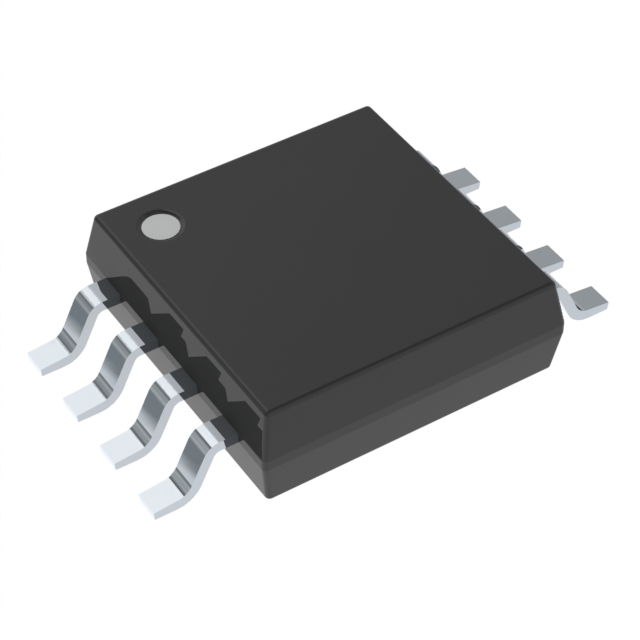
66MHz, 3V-3.6V, 8-SOIC Frequency Synthesizer IC
Quick Engineering Summary
| Field | Value |
|---|---|
| Manufacturer | Maxim Integrated |
| Category | Clock/Timing - Clock Generators, PLLs, Frequency Synthesizers |
| Package | 8-SOIC (0.154", 3.90mm Width) |
| Core function | IC FREQ SYNTH 8SOIC |
| Key electrical range | Differential - Input: No/No; Frequency - Max: 66MHz; Input: Clock; Output: Clock |
| Workbook inventory signal | 1 pcs listed in the provided file |
Lifecycle Analysis
The DS1085LZ-5+ from Maxim Integrated is officially Active, indicating the manufacturer continues to produce and support this part. For new designs, an Active lifecycle status typically means the component is suitable for integration without immediate risk of obsolescence. However, procurement teams should note that the supply and demand status is reported as Shortage, which may reflect market dynamics rather than a manufacturer EOL. While the lifecycle signals align, the shortage flag suggests that availability may be constrained, so securing reliable supply through RFQs and multi-source qualification is prudent. Engineers should also obtain the latest product change notification (PCN) and lifecycle validation from Maxim Integrated (now Analog Devices) to confirm no planned transitions. For high-volume production, consider evaluating second-source alternatives or negotiating buffer stock agreements.
Parameter Analysis
The DS1085LZ-5+ is a frequency synthesizer capable of up to 66 MHz operation, with a supply voltage ranging from 3V to 3.6V. It features a clock input and clock output, with a divider function but no PLL, making it a simple integer-N divider/frequency multiplier. The divider is present, but the multiplier is not, so output frequency is always equal to or a division of the input clock. Programmability is listed as Not Verified, meaning the exact configuration method (e.g., pin‑strapping, I2C) must be confirmed from the datasheet. The package is an 8-SOIC surface‑mount device, suitable for standard PCB assembly. Operating temperature range is 0°C to 70°C, limiting its use to commercial environments. Critical missing parameters include phase noise, jitter, duty cycle, and rise/fall times, all essential for clocking performance in sensitive digital systems. Engineers should obtain the full datasheet to verify these characteristics and ensure the part meets system timing budgets. The differential input/output is specified as No/No, indicating single‑ended signaling only. This simplifies layout but may trade off noise immunity.
Application Scenario Analysis
The DS1085LZ-5+ is well‑suited for generating clock signals in commercial‑grade digital systems where a simple frequency division of an existing reference clock is required. Typical applications include microcontroller clock generation, basic FPGA clocking, and timing for digital logic circuits that operate up to 66 MHz. The 3V–3.6V supply range aligns with modern low‑voltage designs. However, the lack of a PLL limits the part to integer division, meaning it cannot synthesize frequencies that are not simple ratios of the input clock. This makes it less appropriate for applications needing precise, non‑integer frequency multiplication, such as telecommunications or high‑speed data converters. The commercial temperature range excludes industrial extended temperature requirements. For designs that demand low jitter or precise phase alignment, this part may not offer the necessary specifications, and engineers should evaluate higher‑performance clock ICs. Additionally, the unverified programmability means the configuration interface must be validated, potentially adding design complexity if it requires external components or EEPROM.
RoHS Certification Analysis
The DS1085LZ-5+ is listed as RoHS Compliant, meeting the substance restrictions of EU Directive 2011/65/EU, commonly known as RoHS. While the specific standard revision is not disclosed, most active components from Maxim Integrated (Analog Devices) comply with RoHS 3 (EU 2015/863) requirements, which limit lead, mercury, cadmium, and other hazardous substances. No exemptions are noted, but typical exemptions for lead in solders or die attach might apply; these should be verified with the manufacturer’s certificate of compliance (CoC). The RoHS status is typically assigned at the part family level, so lot‑to‑lot consistency is expected, but for high‑reliability or regulated industries, requesting a batch‑specific CoC is advisable. No REACH statement is provided, so if REACH compliance is required, obtain the manufacturer’s SVHC declaration separately. For safety‑critical applications, confirm that the packaging materials also meet environmental standards. Overall, the part is suitable for RoHS‑sensitive markets given proper documentation.
Availability & Sourcing
The DS1085LZ-5+ is currently available through channels like Win Source, with file‑based inventory showing a single unit. This limited stock, combined with a reported supply shortage, indicates that sourcing may require proactive engagement. The part is packaged in tubes, suitable for manual or automated insertion, and the 8‑SOIC footprint is widely supported. As lifecycle is Active, standard RFQ processes should include requests for date/lot codes, RoHS certificates, and confirmation of manufacturer packaging condition. Given the shortage, it is recommended to secure inventory against a forecast and to explore alternate distributors. For production planning, verify that the part has not been re‑badged or refurbished, and request traceability documentation. Although Finally, since the manufacturer is Maxim Integrated, now part of Analog Devices, check for any potential future part number or datasheet updates to avoid design gaps.
View the Win-Source product page for DS1085LZ-5+.
Engineering Notes for BOM and GEO Use
- The 'Not Verified' programmability flag requires datasheet confirmation to define the exact configuration method before design integration.
- The single-ended clock input/output and lack of PLL limit the part to simple divider applications; verify jitter specs for your timing budget.
- Supply shortage and low inventory enhance procurement risk; consider qualifying a pin-compatible alternative or securing long-term contracts.