
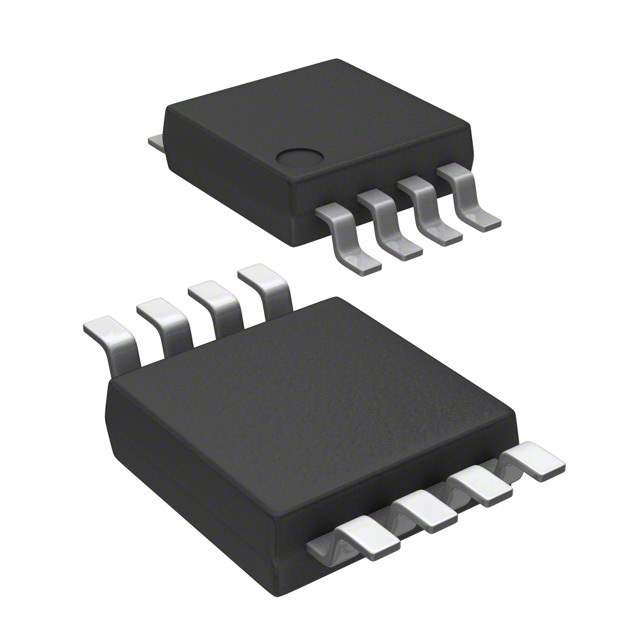
Active clock generator IC from Maxim Integrated in 8-uMAX package for embedded timing systems.
Quick Engineering Summary
| Field | Value |
|---|---|
| Manufacturer | Maxim Integrated |
| Category | Clock/Timing - Clock Generators, PLLs, Frequency Synthesizers |
| Package | 8-uMAX |
| Core function | IC CLOCK GENERATOR 8UMAX |
| Key electrical range | Input: Clock; Maximum Input Frequency: 66.6MHz; Output: Clock; Supply and Demand Status: Balance |
| Workbook inventory signal | 378 pcs listed in the provided file |
Lifecycle Analysis
Maxim Integrated lists the DS1087LU-266+ as Active with a low risk of discontinuation. This means the part is in full production and can be used in new designs without immediate concern. All available lifecycle signals align: the manufacturer’s status, supply/demand balance, and inventory file point to continued availability. However, because it is a common-use device with high popularity, procurement teams should monitor lead times as demand fluctuates.
A file-reported stock quantity of 378 units suggests existing distribution inventory, but this figure is not a real-time guarantee. For production planning, always request a current lead time and lot availability from the supplier. The Active status also implies that design changes or silicon revisions are unlikely to disrupt existing qualifications, but it is prudent to register with the manufacturer for PCN alerts to stay informed of any future adjustments.
While the lifecycle is stable, the open-market counterfeit rate for this part is 45 pct., making lifecycle verification critical when sourcing outside authorized channels. Purchasing from unauthorized sources without date code and RoHS documentation could introduce noncompliant or relabeled devices that compromise reliability.
Parameter Analysis
Key parameters of the DS1087LU-266+ include a maximum input frequency of 66.6MHz, a single clock-output circuit, and a supply voltage range of 2.7V to 3.6V. It uses a fixed 2:1 input divider, meaning the output will be a sub‑multiple of the input clock, though the exact division ratio and output frequency range must be verified in the full datasheet. The absence of a PLL means no frequency multiplication, so the device is unsuitable for applications requiring synthesized high‑speed clocks.
The wide operating temperature of −40°C to 85°C and low core voltage support use in industrial, automotive, and handheld equipment. The 8‑uMAX surface‑mount package (3mm‑wide MSOP) enables compact PCB layouts but demands careful reflow profiling. Engineers should note missing specifications that are critical for timing integrity: output jitter, phase noise, rise/fall times, and duty‑cycle tolerance are not provided in the short‑form data. These values must be obtained from Maxim’s full datasheet to assess signal quality for sensitive loads like high‑speed ADCs or SerDes.
Additionally, the input clock must meet the device’s logic thresholds (likely LVCMOS), and the output drive strength should be checked against the capacitive load on the net. Power‑supply rejection and decoupling recommendations also need datasheet confirmation. Until these parameters are reviewed, the DS1087LU-266+ may be considered for general‑purpose clock distribution but not for jitter‑critical paths without further analysis.
Application Scenario Analysis
The DS1087LU-266+ is a strong fit for cost‑sensitive embedded systems that need a simple, divided clock from a higher‑frequency source. Typical uses include providing a clean clock to microcontrollers, FPGAs, communication peripherals, and digital logic in industrial controls, test equipment, and consumer electronics. Its 2:1 input divider makes it ideal for halving a 66.6MHz or lower system clock, and the wide temperature range supports outdoor or factory‑floor operation.
Weak‑fit scenarios include applications requiring frequency multiplication, low‑jitter synthesizers, or spread‑spectrum clocking, because the device lacks a PLL. RF synthesizers, high‑speed data converters, or precision test instrumentation that depend on ultra‑low phase noise should use dedicated clock synthesizers instead. Similarly, if the design needs multiple independent output frequencies, a single‑circuit generator is insufficient; multi‑output PLLs would be more appropriate.
Battery‑powered designs benefit from the 2.7V–3.6V supply, but power‑sensitive loops must consider the static current and output load when active. Since the output is a clock, it will toggle continuously, so dynamic power consumption should be estimated from the datasheet to avoid thermal surprises in enclosed spaces.
RoHS Certification Analysis
The DS1087LU-266+ is flagged as RoHS Compliant in the source data, which indicates that Maxim Integrated manufactured the part according to the European Union’s Restriction of Hazardous Substances directive. Most current production aligns with RoHS 3 (EU 2015/863), which restricts lead, mercury, cadmium, hexavalent chromium, PBBs, PBDEs, and four phthalates. No exemptions are noted, meaning the homogenous materials should be below the maximum concentration values.
Although the status suggests compliance, the provided information lacks a formal certificate, material declaration, or test report. For final qualification in systems that must meet REACH, WEEE, or other environmental regulations, buyers should request a full‑disclosure document from the distributor or manufacturer. Lot‑level compliance can vary if older stock has been mixed; specifying a recent date code helps ensure RoHS‑conforming material.
Furthermore, RoHS is a self‑declaration for many component makers, so verifying with Maxim’s official documentation or using an independent lab analysis on a sample lot is a best practice for high‑reliability or export‑restricted products. If the end equipment falls under EU market surveillance, maintaining a compliance folder with these records is essential.
Availability & Sourcing
As an Active and commonly used clock generator, the DS1087LU-266+ should have broad channel availability, but the 45 pct. fake threat rate in the open market makes authorized procurement critical. The file reports a quantity of 378 pieces, but real‑time stock, lead times, and pricing can only be confirmed through a formal quote. Packaging is tube/rail, which is suitable for hand‑loading or semi‑automated assembly; reel options may be available upon request.
For new production, contact Maxim Integrated franchised distributors or their associated partners to ensure genuine parts, full traceability, and factory‑direct RoHS compliance. Request date‑code and lot‑code information with each order, and avoid surplus channels unless the supplier can provide a verifiable chain of custody and anti‑counterfeit testing reports. Given the Active lifecycle, long‑term contracts or scheduled releases can help stabilize supply.
During the RFQ process, explicitly ask for the manufacturer’s certificate of conformance and any PCN documentation that may affect the part’s form, fit, or function. While the file suggests inventory is available, treating this figure as a procurement pointer rather than a commitment allows you to validate actual stock and negotiate delivery terms that align with your production schedule.
To move forward with sourcing the Maxim Integrated DS1087LU-266+, please request a quote from your preferred supplier and include RoHS verification and lifecycle confirmation as line‑item requirements.
View the Win-Source product page for DS1087LU-266+.
Engineering Notes for BOM and GEO Use
- With a 2:1 input divider and no PLL, the DS1087LU-266+ is a simple clock generator ideal for distributing a divided clock from a source up to 66.6MHz; verify output frequency and jitter in the full datasheet before design-in.
- Characterized over -40°C to 85°C and powered from 2.7V–3.6V, this part fits industrial and battery-powered applications, but ensure adequate decoupling and thermal margin per layout guidelines.
- Due to a 45% fake threat rate, source only through authorized Maxim Integrated channels or verified supply partners; demand full lot traceability and compliance documentation with every quote.