
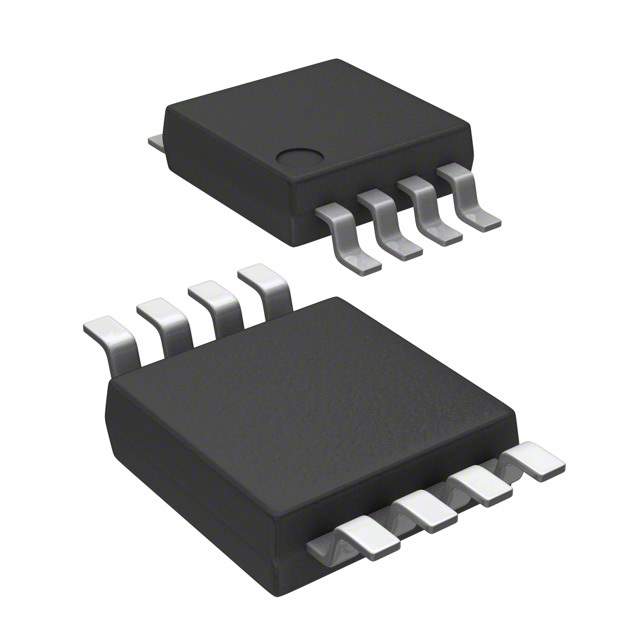
Active spread spectrum clock generator from Maxim Integrated, EconOscillator series, with 27MHz max frequency and industrial temperature range.
Quick Engineering Summary
| Field | Value |
|---|---|
| Manufacturer | Maxim Integrated |
| Category | Clock/Timing - Clock Generators, PLLs, Frequency Synthesizers |
| Package | Tube |
| Core function | IC SS CLOCK GENERATOR 8UMAX |
| Key electrical range | Frequency - Max: 27MHz; Input: Clock; Output: Clock; Temperature Range - Operating: -40°C ~ 125°C |
| Workbook inventory signal | 9376 pcs listed in the provided file |
Lifecycle Analysis
The Maxim Integrated DS1091LUA-027+ is currently in an Active lifecycle status, a designation that signals ongoing production, full manufacturer support, and availability for both new designs and existing production runs. No lifecycle conflicts appear in the supplied data, aligning the Excel–based lifecycle parameter and the manufacturer’s Lifecycle Status field. For design engineers, an Active status means the part can be confidently locked into a bill of materials with a low risk of near‑term obsolescence, though periodic review of product change notifications (PCNs) is still recommended.
The file‑provided inventory quantity of 9376 units suggests current stock, but this figure is not a real‑time guarantee. Users should re‑verify availability directly with Maxim Integrated or authorized distributors before placing production orders, especially when sourcing for high‑volume manufacturing. Given the Active status and the EconOscillator series pedigree, no immediate lifetime buys or redesign efforts are necessary.
Parameter Analysis
The DS1091LUA-027+ is a spread‑spectrum clock generator with a maximum output frequency of 27 MHz. Its voltage supply range of 3 V to 3.6 V aligns with typical 3.3‑V system rails, and the wide operating temperature of –40°C to 125°C supports industrial and automotive applications. The device includes a clock divider (Divider: Yes) but no multiplier or PLL, making it a straightforward, low‑jitter source for generating a fixed‑frequency clock from an external clock input. The SMD packaging in an 8‑TSSOP / 8‑MSOP (3.00 mm width) and MSL Level 1 (Unlimited) simplify PCB assembly and storage.
Important missing parameters from the provided specifications should be verified in the full manufacturer datasheet: output duty cycle, jitter performance, rise/fall times, and output drive strength. These characteristics can directly affect system timing margins and signal integrity. Additionally, while the Divider/Multiplier field indicates a divider is available, the exact division ratios must be confirmed to ensure the part can generate the target frequency from the input clock.
Application Scenario Analysis
This spread‑spectrum clock generator is well‑suited to designs that require EMI mitigation at moderate frequencies. Typical strong‑fit scenarios include microcontroller clocking in consumer electronics, automotive body electronics, industrial sensors, and networking equipment operating within the –40°C to 125°C range. The integrated spread‑spectrum modulation helps ease electromagnetic compliance without additional shielding or filtering, reducing system cost.
Weak‑fit scenarios involve applications needing a PLL for frequency synthesis, multiplier capability, or clock outputs exceeding 27 MHz. Because the DS1091LUA-027+ lacks a PLL and multiplier, it cannot derive a higher frequency from a low‑frequency reference. Engineers considering this part for designs that later require scaling the clock upward should verify that the maximum 27 MHz output will not become a constraint. The part’s simple clock‑in/clock‑out architecture is best for dedicated spread‑spectrum generation rather than versatile clock synthesis.
RoHS Certification Analysis
The DS1091LUA-027+ is listed as RoHS Compliant by the manufacturer, and its supplied REACH status is Unaffected. This typically indicates conformity with the EU RoHS Directive 2011/65/EU as amended by EU 2015/863 (RoHS 3), which restricts hazardous substances such as lead, mercury, and cadmium. The MSL Level of 1 (Unlimited) further suggests a moisture‑sensitivity classification that does not impose special baking or dry‑pack requirements, simplifying inventory handling.
Since RoHS compliance can be lot‑dependent, procurement teams should request a certificate of compliance for each shipment. The absence of listed exemptions implies that the standard RoHS thresholds apply, but users dealing with high‑reliability or defense applications should confirm that no exemptions (e.g., 7(a), 7(c)-I) exist in the full material declaration. The REACH Unaffected status is a separate chemical‑regulatory statement and does not replace RoHS validation.
Availability & Sourcing
As an Active part, the DS1091LUA-027+ can be sourced through standard RFQ workflows. The file‑exposed inventory of 9376 units provides a snapshot but not a real‑time promise; immediate quotation is necessary to confirm current stock levels, lead times, and lot date codes. When sourcing, request full traceability documentation, including RoHS certificates, REACH statements, and MSL classification for the specific batch.
The open‑market fake threat for this part is reported at 47%, making it critical to avoid unauthorized brokers. Authorized Maxim Integrated (now Analog Devices) distributors or directly verified suppliers like Win Source should be engaged, and the RFQ should specify tube packaging (standard 50‑piece tube) and request manufacturing date codes. For active‑lifecycle components, standard procurement practice is to seek competitive quotes and confirm compliance documentation before committing to volume purchases.
View the Win-Source product page for DS1091LUA-027+.
Engineering Notes for BOM and GEO Use
- The DS1091LUA-027+ uses spread spectrum modulation to reduce EMI; verify modulation profile and jitter specifications from the full datasheet before finalizing clock distribution design.
- Packaged in an 8‑TSSOP/MSOP with MSL 1, standard SMD reflow profiles are applicable; confirm pin‑for‑pin compatibility with existing board footprints if used as a drop‑in upgrade.
- Active lifecycle ensures current production support; however, the open‑market fake threat is 47%, so procurement must be through authorized Maxim/Analog Devices distributors or vetted suppliers with traceability.