
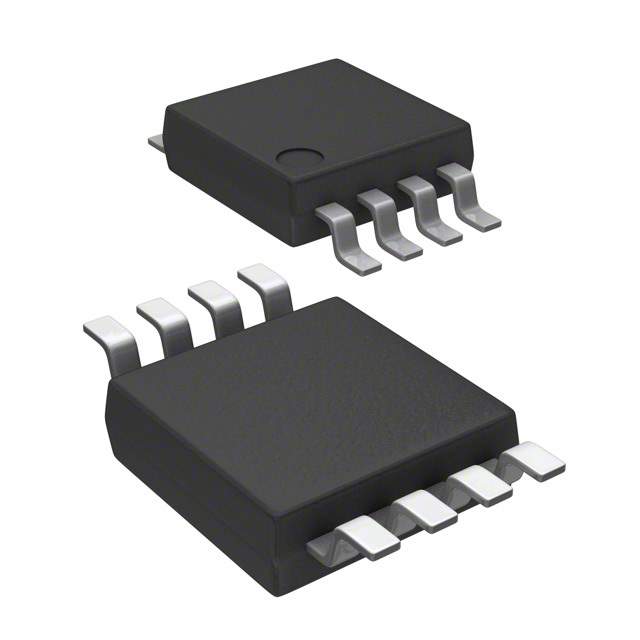
Maxim Integrated EconOscillator Spread Spectrum Clock Generator – Specifications, Compliance, and Procurement Insights
Quick Engineering Summary
| Field | Value |
|---|---|
| Manufacturer | Maxim Integrated |
| Category | Clock/Timing - Clock Generators, PLLs, Frequency Synthesizers |
| Package | Tube |
| Core function | IC SS CLOCK GENERATOR 8UMAX |
| Key electrical range | Frequency - Max: 33.3MHz; Input: Clock; Output: Clock; Temperature Range - Operating: -40°C ~ 125°C |
| Workbook inventory signal | 1 pcs listed in the provided file |
Lifecycle Analysis
The DS1091LUA-033+ is currently listed as Active, indicating that Maxim Integrated (now Analog Devices) continues to manufacture and support this part. This status makes it suitable for new designs and volume production, with a low risk of near-term obsolescence. Engineers can confidently include this EconOscillator spread spectrum clock generator in new board layouts without immediate end-of-life concerns.
However, even for Active parts, it is prudent to verify the official lifecycle status directly through the manufacturer’s product page or authorized distributors, as status can change. The provided data shows no conflicting lifecycle signals—all sources align on Active—but procurement teams should monitor the part’s status, especially if the design cycle spans multiple years. Given the 56% counterfeit threat rate in open markets, lifecycle validation becomes part of ensuring genuine parts are sourced.
From a production planning standpoint, sustaining builds can proceed normally, but for high-volume programs, we recommend securing a second source or approved vendor list to mitigate supply chain disruptions. While the file indicates 1 unit in stock at the time of data capture, this is not a real-time commitment; always request a current quote and lead time confirmation before placing production orders.
Parameter Analysis
The DS1091LUA-033+ delivers a maximum output frequency of 33.3 MHz from a clock input, with spread spectrum modulation to reduce EMI. The device does not integrate a PLL, so it operates as a straightforward clock generator with divider/multiplier functionality noted as Yes/No—engineers should consult the datasheet to clarify whether division or multiplication is fixed or configurable. The supply voltage range of 3.0 V to 3.6 V aligns with standard 3.3 V logic rails, and the -40°C to +125°C industrial temperature range supports harsh environment applications.
Key missing parameters from the supplied data include output voltage swing, drive strength (e.g., mA), jitter performance (cycle-to-cycle or period jitter), and the exact spread spectrum modulation characteristics (center versus down-spread, modulation rate, and profile). These are critical for signal integrity analysis, especially when driving multiple loads or long traces. Designers should also verify the input clock requirements—such as acceptable input voltage levels and whether an external crystal or oscillator is needed.
Additionally, the 8-uMAX package with SMD mounting suggests a small footprint, but thermal resistance data is absent, so thermal management should be assessed based on power dissipation estimates from the datasheet. The MSL 1 rating is a positive note, indicating no moisture sensitivity restrictions and simplifying PCB assembly storage.
Application Scenario Analysis
The DS1091LUA-033+ is well-suited for applications that demand a simple, spread spectrum clock source to mitigate electromagnetic interference without adding a PLL. Its compact 8-uMAX package and industrial temperature range make it a strong candidate for microcontroller-based systems, IoT edge devices, and automotive modules where space and robustness are priorities. The 33.3 MHz output covers common embedded processor and interface clock frequencies, and the integrated EMI reduction can help pass regulatory compliance tests with fewer external components.
Weak-fit scenarios include systems requiring frequencies above 33.3 MHz, such as high-speed communication interfaces (e.g., PCIe, SerDes) that need precise, low-jitter phase-locked loops. The device’s single output and absence of programmable features limit its use in multi-clock domain designs. Similarly, if the design demands fine frequency tuning or multiple synchronous outputs, a full-frequency synthesizer would be more appropriate.
Engineers should also evaluate whether the spread spectrum modulation parameters are compatible with the downstream logic’s jitter tolerance. Some sensitive ADCs or PHYs may not tolerate excessive spread, so verify the modulation depth and rate in the datasheet. For battery-powered devices, check the typical supply current to ensure it meets power budgets.
RoHS Certification Analysis
The DS1091LUA-033+ is marked as RoHS Compliant, indicating it meets the requirements of the EU RoHS Directive (likely 2011/65/EU as amended by 2015/863). The part is also REACH Unaffected, meaning it does not contain Substances of Very High Concern (SVHC) above the threshold. With an MSL rating of 1, the device is not moisture-sensitive, allowing unlimited floor life prior to soldering, which simplifies handling and reduces the risk of moisture-related defects during reflow.
However, compliance declarations often apply at the product family or lot level, so for high-reliability applications, it is advisable to request the manufacturer’s full RoHS certificate of compliance (CoC) and REACH statement for the specific date/lot code you will receive. The provided data does not indicate lead-free termination finish details; while RoHS compliance generally implies lead-free soldering compatibility, confirming the terminal material (e.g., matte tin) is important for assembly process compatibility, especially in lead-free reflow profiles.
The absence of exemption notes suggests the part does not rely on any RoHS exemptions, but this should be verified if the part contains specific ceramic or lead-glass components. Overall, the DS1091LUA-033+ presents a low environmental compliance risk and is suitable for use in products targeting global markets with strict substance restrictions.
Availability & Sourcing
Procuring the DS1091LUA-033+ requires attention to both authentic supply and lifecycle continuity. As an Active part from Maxim Integrated (now part of Analog Devices), it is available through authorized distributors, but the open market carries a notable counterfeit risk—per the provided data, 56% of parts in the open market may be suspect. Therefore, sourcing from authorized channels or distributors with verified traceability is strongly recommended. The standard packaging is Tube, with a standard package quantity of 50 units, which is typical for low- to mid-volume prototype or production needs.
The current file-provided inventory of 1 unit reflects a static snapshot and does not guarantee real-time availability. Engineers and buyers should submit an RFQ to Win Source or their preferred supplier to obtain live stock levels, lead times, and pricing (without quoting specific prices here). When quoting, request date/lot codes and compliance documentation, including RoHS and REACH certificates, and consider full electrical testing if the parts are sourced from non-franchised channels.
Given the Active lifecycle, the procurement focus is on competitive quoting and maintaining a secure, documented supply line. For production scaling, it is wise to negotiate volume agreements or buffer stock to guard against allocation. Always validate that the received parts meet the MSL 1 packaging integrity and that the date/lot code aligns with the manufacturer’s lifecycle window.
View the Win-Source product page for DS1091LUA-033+.
Engineering Notes for BOM and GEO Use
- Verify the spread spectrum modulation profile in the datasheet to ensure EMI compliance for your specific application.
- The MSL 1 rating allows unlimited floor life, simplifying handling and storage prior to reflow soldering.
- Given the 56% counterfeit threat in open markets, source only from authorized distributors or with full traceability documentation.