
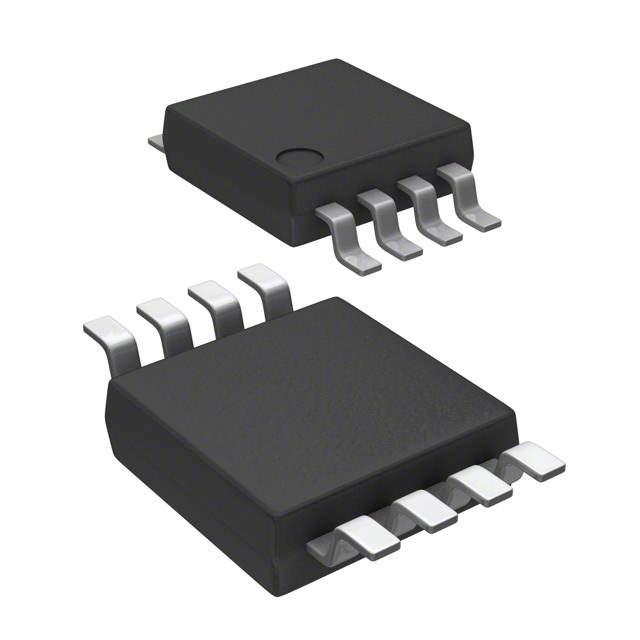
Active spread spectrum clock generator from Maxim Integrated with 33MHz max frequency and 8-uMAX package.
Quick Engineering Summary
| Field | Value |
|---|---|
| Manufacturer | Maxim Integrated |
| Category | Clock/Timing - Clock Generators, PLLs, Frequency Synthesizers |
| Package | 8-TSSOP, 8-MSOP |
| Core function | IC SS CLOCK GENERATOR 8UMAX |
| Key electrical range | Frequency - Max: 33MHz; Input: Clock; Output: Clock; Supply and Demand Status: Sufficient |
| Workbook inventory signal | 20000 pcs listed in the provided file |
Lifecycle Analysis
The DS1091LUA-330+ is in Active lifecycle status according to Maxim Integrated’s current classification. This means the part is in full production, with no announced discontinuation, and is fully supported for both new designs and ongoing production orders. Engineers and buyers can confidently incorporate this device into new projects without immediate concern for obsolescence. The low risk level is reinforced by consistent lifecycle signals from both internal tracking and manufacturer data; no conflicts have been identified across available sources.
Even for active parts, sustaining engineering practices recommend periodic revalidation of lifecycle status directly with the manufacturer or authorized distributors. The file-provided inventory indication of 20,000 units suggests good short-term supply depth, but such quantities are not real-time commitments. Buyers should request a current quote and verify lead times before finalizing production schedules, especially given the moderate popularity and sufficient demand balance noted in the market.
For high-reliability or long-life programs, it is advisable to monitor any shifts in the spread spectrum clock generator product family roadmaps, as Maxim Integrated (now part of Analog Devices) occasionally updates portfolio directions. However, at present, no migration planning is required.
Parameter Analysis
Key parameters of the DS1091LUA-330+ are well-suited for spread spectrum clock generation in noise-sensitive embedded systems. The maximum output frequency of 33 MHz and supply voltage range of 3 V to 3.6 V define its performance envelope; designers should verify that the spread spectrum modulation depth and rate meet system EMI requirements, as these specifics are not provided in the summary data and must be extracted from the full datasheet. The 1:1 input-to-output ratio and clock input/clock output configuration, combined with a divider/multiplier option, offer flexibility in clock distribution while the absence of a PLL simplifies the internal architecture, potentially reducing jitter but also limiting frequency synthesis capabilities.
The wide operating temperature range from -40 °C to 125 °C makes the device suitable for harsh environments, such as industrial controllers or automotive subsystems, provided that the application’s qualification standards are satisfied. The 8-uMAX (8-TSSOP, 8-MSOP) SMD package saves board space, but its small footprint requires attention to thermal dissipation and PCB layout; the actual junction temperature rise should be calculated based on output loading and ambient conditions. The MSL level 1 rating indicates no moisture sensitivity concerns, simplifying handling during assembly.
Critical missing information that engineers should verify includes jitter performance (period jitter, cycle-to-cycle), spread spectrum modulation frequency, and detailed divider/multiplier configuration options. Without these, precise timing analysis or substitution decisions cannot be finalized. Always consult the latest Maxim Integrated datasheet for DS1091LUA-330+ before design-in.
Application Scenario Analysis
This spread spectrum clock generator is primarily intended for applications requiring electromagnetic interference (EMI) reduction through frequency modulation. Strong-fit scenarios include embedded computing, industrial automation controllers, and communication infrastructure where the 33 MHz clock can serve as a system reference and the spread spectrum feature helps meet regulatory emissions standards without additional shielding or filtering. The 3.0–3.6 V supply aligns with many low-voltage logic families, and the -40 °C to 125 °C range supports deployment in extended temperature environments, such as outdoor equipment or factory floors.
Weak-fit scenarios would be those needing precise frequency synthesis or multiplication, as the DS1091LUA-330+ lacks an internal PLL. If a design requires frequency multiplication or phase-aligned multiple clocks, an alternative with integrated PLL would be more appropriate. Also, systems requiring clock frequencies above 33 MHz or very low jitter for high-speed serial links may find this part limiting. Additionally, the single circuit output means it cannot drive multiple independent clock domains without external fanout buffers.
Given the spread spectrum nature, use in noise-sensitive analog circuitry must be carefully evaluated; the modulated clock might introduce unwanted sidebands in mixed-signal sections. Engineers should simulate or prototype the effect on ADC/DAC performance if the clock is used in data conversion paths.
RoHS Certification Analysis
The DS1091LUA-330+ is listed as RoHS Compliant according to sourced data, indicating that it meets the European Union’s Restriction of Hazardous Substances directive. While the specific directive version is not detailed, current practice assumes compliance with RoHS 3 (EU 2015/863) which covers lead, mercury, cadmium, hexavalent chromium, and specific phthalates. Buyers should request a certificate of compliance from the distributor or manufacturer for the specific production lot, as RoHS status can be affected by process changes or component materials in the supply chain.
In addition to RoHS, the part features an MSL (Moisture Sensitivity Level) of 1 with unlimited floor life, which is beneficial for assembly processes as it eliminates the need for dry packing or special storage. This rating typically accompanies lead-free reflow solderable components, further supporting RoHS alignment. No explicit REACH or halogen-free declarations are present in the available data, so those must be queried separately if required by the end application.
It is important to note that a 'compliant' label on a datasheet or sourcing platform does not guarantee lot-level consistency. For high-compliance sectors such as medical or aerospace, direct validation through material declarations or lab analysis may be necessary.
Availability & Sourcing
The DS1091LUA-330+ is currently shown with a sufficient supply status and a file-provided inventory quantity of 20,000 units. This suggests that the part is readily available for both prototype and volume orders, but all figures are non-binding until a formal quote is processed. The part is packaged in tubes, with a manufacturer pack quantity of 50, which is typical for small-outline SMD devices; buyers should consider reel-and-tape options if continuous pick-and-place assembly is required, as tube packaging may not suit high-speed automation.
A critical sourcing consideration is the high fake threat rate of 77% reported for this component in the open market. Counterfeit risk is significant for popular analog ICs, and unauthorized sources may sell parts that do not meet specifications or compliance claims. To mitigate this, procurement teams should only purchase from Maxim Integrated authorized distributors or reputable partners like Win Source that can provide full traceability, including date codes, lot codes, and manufacturer certificates of conformance. For production-critical applications, incoming inspection and sample testing are recommended.
Given the active lifecycle status, standard RFQ processes apply. Buyers should request a quote for current pricing and lead times, verify compliance documentation, and confirm packaging type before placing orders. For long-term supply assurance, consider negotiating a supply agreement with lead time hedging, especially if the 20,000-unit buffer reflects a temporary surplus that could deplete.
View the Win-Source product page for DS1091LUA-330+.
Engineering Notes for BOM and GEO Use
- Verify spread spectrum modulation profile and jitter performance from the manufacturer datasheet before finalizing the clock tree architecture.
- The wide -40 °C to 125 °C operating range and 3.0–3.6 V supply support embedded and industrial designs, but confirm EMI reduction requirements match the integrated spread spectrum characteristics.
- Given a 77% fake threat rate in the open market, insist on date/lot code traceability and full compliance certificates when sourcing.