
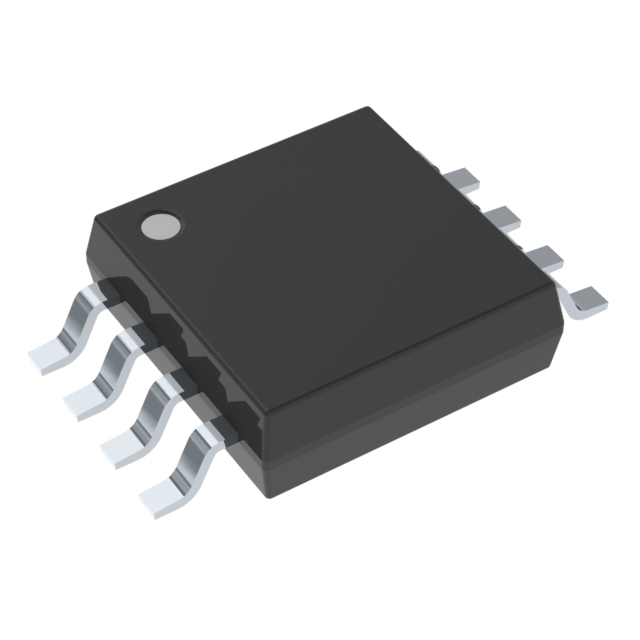
A practical sourcing guide for engineers evaluating the DS1099U-BC+ clock generator from Maxim Integrated.
Quick Engineering Summary
| Field | Value |
|---|---|
| Manufacturer | Maxim Integrated |
| Category | Clock/Timing - Clock Generators, PLLs, Frequency Synthesizers |
| Package | 8-TSSOP, 8-MSOP (0.118", 3.00mm Width) |
| Core function | IC CLOCK GENERATOR 8UMAX |
| Key electrical range | Differential - Input: No/No; Frequency - Max: 524kHz, 262kHz; Input: Clock; Output: CMOS, TTL |
| Workbook inventory signal | 1 pcs listed in the provided file |
Lifecycle Analysis
The lifecycle status for the DS1099U-BC+ is currently unknown. No official lifecycle signals were present in the supplied data, leaving uncertainty for design planning. Without confirmation from Maxim Integrated (now part of Analog Devices), engineers should treat this part as having potential risk for new designs. For sustaining production, it may be available but requires verification of ongoing support.
Given the file-provided inventory showing only a single unit and a shortage supply status, the DS1099U-BC+ may have limited availability. If the part has been discontinued or moved to NRND without notice, long-term procurement could be challenging. It is recommended to confirm lifecycle status directly with the manufacturer and consider alternate sources or a migration plan if the status cannot be clarified. For any new design, a lifecycle verification must be part of the qualification process.
Parameter Analysis
The DS1099U-BC+ operates as a simple clock generator with a maximum output frequency of 524kHz or 262kHz, depending on configuration. It includes a divider but no PLL or multiplier, making it suited for straightforward frequency division from a single input clock. The supply voltage range of 2.7V to 5.5V and wide operating temperature from -40°C to 125°C allow use in industrial and automotive-grade applications, provided other reliability metrics align.
The device offers a 1:2 input-to-output ratio and CMOS/TTL compatible outputs, which are common for digital logic interfaces. The package is an 8-uMAX/uSOP surface-mount, well-suited for space-constrained designs. However, key specifications such as output jitter, phase noise, and exact programming method are not detailed in the available data. Engineers should obtain the full datasheet to verify these parameters, as well as timing accuracy and any configuration pin-strapping requirements before committing to board layout.
Application Scenario Analysis
With its low-frequency clock generation and simple divider functionality, the DS1099U-BC+ is well-matched for applications that require a stable, divided clock from a base oscillator. Examples include microcontroller clock trees, sensor modules, and low-speed data acquisition systems where phase noise is not critical. Its CMOS/TTL outputs interface easily with standard digital logic.
Conversely, this part is a weak fit for applications demanding phase-locked loops, frequency synthesis, or high-frequency clock distribution (above a few MHz), as it lacks a PLL and its maximum frequency is limited to 524kHz. Designs requiring differential signaling or precise frequency multiplication should consider alternative parts. The wide supply range does provide some flexibility in mixed-voltage systems, but the limited frequency range constrains its use in modern high-speed designs.
RoHS Certification Analysis
The DS1099U-BC+ is listed as RoHS Compliant according to the supplied data. While no explicit standard version (e.g., RoHS 3) is cited, the designation typically implies conformity with EU Directive 2015/863, which restricts hazardous substances like lead and mercury. For full compliance verification, including any applicable exemptions or lot-level testing records, engineers should request the manufacturer's certificate of compliance.
If the part is sourced from older stock or authorized distributors, it is still important to confirm that the specific lot meets current RoHS requirements, especially if the original manufacturing date predates the latest directive updates. Additionally, REACH and halogen-free declarations are not provided, so those should be reviewed if required by the design's compliance matrix.
Availability & Sourcing
The DS1099U-BC+ appears with limited availability in the provided data; only a single unit is listed in inventory, alongside a shortage status. Because lifecycle status is unknown, securing a reliable supply requires proactive verification. Engineers should submit an RFQ to Win Source or other distributors to obtain current stock levels, lead times, and lot date codes.
For production planning, it is critical to confirm with Maxim Integrated (Analog Devices) whether this part is still active. If the lifecycle is found to be NRND or discontinued, immediate steps should be taken to secure existing inventory for bridges or evaluate a replacement. All procurement should include traceability documentation and RoHS compliance certificates. Do not commit to new designs without a verified roadmap for the DS1099U-BC+.
View the Win-Source product page for DS1099U-BC+.
Engineering Notes for BOM and GEO Use
- Verify lifecycle with manufacturer before use in new designs; unknown status carries medium risk.
- Obtain full datasheet to confirm output jitter, programming pins, and exact frequency options.
- With shortage status and limited sample quantity, plan for alternative sourcing or replacement early.