
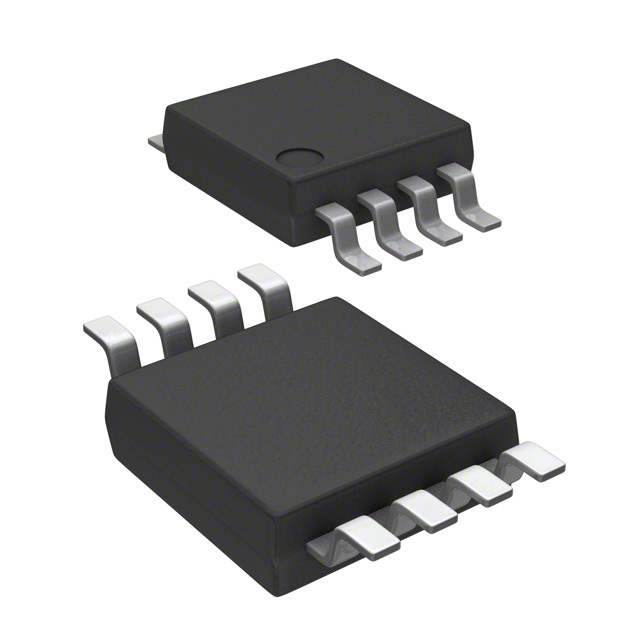
Practical procurement and engineering analysis for the Maxim Integrated DS1099U-LU+ low-frequency clock generator.
Quick Engineering Summary
| Field | Value |
|---|---|
| Manufacturer | Maxim Integrated |
| Category | Clock/Timing - Clock Generators, PLLs, Frequency Synthesizers |
| Package | 8-uMAX |
| Core function | IC CLOCK GENERATOR 8UMAX |
| Key electrical range | Input: Clock; Maximum Input Frequency: 1.023kHz, 4Hz; Output: CMOS, TTL; Supply and Demand Status: Limited |
| Workbook inventory signal | 1 pcs listed in the provided file |
Lifecycle Analysis
The DS1099U-LU+ lifecycle status presents a conflict: the component specification lists the part as 'Active', while the primary lifecycle assessment indicates 'Unknown' with no confirming signals. This discrepancy requires conservative procurement planning. For new designs, do not assume indefinite availability without direct verification from Maxim Integrated (now part of Analog Devices). Existing production should confirm that no end-of-life (EOL) or not-recommended-for-new-design (NRND) notices have been issued.
Given the limited stock signal and medium popularity, it is advisable to revalidate lifecycle status through the manufacturer’s product page or authorized distributors before committing to procurement. The file-provided inventory of one unit is not a real-time indicator and should not be used as a guarantee of supply. If the part is still active, standard ordering lead times may apply; if transitioning, migration to a newer device should be evaluated.
Parameter Analysis
Key parameters for the DS1099U-LU+ clock generator include its 8-uMAX package, which demands SMD assembly and suits space-constrained designs. The maximum input frequency is listed as 1.023kHz and 4Hz, indicating that the device is intended for extremely low-frequency clock generation or timing applications, not for MHz-range clocking. The output supports both CMOS and TTL levels, providing flexibility with different logic families, and the single-circuit design simplifies integration for point-of-use clocking. Supply voltage ranges from 2.7 V to 5.5 V, covering typical battery and industrial rails, while the operating temperature span of -40°C to 125°C qualifies it for automotive and industrial grades.
Critical parameters absent from the supplied data include jitter, output duty cycle, rise/fall times, and output drive strength. Engineers must consult the manufacturer datasheet to verify these values for reliable timing margin and signal integrity. The lack of a PLL means frequency multiplication is not available, so the output is derived directly from the input clock, which may limit flexibility.
Application Scenario Analysis
The DS1099U-LU+ is well-suited for applications that require a simple, low-frequency clock source, such as watchdog timer clocks, power-on-reset (POR) sequencing, LED blinking circuits, and slow peripheral clocking in microcontrollers. Its wide operating temperature range and broad supply voltage support make it viable for industrial sensors and automotive auxiliary systems where a basic clock is needed.
The device is not suitable for high-speed communication interfaces, serializer/deserializer (SerDes) reference clocks, or any design requiring phase-locked loop (PLL) based frequency synthesis due to its low maximum input frequency and absence of a PLL. In mixed-signal environments, the CMOS/TTL output can drive digital logic directly, but differential signalling and low-jitter requirements are not supported. The 8-uMAX package minimizes board area, beneficial for compact IoT endpoints. Before finalizing the design, confirm the exact output frequency range and timing characteristics from the datasheet to ensure it matches the intended application.
RoHS Certification Analysis
The DS1099U-LU+ is listed as 'RoHS Compliant', indicating that it meets the European Union's Restriction of Hazardous Substances directive. However, the specific standard revision (e.g., RoHS 3, EU 2015/863) is not specified in the provided data. Typically, a part from Maxim Integrated would be compliant with the latest RoHS requirements at the time of manufacture, but procurement teams should request a current RoHS certificate of compliance from the supplier to confirm. This is particularly important for lot-specific verification, as compliance can vary by date code.
No REACH status is available, and REACH compliance does not substitute for RoHS; both should be verified if needed. Other environmental attributes such as lead-free solder process compatibility, halogen-free status, and moisture sensitivity level (MSL) are not given, yet they are crucial for assembly. Engineers should verify these in the manufacturer’s datasheet and request full material declaration documents to meet company-specific environmental policies.
Availability & Sourcing
The DS1099U-LU+ currently has a file-provided stock quantity of one unit; however, this does not represent real-time availability. Supply and demand status is marked as 'Limited', suggesting that the part may have constrained lead times or low market liquidity. Given the 59% fake threat rate in the open market, sourcing through authorized distributors or directly from Analog Devices (which absorbed Maxim Integrated) is strongly recommended to avoid counterfeit components.
The part is packaged in tubes/rails, which is standard for 8-uMAX, and should be stored in dry cabinets with humidity protection as noted. When requesting quotes, buyers should specify required date or lot codes, request traceability documentation, and confirm lifecycle status along with RoHS compliance certificates. For designs where the lifecycle conflict raises concern, secure sufficient inventory for production needs and consider evaluating a functionally equivalent alternative if the part is found to be NRND or EOL. Direct any quotation requests to Win Source or other authorized sources, ensuring all compliance and authenticity checks are performed.
View the Win-Source product page for DS1099U-LU+.
Engineering Notes for BOM and GEO Use
- The DS1099U-LU+ maximum input frequency is only 1.023kHz (or 4Hz) and lacks a PLL, so it is limited to low-speed clock generation; verify your frequency requirements against the datasheet.
- With a 59% fake threat rate, prioritize authorized distribution sources and insist on traceability documentation to avoid counterfeit components.
- Lifecycle is conflicted (spec says Active, primary assessment Unknown); confirm directly with Analog Devices before designing into new products.