
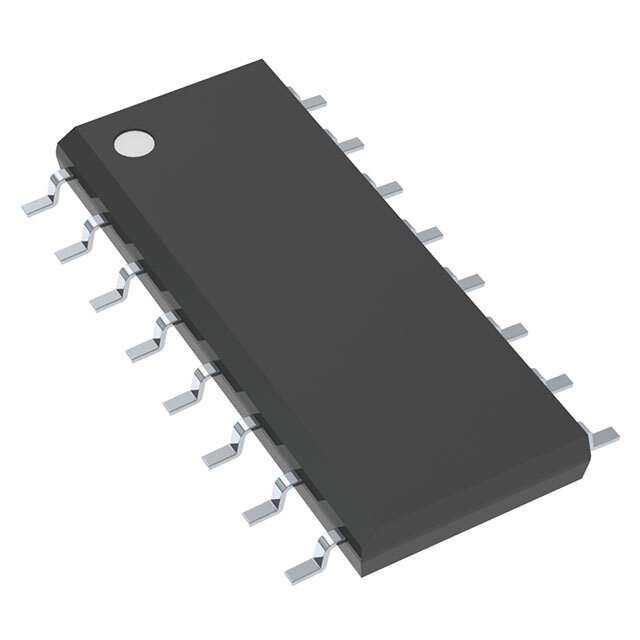
Active 1:2 Crosspoint Switch, 3.3V, 16-SOIC, RoHS Compliant – Texas Instruments
Quick Engineering Summary
| Field | Value |
|---|---|
| Manufacturer | Texas Instruments |
| Category | Logic - Signal Switches, Multiplexers, Decoders |
| Package | Not available in supplied data |
| Core function | IC CROSSPOINT SW 1 X 2:2 16-SOIC |
| Key electrical range | Supply and Demand Status: Balance |
| Workbook inventory signal | 1866 pcs listed in the provided file |
Lifecycle Analysis
The DS10CP152TMAX/NOPB from Texas Instruments carries an Active lifecycle status, confirmed by all supplied signals and an estimated end-of-life (EOL) date of 2028. For new designs, this means the part can be specified with confidence, as Active components generally enjoy full manufacturer support, stable supply, and ongoing production. The balanced supply/demand status and high popularity further indicate that this device is widely used and unlikely to face abrupt obsolescence.
However, engineers should note that the 2028 EOL estimate is a forward-looking projection and not a contractual guarantee. It is advisable to periodically revalidate lifecycle status directly via TI’s product page or authorized channels, especially if the design involves long qualification cycles or extended production runs. The 44 percent fake threat in the open market is a reminder to avoid gray-market sourcing, as counterfeit parts could pose reliability risks. Procurement should secure supply from TI’s authorized distribution network and request lot traceability to mitigate that risk.
Parameter Analysis
The DS10CP152TMAX/NOPB is configured as a 1 x 2:2 crosspoint switch, meaning one input can be routed to either of two outputs. This single-supply device operates from 3.0 V to 3.6 V, placing it in the typical 3.3V logic domain. The -40°C to +85°C temperature range supports industrial applications, and the 16‑SOIC surface‑mount package is widely used, simplifying PCB layout and second‑sourcing.
The supplied data lacks several electrical specifications critical for high‑speed signal integrity, including propagation delay, jitter, crosstalk, maximum data rate, and I/O logic standards. The DS10CP152 family name and 1:2 configuration suggest an LVDS crosspoint switch tailored for telecom or datacom backplanes, but this must be confirmed from the manufacturer’s datasheet. Engineers should also verify output current drive, power‑on glitch behavior, and signal voltage thresholds to ensure compatibility with downstream receivers.
For procurement, the most important parameters to check beyond those mentioned are: input common‑mode range, differential output voltage (VOD), and termination requirements. These directly influence the link budget and signal integrity in high‑speed designs. Without these, a full fit‑for‑use evaluation is not possible.
Application Scenario Analysis
As a 1:2 crosspoint switch, the DS10CP152TMAX/NOPB fits well in applications requiring a single high‑speed signal to be switched between two destinations. Strong‑fit scenarios include redundant path selection in telecom backplanes, test‑and‑measurement instrumentation where a signal is routed to different acquisition channels, and broadcast video routing (provided the bandwidth is sufficient). The industrial temperature range and SOIC package make it suitable for ruggedized equipment, such as factory automation or outdoor communications nodes.
Weak‑fit scenarios would be designs requiring larger crosspoint arrays (multiple inputs to multiple outputs), or those operating outside the 3.0 V‑3.6 V supply range. If the signal type is LVDS, it may not be appropriate for single‑ended CMOS or other logic families without level translation. Additionally, because maximum data rate is not provided, high‑speed serial links above several gigabits per second cannot be reliably designed without further confirmation. Evaluate the full TI datasheet to determine if the device meets your protocol‑specific jitter and skew budgets.
RoHS Certification Analysis
The DS10CP152TMAX/NOPB is marked RoHS Compliant, indicating it meets the European Union’s Restriction of Hazardous Substances directive, likely the current RoHS 3 (EU 2015/863). The additional Halogen Free Compliant attribute reinforces its environmental compliance, per IEC 61249-2-21. This combination is typical for Texas Instruments parts manufactured in Malaysia, and it aligns with modern electronics procurement requirements for most global markets.
While the supplied compliance status provides a baseline, engineers should request a full Material Declaration Data Sheet (MDDS) or Certificate of Compliance (CoC) from TI for documentation required by some quality systems, such as automotive or aerospace. The absence of explicit REACH or MSL (Moisture Sensitivity Level) data in the provided specifications means those should be verified directly from the manufacturer’s online product page. For MIL‑spec or medical applications, lot‑level RoHS testing may be necessary to ensure consistency.
Availability & Sourcing
The DS10CP152TMAX/NOPB is a commonly used, high‑popularity part from Texas Instruments with a balanced supply‑demand status. As an Active device, normal distribution channels should have predictable lead times, and the estimated EOL of 2028 offers a comfortable planning horizon. File‑provided inventory data shows approximately 1,866 units, but this is not a real‑time guarantee and should be validated via a Request for Quote (RFQ).
Given the 44 percent fake threat level identified in open markets, sourcing must be limited to Texas Instruments’ authorized distributors or directly from TI. Always request date code and lot code traceability, and verify that RoHS and Halogen‑Free compliance certificates accompany the shipment. For production orders, negotiate periodic supply agreements to lock in availability, especially if the project timeline extends toward the 2028 EOL. To obtain current stock levels and pricing, submit an RFQ through the designated platform.
View the Win-Source product page for DS10CP152TMAX/NOPB.
Engineering Notes for BOM and GEO Use
- Verify signal type (likely LVDS) and maximum data rate from the TI datasheet before committing to PCB layout.
- Given 44% counterfeit risk, source only from TI authorized distributors and request full traceability documentation.
- The 2028 estimated EOL suggests long-term support; confirm lifecycle commitment with Texas Instruments for production programs.