
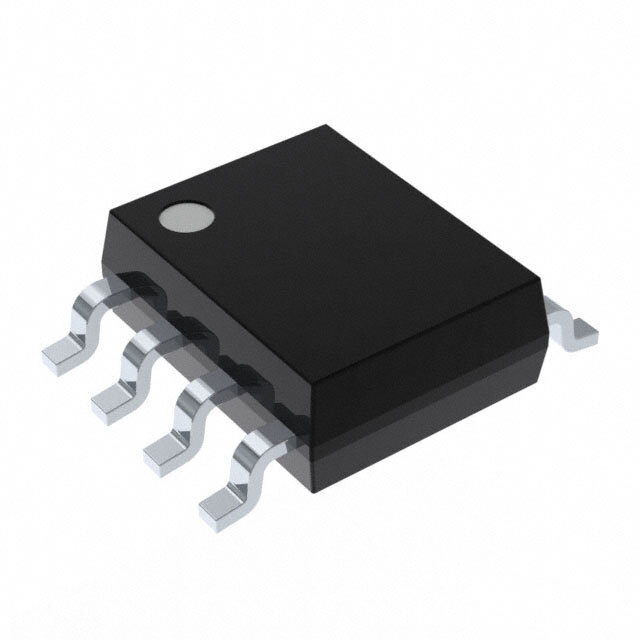
Active 5-Tap Nonprogrammable Delay Line by Maxim Integrated – Procurement & Technical Overview
Quick Engineering Summary
| Field | Value |
|---|---|
| Manufacturer | Maxim Integrated |
| Category | Clock/Timing - Delay Lines |
| Package | 8-TSSOP, 8-MSOP (0.118", 3.00mm Width) |
| Core function | IC DLY LN 5 TAP 200NS 8-TSSOP |
| Key electrical range | Supply and Demand Status: Shortage; Temperature Range - Operating: -40°C ~ 85°C; Voltage - Supply: 3V ~ 3.6V |
| Workbook inventory signal | 1 pcs listed in the provided file |
Lifecycle Analysis
The DS1100LU-200+ is currently listed as Active by Maxim Integrated, indicating that the part is in full production and recommended for new designs. This lifecycle status carries low risk for procurement, as components with Active status typically have ongoing manufacturer support, guaranteed availability, and no planned discontinuation.
However, the supply and demand status is noted as "Shortage," which suggests that market availability may be constrained despite the Active lifecycle. Buyers should verify current lead times and consider the potential need for safety stock. The file-provided inventory quantity of one unit is a snapshot and does not represent real-time stock levels. For production planning, it is advisable to contact Maxim Integrated (now part of Analog Devices) to confirm long-term production plans and to request a lifetime buy forecast if design longevity is critical.
While the DS1100LU-200+ remains a viable choice for new developments, teams should also evaluate alternative delay lines with similar specifications as a risk mitigation strategy, especially if the shortage persists. Revalidation of lifecycle status through the manufacturer’s official product page or authorized distributors is recommended before committing to high-volume orders.
Parameter Analysis
The DS1100LU-200+ provides a fixed total delay of 200 ns via a nonprogrammable architecture, featuring 5 taps with a consistent tap increment of 40 ns and a first tap delay of 40 ns. These parameters define the device as a simple, fixed-value delay line suitable for applications requiring deterministic timing offsets without configuration.
The component operates from a supply voltage of 3 V to 3.6 V, implying nominal 3.3 V operation. Designers should ensure a clean power supply with adequate bypassing to maintain delay accuracy. The operating temperature range of –40°C to +85°C qualifies it for industrial environments, but the datasheet should be consulted for delay variation over temperature and voltage drift specifications, as these are not included in the available data. The surface-mount 8‑uMAX/uSOP package (8‑TSSOP/MSOP footprint) supports compact PCB layouts and automated assembly.
Key specifications missing include output drive strength, propagation delay, jitter performance, rise/fall times, and power consumption. These parameters are critical for ensuring signal integrity and timing margin in high‑speed digital systems. Engineers must refer to the full Maxim Integrated DS1100LU-200+ datasheet to verify that the output can drive the intended capacitive load and that delay accuracy meets system requirements before finalizing the design.
Application Scenario Analysis
As a 5‑tap nonprogrammable delay line, the DS1100LU-200+ is primarily used for fixed timing adjustments in digital circuits. Typical strong‑fit applications include clock deskewing, where multiple clock phases need alignment; adjustment of setup and hold times in synchronous memory interfaces; and coarse timing correction in industrial controllers. Its fixed tap points make it straightforward to implement without microcontroller intervention.
The 200 ns total delay and 40 ns resolution are well‑suited for medium‑speed logic families and FPGA I/O timing alignment. The industrial temperature range allows deployment in factory automation and embedded systems subjected to moderate thermal environments.
Weak‑fit scenarios involve dynamic delay control, as the device is nonprogrammable. Applications requiring sub‑nanosecond jitter or highly precise delay accuracy may find this part insufficient if the datasheet confirms higher jitter levels. Additionally, without programmable features, the DS1100LU-200+ cannot be used in adaptive timing networks where delays must be adjusted in real time. For such cases, purchasers should consider digitally programmable delay lines from Maxim Integrated’s portfolio or alternative suppliers.
RoHS Certification Analysis
The DS1100LU-200+ is marked as RoHS Compliant, an essential certification for electronic components sold into the European Union under the Restriction of Hazardous Substances Directive. Compliance indicates that the part does not contain restricted substances above the maximum concentration values, such as lead, mercury, and cadmium.
However, the available documentation does not specify the exact RoHS standard version (e.g., EU 2015/863 amending Annex II), nor does it list any exemptions that may apply to this component. For compliance verification, purchasers should request a full RoHS certificate and, if necessary, a REACH statement, as REACH compliance is not indicated. Additionally, RoHS status can sometimes be declared at the product family level rather than per individual lot, so it is prudent to obtain lot‑specific compliance documentation when sourcing for high‑reliability or regulated markets.
While the DS1100LU-200+ is widely presumed to meet EU RoHS requirements, final certification should be confirmed with the manufacturer or an authorized distributor to avoid import delays or non‑compliance risks.
Availability & Sourcing
The DS1100LU-200+ is an Active component from Maxim Integrated, and procurement teams should initiate a request for quotation (RFQ) to obtain current pricing, lead times, and stock levels. The file‑provided inventory shows a single unit, which is not a live stock indication and should not be used for planning decisions. Given the noted Shortage supply‑demand status, lead times may be extended, and early ordering is recommended.
Sourcing should be conducted via authorized distributors or directly from Analog Devices to guarantee genuine, traceable parts. When ordering, specify the tube packaging format (standard for 8‑uMAX/uSOP devices) and request date/lot code information to support traceability and quality control. Additionally, verify the lifecycle status and compliance certifications (RoHS, REACH) with the supplier to ensure the parts meet regulatory requirements and are not subject to last‑time‑buy conditions.
For long‑term production, consider securing a buffer stock or evaluating alternative delay lines if availability remains constrained. To proceed, contact Win Source or an authorized distributor to request a quote for the DS1100LU-200+ and confirm current inventory.
View the Win-Source product page for DS1100LU-200+.
Engineering Notes for BOM and GEO Use
- Consult the full Maxim Integrated DS1100LU-200+ datasheet to verify output drive, jitter, and propagation delay specifications before committing to design.
- The shortage indication suggests potential lead time risks; secure stock early or consider alternative parts like programmable delay lines if delays become prohibitive.
- Obtain lot‑specific RoHS and REACH compliance certificates to ensure regulatory conformity for target markets.