
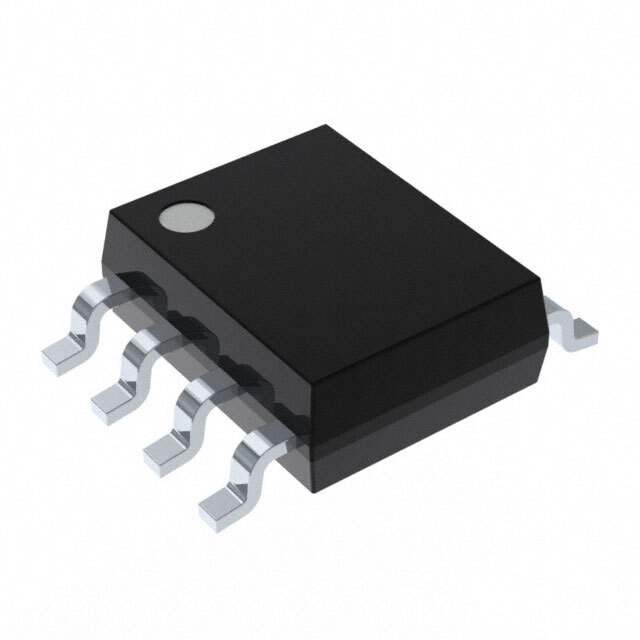
Active 5-tap, 100ns silicon delay line in 8-SOIC from Maxim Integrated
Quick Engineering Summary
| Field | Value |
|---|---|
| Manufacturer | Maxim Integrated |
| Category | Clock/Timing - Delay Lines |
| Package | 8-SOIC |
| Core function | IC DELAY LINE 5 TAP 100NS 8-SOIC |
| Key electrical range | Supply and Demand Status: Limited; Supply Voltage - Operating: 3 V to 3.6 V; Temperature Range - Operating: -40°C to 85°C |
| Workbook inventory signal | 1 pcs listed in the provided file |
Lifecycle Analysis
The DS1100LZ-100+ from Maxim Integrated is an active part with all lifecycle signals aligned, indicating full production and support. For new designs, this means the component is readily available and not subject to obsolescence risks in the near term. Engineers can confidently incorporate it into new products, though periodic revalidation with the manufacturer is advised to catch any forthcoming changes.
The supplied inventory data lists a workbook quantity of one unit, but this is a file-based snapshot and not a real-time stock level. Procurement teams should treat this as indicative only and confirm actual availability directly with distributors or the manufacturer. No lifecycle conflicts exist, so the part is suitable for both new production and sustaining existing systems.
Parameter Analysis
The DS1100LZ-100+ provides a fixed 100 ns total delay, divided into five taps with a consistent 20 ns increment per tap. This precision stems from silicon delay line technology, making it suitable for timing adjustments in digital circuits. The supply voltage range of 3.0 V to 3.6 V and operating temperature of -40°C to 85°C ensure compatibility with common 3.3V systems and industrial environments. The 8-SOIC package allows surface-mount assembly and compact PCB layout.
Critical missing parameters include jitter performance, propagation delay variability, and input/output logic levels. For clock distribution or phase alignment, any added jitter can degrade system timing margins. Designers must consult the full manufacturer datasheet for these values and assess how they interact with clock skew budgets. Also verify the rise/fall times and pulse width sensitivity to avoid unintended glitches.
Application Scenario Analysis
As a nonprogrammable delay line, the DS1100LZ-100+ is ideal for applications requiring fixed, repeatable timing offsets. It excels in clock deskewing, where a known 100 ns delay aligns multiple clock phases. It can also generate precise pulse-width modulation by combining tap outputs with logic gates. Typical uses include timing calibration in test and measurement equipment, sensor signal synchronization, and memory interface strobe shaping.
However, it is a poor fit for designs needing variable or programmable delays; those require a programmable delay line or a clock generator with adjustable phase. Also, for very high-speed signals beyond a few hundred megahertz, the inherent dispersion of the delay line may limit effectiveness. In such cases, consider alternative technologies like ECL/PECL buffers or phase-locked loops.
RoHS Certification Analysis
The DS1100LZ-100+ is listed as RoHS Compliant, indicating it meets EU Directive 2011/65/EU and amendments. This status allows its use in products sold in the European Union and other markets with similar restrictions. However, no additional compliance details such as REACH, halogen-free, or MSL ratings are provided. For full environmental assurance, request the manufacturer’s Certificate of Compliance (CoC) including substances of very high concern (SVHC) and lead-free confirmation.
RoHS compliance can be declared at the family or lot level. For high-reliability or medical applications, verify the specific date/lot code against the manufacturer’s compliance records to ensure no non-compliant materials were used in production. Also check if any exemptions apply to this device category.
Availability & Sourcing
With an active lifecycle status, the DS1100LZ-100+ is available through Maxim Integrated’s authorized distributors. Procurement should follow a standard RFQ process to obtain current lead times and stock levels. The file-provided quantity is not real-time; contact suppliers for live inventory. The reported 28% counterfeit threat in the open market underscores the need to source from franchised channels only, requesting full traceability with date and lot codes.
Packaging is tube/rail, suitable for automated pick-and-place lines. When requesting quotes, specify packaging type and ask for compliance documentation including RoHS certificates and MSL if reflow soldering is planned. For new production, secure samples for validation and negotiate supply agreements to buffer against allocation risks. If the part ever transitions to NRND, plan buffer stock and migration paths accordingly.
View the Win-Source product page for DS1100LZ-100+.
Engineering Notes for BOM and GEO Use
- Verify full timing specs (jitter, propagation delay) from manufacturer datasheet before design lock.
- The 3.3V supply and -40°C to 85°C range cover many industrial environments; confirm derating for your thermal profile.
- Request lot-level RoHS and REACH compliance docs along with date codes to avoid counterfeit risks (28% fake threat reported).