
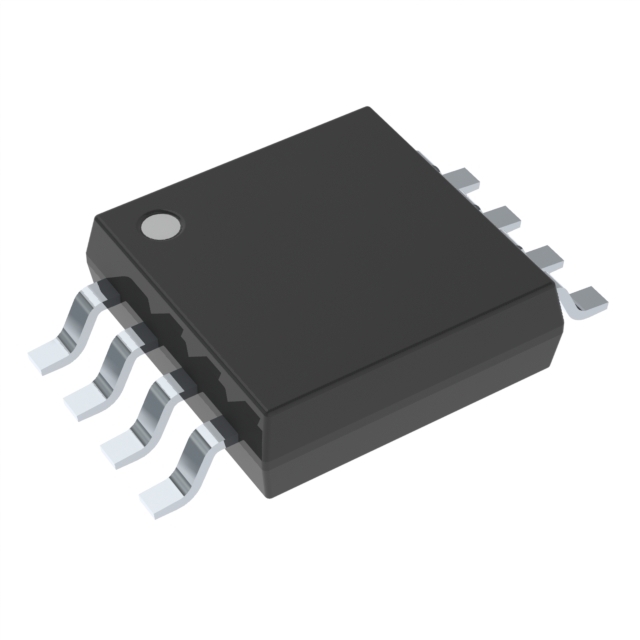
150ns 5-Tap Nonprogrammable Delay Line from Maxim Integrated
Quick Engineering Summary
| Field | Value |
|---|---|
| Manufacturer | Maxim Integrated |
| Category | Clock/Timing - Delay Lines |
| Package | 8-SOIC (0.154", 3.90mm Width) |
| Core function | IC DELAY LINE 5 TAP 150NS 8-SOIC |
| Key electrical range | Supply and Demand Status: Shortage; Temperature Range - Operating: -40°C ~ 85°C; Voltage - Supply: 3V ~ 3.6V |
| Workbook inventory signal | 32 pcs listed in the provided file |
Lifecycle Analysis
The DS1100LZ-150+ is currently listed as Active by Maxim Integrated, indicating full manufacturer support for new designs and ongoing production. For engineers integrating this delay line into new projects, the Active status means there is no immediate end-of-life risk, and it can be safely considered for both new designs and sustaining production. However, given that component lifecycles can change with little notice, it is prudent to periodically revalidate the status through the manufacturer's official product page or PCN (Product Change Notification) subscriptions.
The file-provided inventory shows a quantity of 32 units, which should not be taken as a real-time availability guarantee. In the context of the reported supply-and-demand status of 'Shortage,' design teams should plan for longer lead times and secure buffer stock early when committing to production volumes. While no lifecycle conflicts exist in the supplied data, direct confirmation with Maxim Integrated or authorized distributors is always recommended before finalizing BOMs.
Parameter Analysis
The DS1100LZ-150+ offers a total delay of 150ns implemented across 5 independent taps with a uniform increment of 30ns. This fixed, nonprogrammable architecture simplifies board-level timing alignment without requiring configuration interfaces, making it suitable for clock distribution trees where consistent, repeatable delays are needed. The first tap provides a delay of 30ns, allowing fine-grained timing offsets relative to the input clock edge.
Supply voltage is specified as 3V to 3.6V, which aligns well with standard 3.3V logic rails but requires attention to supply decoupling and noise margins, especially in mixed-signal environments. The operating temperature range of -40°C to 85°C covers most industrial applications, though designers should verify that the delay accuracy and stability over temperature meet system tolerances. The part is housed in a compact 8-SOIC surface-mount package, which is widely compatible with automated assembly.
Key parameters not fully detailed in the available data include rise/fall time, propagation delay accuracy (±%), and output drive strength. These directly impact signal integrity and should be verified from the manufacturer's datasheet before finalizing a design. Additionally, the input logic thresholds and any enable/disable functionality should be confirmed to ensure compatibility with the driving logic families.
Application Scenario Analysis
As a nonprogrammable 5-tap delay line with 30ns increments, the DS1100LZ-150+ is well-suited for applications that require fixed, stepwise clock phase adjustments. Typical strong-fit scenarios include clock deskewing in digital systems, synchronous bus timing alignment, and generation of staggered control signals for memory interfaces or pipeline stages. The part's ability to operate from a 3.3V supply makes it a natural fit for many FPGA and microcontroller-based designs where multiple derivative clocks with deterministic offsets are needed.
Less ideal applications include those requiring fine delay resolution below 30ns or programmable delay adjustment, as the fixed taps impose a discrete set of delays. In such cases, systems may need a programmable delay line or a PLL-based solution. Also, designs operating at supply voltages outside the narrow 3V–3.6V range cannot use this part directly and would need level shifting or an alternative component. While the industrial temperature range suggests robustness, applications targeting extended temperature extremes or high shock/vibration environments should verify mechanical reliability beyond what standard SOIC packages typically provide.
RoHS Certification Analysis
The DS1100LZ-150+ is documented as RoHS Compliant in the source data. This generally indicates compliance with the European Union's Restriction of Hazardous Substances directive, most likely the latest effective revision, RoHS 3 (Directive 2015/863), which restricts lead, mercury, cadmium, and other substances. However, the specific RoHS version or any related compliance standards like REACH are not explicitly stated in the provided information.
For procurement and compliance documentation, it is important to note that RoHS status is often claimed at the product family level. Lot-level or date-code-level verification may be required for high-reliability or regulated industries. The part is not indicated as having any RoHS exemptions, but absence of such data does not guarantee none exist. Buyers should request a full certificate of conformity or a RoHS declaration from Maxim Integrated or the distributor to confirm the applicable directive and any exemption clauses, especially for EU market access.
Additionally, while RoHS compliance addresses lead-free requirements, it does not automatically ensure halogen-free construction or adherence to other environmental standards. If these are critical, specific certificates must be requested.
Availability & Sourcing
The DS1100LZ-150+ is currently marked as Active, which generally supports straightforward procurement through authorized distributors. However, the indicated supply-and-demand status of 'Shortage' combined with a file-provided stock quantity of 32 units suggests that real-time availability may be limited. Engineers and buyers should treat the listed quantity as a snapshot only and request a current quote to confirm actual stock, lead times, and pricing before committing to orders.
When sourcing this delay line, ensure that the part is obtained in the original 8-SOIC tube packaging as specified, to maintain integrity during handling and assembly. Traceability through date and lot codes is important for compliance verification and quality control, so ask for documentation that allows you to cross-reference with the manufacturer's certified test records. Given the Active lifecycle, standard RFQ processes apply, but due to the shortage status, planning for buffer inventory and alternate supply paths is advisable.
For high-volume production, consider securing allocation agreements or evaluating second-source options, though no direct substitutes are provided in this data. As always, verify that the lifecycle status remains Active through official Maxim Integrated channels at the time of purchase to avoid inadvertent procurement of end-of-life or obsolete material.
View the Win-Source product page for DS1100LZ-150+.
Engineering Notes for BOM and GEO Use
- Verify supply voltage decoupling and noise margin for 3.3V rail; operating range is 3V–3.6V.
- Assess tap-to-tap skew and total delay accuracy across temperature; request detailed timing specs from datasheet if critical.
- Factor in reported shortage when planning production; secure inventory commitments early and confirm lifecycle status regularly.