
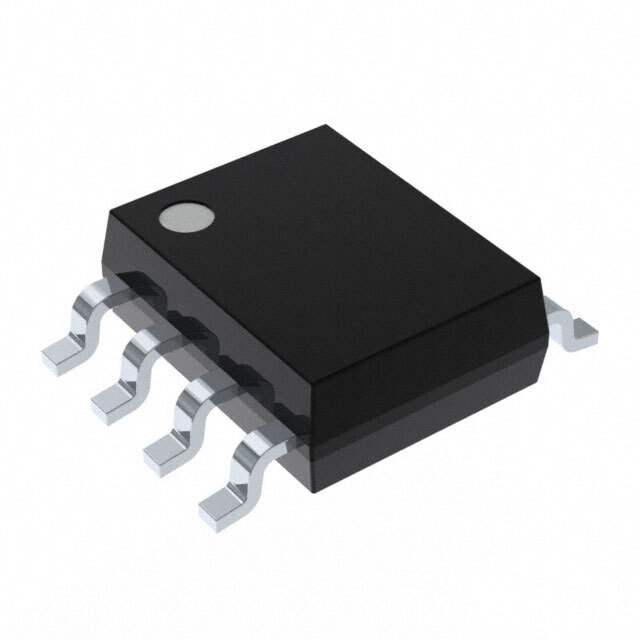
Active 5-tap delay line with 20ns total delay in 8-SOIC package; verify datasheet for full engineering specifications.
Quick Engineering Summary
| Field | Value |
|---|---|
| Manufacturer | Maxim Integrated |
| Category | Clock/Timing - Delay Lines |
| Package | 8-SOIC |
| Core function | IC DELAY LINE 5 TAP 20NS 8-SOIC |
| Key electrical range | Supply and Demand Status: Balance; Supply Voltage - Operating: 3 V to 3.6 V; Temperature Range - Operating: -40°C to 85°C |
| Workbook inventory signal | 2500 pcs listed in the provided file |
Lifecycle Analysis
The DS1100LZ-20+ is currently listed as Active by Maxim Integrated. This status indicates full production support and recommendability for new designs. All lifecycle signals from the supplied data align, with no indications of end-of-life or not-recommended-for-new-design status.
For volume production, it is prudent to revalidate lifecycle status directly with Maxim Integrated or authorized distributors, as manufacturer roadmaps can shift. The part has high popularity and is flagged as a common-used item, which generally supports stable supply. However, a 29% fake threat in the open market emphasizes the need for sourcing from authorized channels.
File-provided inventory quantities show 2500 units, but this snapshot is not real-time. Request a current quote to confirm exact stock and delivery lead times before committing to production schedules.
Parameter Analysis
Key parameters of the DS1100LZ-20+ include its 5 taps with 4ns increments yielding a 20ns total delay. The delay to first tap is also 4ns. This nonprogrammable configuration simplifies integration where fixed delay values are needed. The supply voltage range of 3V to 3.6V and operating temperature of -40°C to +85°C match industrial and commercial environments.
The 8-SOIC surface-mount package enables compact PCB layout. The number of independent delays is one, meaning all taps share a common input. This is typical for a single delay line channel. Missing from the supplied data are critical timing tolerances: propagation delay accuracy, tap-to-tap skew, and input frequency limitations. Output logic levels and rise/fall times are also unspecified; these must be verified in the manufacturer datasheet to ensure compatibility with downstream logic families.
For design integration, confirm capacitive load derating and power dissipation under worst-case conditions, as these influence thermal margin and jitter performance.
Application Scenario Analysis
The DS1100LZ-20+ is suited for clock distribution networks requiring fixed timing adjustments. Its 4ns resolution supports fine-grained phase alignment in synchronous digital systems such as microcontrollers, FPGAs, and memory interfaces. Nonprogrammable operation fits applications where delay values are predetermined and stable over product lifetime.
Weak-fit scenarios include high-speed systems demanding sub-nanosecond resolution or programmable delay lines for adaptive timing. Designs needing multiple independent delay channels would require multiple DS1100LZ-20+ parts or alternative multi-channel devices. The part is not intended for analog signal applications; it is a digital delay line.
Given its popularity and wide temperature range, this part appears in industrial controllers, instrumentation, and communication infrastructure where reliable clock deskewing is essential but ultra-high precision is not the primary requirement.
RoHS Certification Analysis
The DS1100LZ-20+ is stated as RoHS Compliant, meeting the requirements of the EU’s Restriction of Hazardous Substances. This usually implies compliance with RoHS 3 (EU 2015/863) unless otherwise noted. No exemptions are listed in the supplied data, but users should verify that any exemption (e.g., lead in solder for high-reliability applications) applies if necessary.
No REACH information is provided. REACH (Registration, Evaluation, Authorisation and Restriction of Chemicals) is a separate EU regulation; RoHS compliance does not automatically guarantee REACH compliance. For full regulatory coverage, request both RoHS and REACH certificates of compliance from the supplier.
Since RoHS status is attributed at the component level, lot-level documentation should be obtained during procurement to ensure ongoing compliance in case of manufacturing changes. This is especially pertinent for parts with a noted fake threat, where traceability and authenticity verification are crucial.
Availability & Sourcing
The DS1100LZ-20+ is currently in production with an Active lifecycle status. File-provided inventory data indicates a balance supply-demand status and a quantity of 2500 units. These figures are not real-time, and actual stock may vary. A 29% fake threat in the open market underscores the importance of sourcing from franchised or authorized distributors.
Packaging is tube/rail, and the part is stored in dry storage cabinets with humidity protection per supplied specifications. Request a quote to obtain current availability, pricing, and lead times directly from Win Source or other authorized sources. Verify date and lot codes to mitigate counterfeit risk.
Since this is a common-used part, multiple distributors may carry it, but users should prioritize those offering compliance documentation (RoHS, REACH) and traceability. For ongoing production, consider negotiating supply agreements to secure allocation, especially if market conditions shift.
View the Win-Source product page for DS1100LZ-20+.
Engineering Notes for BOM and GEO Use
- Verify timing tolerances (tap-to-tap skew, propagation delay variation) directly from the official Maxim datasheet before finalizing timing budgets.
- The 4ns tap increments and 20ns total delay suit clock deskewing in moderate-speed digital systems; confirm signal integrity at highest operating frequency.
- Check supply voltage range (3V-3.6V) against your power rail design; consider bypassing and layout practices for minimal jitter.