
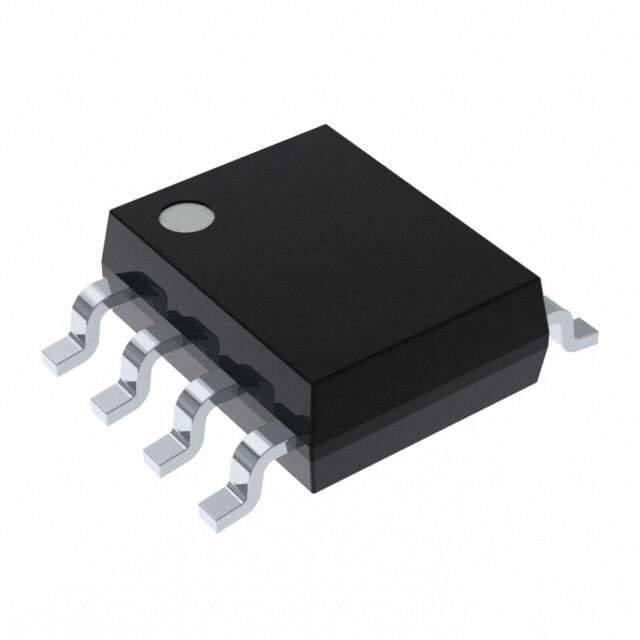
200 ns total delay, 5 taps, 3.3V supply, -40 to 85°C, 8-SOIC package
Quick Engineering Summary
| Field | Value |
|---|---|
| Manufacturer | Maxim Integrated |
| Category | Custom Parts (B - D) |
| Package | SOIC |
| Core function | IC DELAY LINE 5 TAP 200NS 8-SOIC |
| Key electrical range | Max Operating Temperature: 85 °C; Max Supply Voltage: 3.6 V; Min Operating Temperature: -40 °C; Min Supply Voltage: 3 V |
| Workbook inventory signal | 1 pcs listed in the provided file |
Lifecycle Analysis
The DS1100LZ-200+T is classified as Active under Maxim Integrated’s product lifecycle. This means the part is in full production and suitable for new designs as well as volume procurement. With Maxim now integrated into Analog Devices, engineers should confirm that no product change notifications or discontinuance plans have been posted on the manufacturer’s website.
All provided lifecycle signals align, indicating no current risk. For new production programs, the active status supports long-term sourcing, but the file-noted limited supply suggests early engagement with distributors to secure inventory and avoid lead-time surprises.
Parameter Analysis
The DS1100LZ-200+T offers a 200 ns total delay with 5 taps, each tap providing a 40 ns increment from the first tap’s 40 ns delay. It operates on a 3.3 V supply (3.0 V to 3.6 V) over an industrial temperature range of -40 °C to 85 °C. The 8-pin SOIC surface-mount package fits standard assembly processes.
These fixed, non-programmable delay values make the part predictable and straightforward for timing alignment. Critical missing parameters from the provided data include tap-to-tap skew, output rise/fall times, and propagation delay variation across temperature and supply voltage. Engineers should verify these in the official datasheet to ensure timing margins meet system requirements.
Application Scenario Analysis
This delay line is a strong fit for timing alignment, clock deskewing, and pulse edge positioning in low-speed digital systems. Potential uses include FPGA/ASIC interface timing adjustments, test instrumentation signal conditioning, and general-purpose phase shifting where 40 ns steps are adequate.
It is less suited for applications requiring sub-nanosecond resolution or programmable delays. The 3.3 V supply excludes direct use in 5 V legacy designs without additional level translation. Before adopting the DS1100LZ-200+T, confirm that its 200 ns range and fixed 40 ns granularity align with the application’s timing budget and that the output drive strength meets load requirements.
RoHS Certification Analysis
The DS1100LZ-200+T is listed as RoHS Compliant, indicating conformance to EU hazardous substance restrictions. This typically aligns with the current RoHS 3 (EU 2015/863) directive, but lot-specific compliance should be confirmed with the supplier.
REACH compliance details were not supplied and should be requested separately if needed. The storage condition recommendation, “Dry storage cabinet & Humidity protection package,” suggests moisture sensitivity. Verify the moisture sensitivity level (MSL) and reflow soldering profile to avoid assembly defects. For full assurance, obtain a compliance certificate covering the specific production lot.
Availability & Sourcing
File-provided inventory indicates one unit, but real-time availability must be verified via quotation. The supply status is noted as Limited, with medium popularity, which may affect lead times. The 38% open market fake threat rate reinforces the need to source exclusively through authorized Maxim Integrated (now Analog Devices) distributors.
Request a quote that includes date/lot codes, traceability documentation, and RoHS certificates. For an active component, standard lead times generally apply, but the limited supply signal suggests validating current stock levels before design-in. Initiate an RFQ through verified channels to secure genuine DS1100LZ-200+T parts.
View the Win-Source product page for DS1100LZ-200+T.
Engineering Notes for BOM and GEO Use
- Verify total delay tolerance and tap-to-tap skew in the official datasheet before timing-critical designs.
- The 38% open market fake threat rate necessitates sourcing through authorized distributors and requesting full traceability documentation.
- Confirm MSL level and reflow profile to avoid moisture-related defects during assembly; dry storage condition suggests moisture sensitivity.