
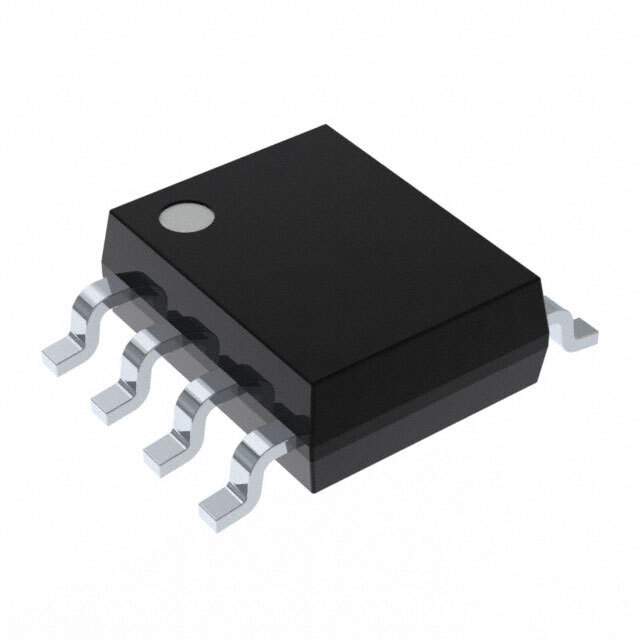
5-Tap, 200ns Non-Programmable Delay Line in 8-SOIC for Precision Timing Applications
Quick Engineering Summary
| Field | Value |
|---|---|
| Manufacturer | Maxim Integrated |
| Category | OEM Parts (C - E) |
| Package | SOIC |
| Core function | IC DELAY LINE 5 TAP 200NS 8-SOIC |
| Key electrical range | Max Supply Voltage: 3.6 V; Maximum Operating Temperature: 85 °C; Min Operating Temperature: -40 °C; Min Supply Voltage: 3 V |
| Workbook inventory signal | 1 pcs listed in the provided file |
Lifecycle Analysis
The DS1100LZ-200+ is listed as Active by Maxim Integrated, with all lifecycle signals aligning. Active status means the part is in full production and is recommended for both new designs and ongoing volume manufacturing. Engineers can incorporate this 5-tap delay line into new projects without immediate end-of-life concerns. The risk level is low.
To sustain production schedules, buyers should still monitor manufacturer communications, as Active status does not eliminate the possibility of future changes. Given Maxim Integrated’s integration into Analog Devices, it is prudent to confirm product roadmap announcements that could affect long-term supply. While the file-provided workbook indicates a single unit in stock, actual distributor inventory may fluctuate. It is advisable to request a current quote and verify lifecycle directly with authorized channels.
For new design starts, the DS1100LZ-200+ remains a viable choice, provided that application requirements match the available specifications. Documentation reviews—including any recent product change notifications—should be performed before finalizing BOMs to ensure continued alignment with system-level reliability goals.
Parameter Analysis
The DS1100LZ-200+ delay line provides five taps with a total delay of 200 ns and a uniform tap increment of 40 ns, starting from a first-tap delay of 40 ns. It operates from a 3V to 3.6V supply, with a nominal 3.3V typical operating voltage, making it compatible with common low-voltage logic families. The device is housed in an 8-pin SOIC surface-mount package with dimensions of roughly 5 mm x 4 mm and a height of 1.5 mm, supporting compact PCB layouts and automated assembly.
Key decision-critical parameters include the supply voltage range and temperature rating from -40°C to +85°C, which define environmental margins. The non-programmable delay increments and total delay must be matched to the timing budget of the target application; engineers should confirm that the 40 ns step resolution and 200 ns maximum meet skew compensation or pulse-width adjustment needs. Package thermal characteristics are not specified in the supplied data, but because power dissipation in delay line ICs is typically low, standard SOIC soldering profiles apply.
Missing datasheet values such as propagation delay tolerance, rise/fall time, and input capacitance should be obtained from the official Maxim Integrated (now Analog Devices) datasheet before layout or signal integrity simulation. Additionally, verify the recommended decoupling and termination schemes to ensure clean delay performance in noisy environments.
Application Scenario Analysis
This 5-tap delay line is well suited for digital timing alignment tasks in communications equipment, instrumentation, and industrial controls. In such systems, it can deskew clock edges, adjust signal propagation delays between parallel data paths, or generate precise pulse widths. With its 40 ns tap resolution, it fits applications where coarse but fixed timing offsets are acceptable.
Typical strong-fit scenarios include synchronizing SPI or I2C interfaces, compensating for PCB trace length mismatches in multi-board systems, and creating short-duration timing windows for gating signals. The DS1100LZ-200+ can also serve in test fixtures where adjustable delays are not needed and non-programmable delay steps simplify design.
Weak-fit scenarios involve high-speed serial links requiring sub-nanosecond precision, or systems that must operate below 3V, as the minimum supply voltage is 3V. Additionally, the part is not radiation-hardened, so it should not be used in aerospace or medical implant applications without thorough reliability analysis. For designs needing programmable delays or wider delay ranges, alternative devices may be more appropriate. Engineers should carefully assess whether the 40 ns granularity aligns with protocol timing budgets and noise margins.
RoHS Certification Analysis
The DS1100LZ-200+ is designated as RoHS Compliant according to the provided data. The Lead Free specification is listed as Yes, which aligns with typical RoHS requirements restricting lead and other hazardous substances. Although the exact RoHS standard revision is not stated, it is prudent to assume compliance with EU RoHS (2011/65/EU and amendments) given Maxim Integrated's component portfolio.
No specific exemptions are indicated, but for high-reliability applications, it is recommended to request the full material declaration from the manufacturer or authorized distributors. Lot-level compliance documentation should be obtained when sourcing from non-franchised channels due to the high fake component threat score of 72 pct. The part's MSL (moisture sensitivity level) is not specified, so refer to the packaging label and follow the storage condition guidelines—dry storage cabinet and humidity protection are recommended per the available information. Confirming RoHS status at the physical lot code level is a necessary step in the procurement process to ensure regulatory conformance.
Availability & Sourcing
The DS1100LZ-200+ is in Active production, but the file-sourced inventory shows only one unit, and the supply/demand status is noted as Shortage. Given the 72 pct. fake component threat in the open market, sourcing through unauthorized channels carries significant risk. Buyers should prioritize authorized distributors or factory-direct supply to ensure genuine parts and full traceability.
During procurement, request date codes, lot codes, and RoHS compliance certificates as standard documentation. Verify packaging integrity; the part is typically supplied in tubes with dry-pack storage. For volume production, lead-time inquiries should be directed to Maxim Integrated (now part of Analog Devices) or their franchised distributors. The workbook quantity is not a real-time guarantee, so always obtain a current quote. With Active lifecycle, this part is orderable, but market conditions may require allocation checks.
If the part is for a new design, evaluate second-source options early, especially given the shortage flag. For existing designs, secure inventory well ahead of production ramps. To initiate a purchase inquiry or request a quote for the DS1100LZ-200+, contact your preferred supplier with the full manufacturer part number and compliance requirements.
View the Win-Source product page for DS1100LZ-200+.
Engineering Notes for BOM and GEO Use
- Ensure the supply voltage never exceeds 3.6V, and provide adequate decoupling as recommended in the datasheet to maintain delay accuracy.
- The 72% fake component risk mandates purchasing only from authorized Maxim Integrated/Analog Devices distributors with traceable lot codes.
- Verify timing specifications—tap-to-tap skew, rise/fall times, and power-on delay—against your system’s requirements directly from the manufacturer datasheet.