
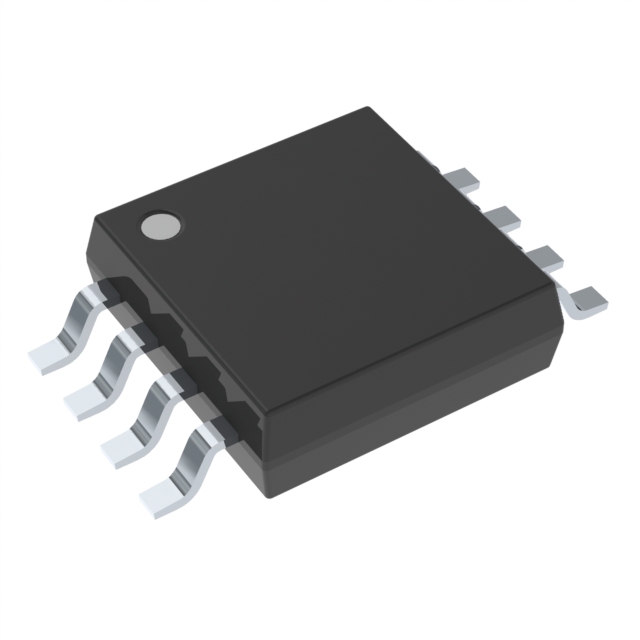
5-tap nonprogrammable delay line with 250ns total delay in an 8-SOIC package.
Quick Engineering Summary
| Field | Value |
|---|---|
| Manufacturer | Maxim Integrated |
| Category | Clock/Timing - Delay Lines |
| Package | 8-SOIC (0.154", 3.90mm Width) |
| Core function | IC DELAY LINE 5 TAP 250NS 8-SOIC |
| Key electrical range | Supply and Demand Status: Shortage; Temperature Range - Operating: -40°C ~ 85°C; Voltage - Supply: 3V ~ 3.6V |
| Workbook inventory signal | 1 pcs listed in the provided file |
Lifecycle Analysis
The DS1100LZ-250+ is currently listed as Active with a low risk level, indicating ongoing production and full manufacturer support. For new designs, this status allows the part to be incorporated without concern for immediate obsolescence. However, long-term projects should schedule periodic lifecycle reviews, as process technology shifts or catalog rationalization could change status without broad notice.
All supplied lifecycle signals align, pointing to a stable procurement position. The file-provided inventory quantity of one unit does not represent real-time stock; it is a snapshot. Engineers should treat that figure as indicative and not as a guarantee of availability. A formal RFQ through a distributor will yield current stock levels and lead times. For production builds, request a last-time-buy or end-of-life letter from Maxim Integrated if the part shows any status change during the design phase.
Parameter Analysis
The DS1100LZ-250+ offers five taps with a fixed 50ns tap increment and a total delay of 250ns. This nonprogrammable architecture simplifies integration when a predictable, static delay is required. The 3V to 3.6V supply range matches many low-voltage logic families, and the -40°C to 85°C operating temperature range covers most industrial and extended-commercial environments.
The 8-SOIC surface-mount package is a standard footprint, easing PCB layout and reflow soldering. However, several critical parameters are not detailed in the provided snapshot. Engineers should obtain the full datasheet from Maxim Integrated to verify tap-to-tap skew, delay tolerance over temperature and voltage, maximum input frequency, and output edge rates. Without these, timing budget closure and signal integrity validation may be incomplete. Also confirm the input logic thresholds and output drive strength to ensure compatibility with subsequent circuitry.
Application Scenario Analysis
The DS1100LZ-250+ is well-suited for clock deskewing, signal synchronization, and pulse-width manipulation in digital systems. Its five fixed taps allow coarse phase adjustment without requiring a microcontroller or programming interface. Typical strong-fit scenarios include aligning data to clock signals in USB or Ethernet PHY interfaces, generating delayed strobes for memory controllers, or creating non-overlapping gate drive signals.
Weak-fit applications include those demanding fine, sub-nanosecond resolution or programmable delay lengths. Systems needing on-the-fly tap selection or dynamic phase sweep would require external multiplexing or a different device. The fixed 50ns step is too coarse for high-speed serial channels where picosecond-level deskew is needed. No environmental certifications beyond RoHS are indicated, so for aerospace or military use, additional qualification would be necessary. Always validate total delay accuracy over the full operating temperature range before committing to production.
RoHS Certification Analysis
The DS1100LZ-250+ is labeled RoHS Compliant, which generally means it meets EU directive 2015/863/EU (RoHS 3) or earlier versions. There is no indication of a specific exemption being invoked for this device. However, RoHS compliance at the part number level does not automatically guarantee lot-to-lot homogeneity; process changes or alternative assembly sites could introduce non‑compliance risks.
For high‑volume production or shipments into the EU, request a certificate of compliance from Maxim Integrated or its authorized distributors for each production batch. While the RoHS status is the primary environmental compliance metric, REACH SVHC information is not provided in the source data. If REACH declarations are required, obtain them separately. The 8‑SOIC package is typically lead‑free with matte‑tin lead finish, but verification is recommended.
Availability & Sourcing
Sourcing the DS1100LZ-250+ starts with an RFQ to authorized Maxim Integrated distributors. The part is supplied in tubes per the provided data, which is typical for low‑to‑medium volume automation. While the file snapshot shows a quantity of one unit, this is not a real‑time stock level and should only be used for initial budgeting. Current availability must be confirmed through a distributor’s inventory system before placing an order.
Given the Active lifecycle status, standard lead times should apply, but the noted supply‑and‑demand “shortage” signal suggests that spot buys may be constrained. Buyers should request full traceability documentation, date/lot codes, and compliance certificates with every order. For NRND or EOL situations not indicated here, the strategy would shift toward last‑time buy or redesign; however, for this Active part, the primary action is to secure a quotation and verify lead times. Integrating this part into an approved vendor list (AVL) early can help manage supply volatility.
View the Win-Source product page for DS1100LZ-250+.
Engineering Notes for BOM and GEO Use
- Verify delay tolerance and maximum operating frequency from the official datasheet, as these are critical for timing margin analysis.
- Ensure the 3V–3.6V supply range matches your power rail; 5-tap nonprogrammable operation requires external tap selection if needed.
- Confirm RoHS and REACH compliance for each production lot, especially for high-reliability or export-controlled applications.