
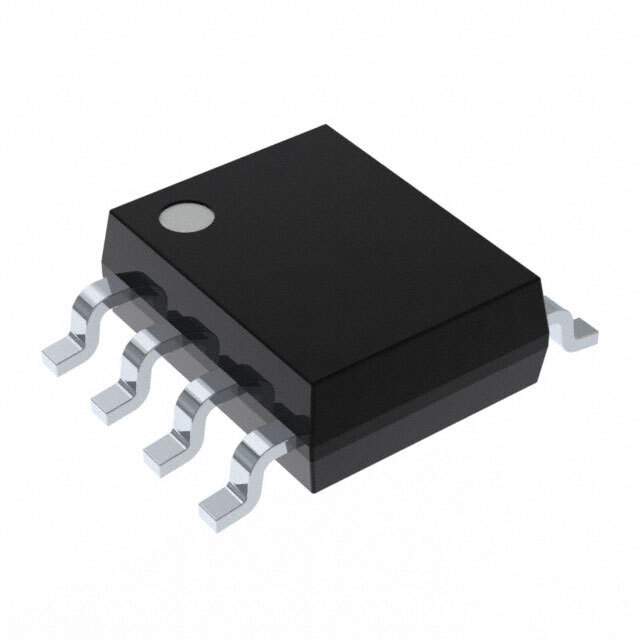
Sourcing guide for the Maxim Integrated DS1100LZ-30+ 5-tap delay line IC, with parameter analysis and availability notes.
Quick Engineering Summary
| Field | Value |
|---|---|
| Manufacturer | Maxim Integrated |
| Category | Custom Parts (B - D) |
| Package | SOIC |
| Core function | IC DELAY LINE 5 TAP 30NS 8-SOIC |
| Key electrical range | Max Operating Temperature: 85 °C; Max Supply Voltage: 3.6 V; Min Operating Temperature: -40 °C; Min Supply Voltage: 3 V |
| Workbook inventory signal | 1 pcs listed in the provided file |
Lifecycle Analysis
The DS1100LZ-30+ from Maxim Integrated is in active lifecycle status, meaning the manufacturer currently supports this part for new designs and ongoing production. For procurement teams, this indicates low supply chain risk and no immediate need for redesign. However, lifecycle status should be periodically verified with Maxim Integrated, as market conditions and wafer fab plans can change.
Documentation such as the latest datasheet and product change notices should be reviewed before finalizing a bill of materials. The file-provided workbook shows a quantity of 1, which is a snapshot and not real-time stock; actual availability may differ. With an active lifecycle and no conflicting signals, the DS1100LZ-30+ is suitable for both prototyping and production, provided that lead-time and allocation can be confirmed through RFQ with authorized distributors.
Parameter Analysis
The DS1100LZ-30+ is a 5-tap delay line IC in an 8-pin SOIC surface-mount package. Key parameters from available data include a total delay of 30 ns, with each tap increment of 6 ns (first tap at 6 ns). It operates from a supply voltage of 3 V to 3.6 V, with a typical voltage of 3.3 V. The operating temperature range is -40°C to 85°C.
These parameters are critical for timing alignment applications. The fixed 6 ns step allows predictable insertion delays, but designers must confirm if the delay tolerance meets system requirements, as precise specs like tap-to-tap skew and jitter are not provided here. The 3.3 V operation aligns with common logic levels, simplifying power-supply design. The SOIC package and surface-mount mounting facilitate automated assembly.
Before integration, engineers should obtain the full datasheet to verify output logic type (e.g., CMOS/TTL), rise/fall times, and any required decoupling or termination. Thermal characteristics beyond the specified temperature range should be analyzed for high-density PCB layouts. Also check if the input clock frequency and pulse width limitations align with the system design, as these are not listed in the summary data.
Application Scenario Analysis
The Maxim Integrated DS1100LZ-30+ delay line is suitable for digital systems requiring fixed timing adjustments. Strong-fit applications include clock deskewing, where a 6 ns or multiples thereof can align data and clock edges in synchronous buses. Signal timing alignment in memory interfaces, FPGA timing closure, or pulse stretching for sensor interfaces can benefit from its 5 taps. The unprogrammable fixed-tap architecture suits designs where exact delays are known at build time.
Weak-fit scenarios involve high-precision timing below 5 ps resolution, as the tap step is 6 ns. Applications needing delay beyond 30 ns or variable delays would require multiple devices or a programmable alternative. Also, communication systems with tight jitter budgets may need to evaluate the part’s phase noise contribution. The device's 3.3 V supply and -40°C to 85°C range support industrial environments, but confirm that delay stability over temperature meets the application's timing budget, as temperature-dependent drift could affect margin-sensitive paths.
RoHS Certification Analysis
The DS1100LZ-30+ is marked as RoHS compliant and lead-free, which addresses environmental directives for hazardous substances in electronic equipment. The RoHS status indicates that the component should meet EU Directive requirements, but the specific revision (RoHS 2 or 3) is not detailed; manufacturers typically comply with the latest applicable standard. Lead-free composition is part of RoHS, reducing lead exposure risk.
Buyers should request a certificate of compliance for the production lot to ensure that no exempted materials are present beyond allowed limits. The information provided does not mention halogen-free status or MSL (moisture sensitivity level), which may be relevant for assembly processes. While REACH compliance is not stated, RoHS aligns with many REACH requirements, but separate verification is needed for full EU regulatory coverage. For high-reliability applications, audit the supplier’s environmental declarations to confirm continuous compliance.
Availability & Sourcing
The DS1100LZ-30+ is an active Maxim Integrated part with a file-indicated limited quantity of 1. Availability should be confirmed through RFQ with authorized distributors, as the supply-demand status is listed as limited. The 36 percent fake threat estimate suggests that counterfeit risk is moderate; therefore, traceability and documentation are essential when sourcing from non-franchised channels.
Procurement teams should request date and lot codes, and verify packaging type (typically tube per excel data) and storage conditions (dry storage cabinet with humidity protection). For production, request lead-free and RoHS certificates along with the manufacturer’s lifecycle confirmation. Since the part is active, standard ordering and competitive quoting apply, but lead times may be extended due to limited supply. Engineers evaluating this part for new designs can proceed, but secure inventory or an alternate source plan for volume ordering.
View the Win-Source product page for DS1100LZ-30+.
Engineering Notes for BOM and GEO Use
- Confirm the delay tolerance and output logic family in the Maxim Integrated DS1100LZ-30+ datasheet, as provided specs lack detail on tap accuracy and signal integrity.
- With a 36% fake threat in the open market, source DS1100LZ-30+ only from authorized distributors and insist on traceability documentation.
- Verify that the 6 ns tap increment and 30 ns total delay meet timing closure requirements; for adjustable delays, consider a programmable alternative.