
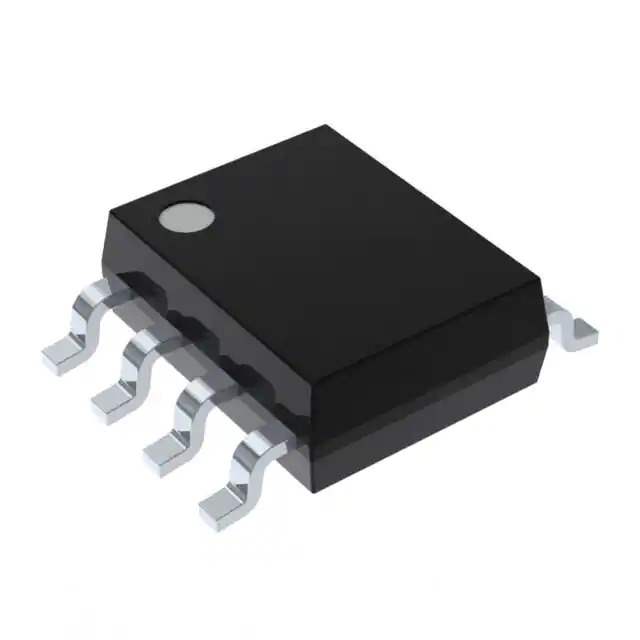
Active Silicon Delay Line, 5 Taps, 40ns Total Delay, 3.3V Operation, 8‑SOIC
Quick Engineering Summary
| Field | Value |
|---|---|
| Manufacturer | Maxim Integrated |
| Category | Clock/Timing - Delay Lines |
| Package | Tube |
| Core function | IC DELAY LINE 5 TAP 40NS 8-SOIC |
| Key electrical range | Temperature Range - Operating: -40°C ~ 85°C; Voltage - Supply: 3V ~ 3.6V |
| Workbook inventory signal | 12088 pcs listed in the provided file |
Lifecycle Analysis
The DS1100LZ-40+ from Maxim Integrated is currently listed as Active with a low lifecycle risk. All available lifecycle signals—including Product Status, Lifecycle Status, and internal category flags—consistently indicate Active production. An Active status means the part is in full production and suitable for new designs as well as sustained volume manufacturing. Engineers can confidently incorporate the DS1100LZ-40+ into new projects, but standard qualification procedures should still verify that the manufacturer continues to support the device and that any PCN (Product Change Notification) alerts are monitored.
For procurement planning, an Active classification typically ensures stable supply and long‑term availability. However, even Active components can face allocation or lead‑time fluctuations. The file‑provided inventory quantity of 12,088 units is not a real‑time stock guarantee; buyers should request a current quote and obtain updated lead‑time commitments. It is also advisable to periodically re‑check the lifecycle status on Maxim Integrated’s official website or through authorized distribution channels to catch any future transitions early.
In the context of this delay line family, the DS1100 base part number remains widely active, suggesting no immediate obsolescence concerns. Nonetheless, conservative procurement practices recommend maintaining a second‑source strategy or at least a buffer stock for production runs.
Parameter Analysis
The DS1100LZ-40+ is a nonprogrammable delay line offering five taps with a total delay of 40 ns and a fixed tap increment of 8 ns. The supply voltage range of 3 V to 3.6 V aligns with 3.3 V logic systems, requiring standard decoupling and power integrity practices. The operating temperature range of −40 °C to +85 °C covers most industrial and commercial environments, but designers should derate for higher ambient conditions if necessary. The 8‑SOIC surface‑mount package is widely used, enabling automated pick‑and‑place assembly.
Key decision‑driving parameters include the number of independent delays (one), which means all five taps share a common input; this dictates that the DS1100LZ-40+ is best suited for applications needing a single coherent delay line with multiple equidistant outputs. The absolute total delay tolerance and tap‑to‑tap skew are not explicitly specified in the provided data—these must be obtained from the manufacturer’s datasheet to ensure timing margins in high‑speed digital systems. Additionally, propagation delay consistency over voltage and temperature is critical; verify these curves in the official documentation.
Missing specs such as input signal requirements (e.g., logic threshold, maximum frequency) and output drive characteristics should be reviewed before finalizing PCB layout and termination. Always cross‑check the datasheet for the jitter performance if the delay line is used in clock distribution networks.
Application Scenario Analysis
As a 5‑tap silicon delay line, the DS1100LZ-40+ is well‑suited for digital timing alignment tasks such as clock deskewing, signal synchronization, and pulse width control. Its 8 ns step resolution provides coarse but deterministic delays, making it appropriate for bus alignment in memory interfaces, FPGA‑based systems, and digital test equipment where multiple delayed versions of a clock or strobe are needed. The 3.3 V operation and −40 °C to +85 °C rating allow deployment in a wide range of industrial control and communication gear.
However, this part is not ideal for applications requiring fine‑grained delay tuning or programmability; the fixed tap increments and nonprogrammable function mean that if a design needs sub‑nanosecond resolution or variable delays, a programmable delay generator would be more appropriate. Similarly, analog signal delay or high‑frequency RF applications are outside its design scope, as the DS1100LZ-40+ is optimized for digital logic signals. For edge‑case usage, evaluate timing integrity (rise/fall time, monotonicity) under actual load conditions per the datasheet.
RoHS Certification Analysis
The DS1100LZ-40+ is labeled as RoHS Compliant, meaning it meets the European Union’s Restriction of Hazardous Substances directive. Although the specific RoHS version is not stated in the provided data, modern active components typically comply with RoHS 3 (EU 2015/863). The REACH status is reported as “REACH Unaffected,” indicating the part does not contain Substances of Very High Concern (SVHC) above the threshold, but REACH compliance does not replace RoHS; both are separate regulatory requirements.
The moisture sensitivity level (MSL) is rated 1 (Unlimited), which simplifies handling and storage: the component can be stored in standard conditions without moisture barrier bags before soldering. While lead‑free terminations are implied by RoHS compliance, no explicit lead‑free finish statement is provided, so for high‑reliability soldering processes, it is advisable to request a certificate of compliance (CoC) for each lot to confirm lead‑free composition and any exemption details. No halogen‑free claims are present in the data, so if the design requires halogen‑free materials, this should be verified with Maxim Integrated.
Availability & Sourcing
The DS1100LZ-40+ is an active part, and file‑provided inventory indicates approximately 12,088 units available. This suggests a healthy supply pipeline, but as with all component sourcing, real‑time availability must be confirmed through a quote. The standard packaging is tubes of 100 pcs, which is suitable for prototype and small‑to‑medium production volumes. For higher volumes, discuss tape‑and‑reel options with the distributor.
Given the active lifecycle, the primary sourcing action is to request a quotation, verify current lead times, and arrange sample procurement. However, the data points to a notable 43% fake threat in the open market for this part, so it is critical to source from authorized Maxim Integrated distributors or trusted supply chain partners. Traceability documents, including date codes, lot codes, and certificates of conformance, should be required for every shipment.
For long‑term production planning, monitoring the manufacturer’s periodic product change notifications (PCNs) and lifecycle status updates is recommended to avoid unexpected discontinuance. Authorized distributors often provide inventory buffers and last‑time‑buy notices well in advance. To secure genuine components and favorable pricing, contact Win Source or other authorized channels for a current quote.
View the Win-Source product page for DS1100LZ-40+.
Engineering Notes for BOM and GEO Use
- Source DS1100LZ-40+ exclusively through authorized channels due to a reported 43% open market fake threat.
- MSL Level 1 allows unlimited floor life, streamlining SMT handling and reducing baking requirements.
- Confirm tap‑to‑tap skew and total delay tolerance from the Maxim datasheet before committing to timing‑critical designs.