
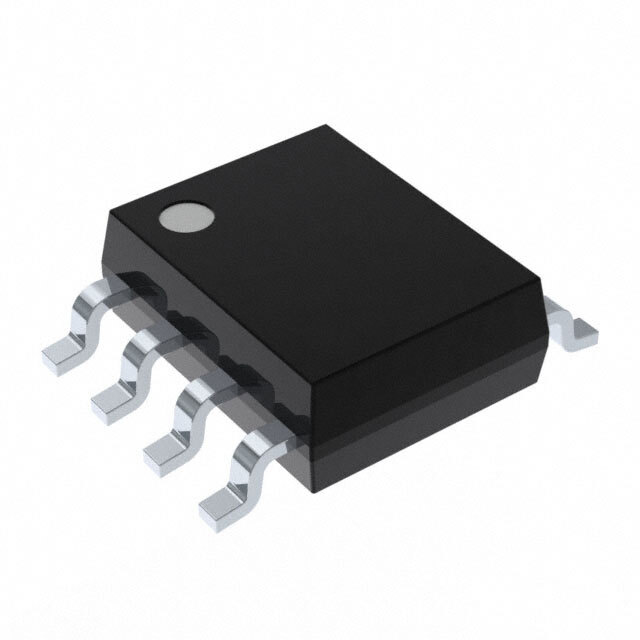
Active 5-tap nonprogrammable delay line, 500ns total delay, 100ns tap increment, 8-SOIC package, 3V-3.6V supply, -40°C to 85°C.
Quick Engineering Summary
| Field | Value |
|---|---|
| Manufacturer | Maxim Integrated |
| Category | Clock/Timing - Delay Lines |
| Package | 8-SOIC (0.154", 3.90mm Width) |
| Core function | IC DELAY LINE 5 TAP 500NS 8-SOIC |
| Key electrical range | Supply and Demand Status: Shortage; Temperature Range - Operating: -40°C ~ 85°C; Voltage - Supply: 3V ~ 3.6V |
| Workbook inventory signal | 34 pcs listed in the provided file |
Lifecycle Analysis
The DS1100LZ-500+ from Maxim Integrated (now part of Analog Devices) is classified as Active, with all supplied lifecycle signals indicating a low-risk procurement status. This means the part is in full production, supported by the manufacturer, and suitable for both new designs and sustaining production. No end-of-life or not-recommended-for-new-design notices have been identified, so engineers can incorporate this delay line without immediate concern over obsolescence.
However, lifecycle status should not be taken as a guarantee of unlimited availability. The component is flagged with a "Shortage" supply and demand status, and file-provided inventory shows just 34 units. This discrepancy between active lifecycle and constrained stock suggests that market demand may temporarily outstrip supply. Therefore, sourcing teams should treat the device as availability-constrained and verify real-time stock levels with authorized distributors.
To mitigate risk, it is prudent to re-validate the lifecycle directly with the manufacturer, especially if the part is intended for long-lifecycle programs. Additionally, monitor Analog Devices' official product change notifications for any future updates to the DS1100LZ-500+ status.
Parameter Analysis
The most decision-relevant parameters for the DS1100LZ-500+ center on its delay characteristics: a total delay of 500ns, 5 taps, and a tap increment of 100ns. These fixed values define the temporal resolution and range for signal alignment tasks. The nonprogrammable nature means the delays are immutable, so the design must accept exactly 100ns steps up to 500ns. Engineers should confirm that this granularity and span align with their clock skew or pulse-width requirements before layout.
Electrical specifications include a supply voltage range of 3V to 3.6V, which narrows the allowed power rail tolerance; a well-regulated 3.3V rail is typical. The operating temperature range of -40°C to 85°C supports industrial environments, but derating for high-temperature enclosures should consider package thermal characteristics not provided here. The 8-SOIC surface-mount package (0.154" width) is standard for automated assembly, but designers should verify footprint compatibility and solderability.
Missing from the supplied data are critical timing details: propagation delay accuracy, jitter, rise/fall times, and output drive strength. These parameters directly impact signal integrity and must be obtained from the official Maxim Integrated / Analog Devices datasheet. Also absent are power dissipation figures, which are needed for thermal budgeting and power supply sizing. Verify these before finalizing the component selection.
Application Scenario Analysis
The DS1100LZ-500+ is engineered for fixed-delay timing applications typical of clock distribution, signal synchronization, and coarse phase adjustment in digital systems. Its 5-tap structure with 100ns increments suits designs where multiple skewed copies of a clock or pulse are needed, such as in memory interfaces, FPGA input retiming, or simple digital delay generation. The nonprogrammable attribute makes it ideal for applications where delay settings are fixed at design time and never need tuning.
Strong-fit scenarios include industrial controllers, motor drive timing, or legacy system upgrades where a reliable, no-configuration delay element is required. The part’s wide temperature range and surface-mount form factor support dense PCB layouts in factory automation or instrumentation. In contrast, weak-fit scenarios involve applications demanding programmable delays, sub-nanosecond resolution, or very high-speed signals beyond the part’s bandwidth—factors that would require a different delay line architecture.
Because of the reported shortage condition, the DS1100LZ-500+ may not be optimal for high-volume consumer products where uninterrupted supply is critical. For prototyping or low-volume builds, its active status and fixed delays still offer a straightforward solution, provided procurement challenges are addressed.
RoHS Certification Analysis
The DS1100LZ-500+ is stated by the manufacturer to be RoHS Compliant, which generally means it adheres to the EU Directive 2011/65/EU restricting lead, mercury, cadmium, and other hazardous substances. This compliance is typical for Maxim Integrated parts and is essential for products sold in the European Union or other regions adopting RoHS frameworks. The packaging and terminations should be lead-free, supporting modern reflow soldering processes.
Note that the supplied compliance information does not include REACH, halogen-free, or MSL ratings. REACH compliance is a separate regulation and cannot be inferred from RoHS status alone. For applications requiring full material disclosure, such as medical or aerospace, request the manufacturer’s certificate of conformity and any applicable exemption lists.
Since compliance can vary by production lot, especially for older stock, it is advisable to validate the specific date/batch codes with the distributor. A lot-level RoHS certificate ensures that the exact parts being purchased meet the environmental standards required, avoiding costly rework or import delays.
Availability & Sourcing
The DS1100LZ-500+ is currently flagged as a shortage part, and file-provided inventory shows only 34 units in stock. While its lifecycle is Active, this mismatch highlights a real-world supply constraint. Sourcing teams should not rely on the file-provided quantity as a guarantee; instead, request a quote from authorized distributors for up-to-the-minute stock levels, lead times, and pricing.
When procuring, specify the exact manufacturer part number, and confirm packaging (tube) and device marking. For quality assurance, insist on traceable date and lot codes, especially if the parts are destined for regulated industries. Verify that the distributor can provide a RoHS certificate and any necessary compliance documentation for the delivered lots. Surface-mount devices like the 8-SOIC DS1100LZ-500+ are sensitive to moisture; check that they are shipped in sealed, moisture-barrier packaging if required by your assembly process.
Given the shortage status, consider engaging with multiple franchised sources or authorized partners to secure inventory. If the DS1100LZ-500+ is critical, evaluate whether an alternative delay line with similar specifications could serve as a backup. For new designs where the part is not yet locked in, delaying the BOM freeze until supply stabilizes might be a prudent risk-mitigation strategy. Always re-confirm lifecycle and availability before placing large orders.
View the Win-Source product page for DS1100LZ-500+.
Engineering Notes for BOM and GEO Use
- The DS1100LZ-500+ is a fixed-function delay line; verify its 100ns tap increments and 500ns total delay meet your timing requirements without adjustment.
- File-provided inventory shows only 34 units with a shortage status — confirm real-time availability and lead times before committing to production.
- RoHS compliance is indicated, but request full material declarations and lot-level certificates for high-reliability or export-sensitive applications.