
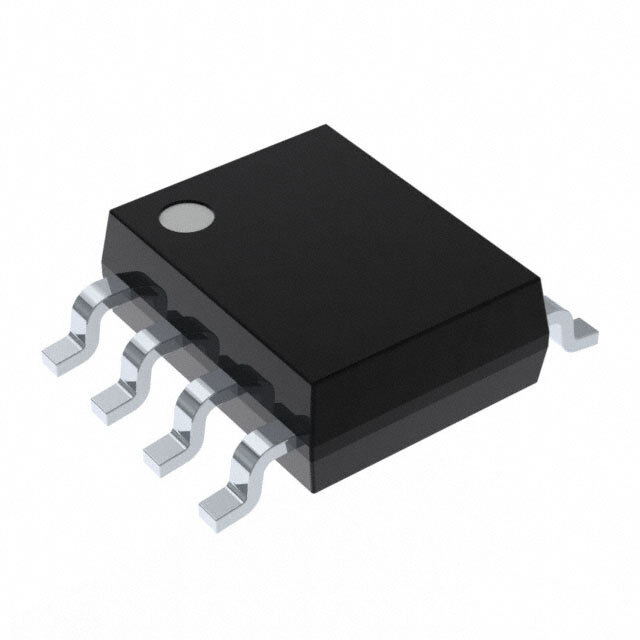
Sourcing guide for the DS1100LZ-60+ 5-tap delay line: specs, lifecycle, RoHS, and availability.
Quick Engineering Summary
| Field | Value |
|---|---|
| Manufacturer | Maxim Integrated |
| Category | Clock/Timing - Delay Lines |
| Package | 8-SOIC (0.154", 3.90mm Width) |
| Core function | IC DELAY LINE 5 TAP 60NS 8-SOIC |
| Key electrical range | Supply and Demand Status: Shortage; Temperature Range - Operating: -40°C ~ 85°C; Voltage - Supply: 3V ~ 3.6V |
| Workbook inventory signal | 1300 pcs listed in the provided file |
Lifecycle Analysis
The DS1100LZ-60+ from Maxim Integrated is listed with an Active lifecycle status. All available signals align on this status, indicating that the part is currently in production and not approaching end-of-life. For new designs, this typically means low procurement risk; however, it is always prudent to check with the manufacturer for any planned discontinuation notices, especially for programs with long lifecycles.
The file-provided inventory data suggests some available stock, but this is not a real-time guarantee. Engineers and buyers should verify current availability and lead times with authorized distributors. Notably, the supply and demand status is marked as 'Shortage,' which may indicate constrained supply despite the Active status. Planning for potential allocation or extended lead times is advisable.
Parameter Analysis
The DS1100LZ-60+ is a nonprogrammable delay line with five equally spaced taps, each providing a fixed 12ns delay increment and a total delay of 60ns. This fixed architecture is well-suited for applications requiring precise, repeatable timing delays without the need for dynamic adjustment. The delay to the first tap is also 12ns, ensuring consistent spacing. Designers should confirm that these fixed delays align with their timing budgets, as no trimming or programming is possible.
The device operates from a supply voltage of 3V to 3.6V, which places it in the typical 3.3V domain, and the -40°C to +85°C operating temperature range supports industrial applications. Key missing parameters from the available data include minimum and maximum propagation delays, output rise/fall times, input logic threshold levels, and jitter characteristics. These should be obtained from the official Maxim Integrated datasheet to ensure proper integration and timing margin analysis. The 8-SOIC surface-mount package is standard, but thermal and layout considerations should follow manufacturer guidelines.
Application Scenario Analysis
The DS1100LZ-60+ is ideally suited for clock and timing applications where a fixed, multiple-tap delay line is needed. Typical strong-fit scenarios include clock deskewing in synchronous digital systems, signal edge alignment in multi-channel data acquisition, and generating precise pulse delays in embedded controllers. The five equally spaced taps allow for multiple phase-offs from a single reference, which is useful in phasing control circuits.
However, this part is not optimal for designs that require programmable or variable delays, as it is nonprogrammable. Additionally, for very high-frequency clock signals, the lack of specified jitter and propagation delay tolerance may limit its use in jitter-sensitive applications like high-speed serial communication. The 3.3V operation and industrial temperature range make it a good fit for many industrial and automotive (non-safety-critical) environments, provided the timing requirements are fully validated with the datasheet specifications.
RoHS Certification Analysis
The DS1100LZ-60+ is listed as RoHS Compliant, which suggests it meets the European Union's Restriction of Hazardous Substances directive. The available data does not specify the exact RoHS revision (e.g., RoHS 2 or RoHS 3), but as an active part from a major manufacturer, it is reasonable to assume compliance with the latest applicable standards. No exemptions are noted, but if any are required for specific substances, they should be confirmed with the supplier.
While the RoHS status is provided at the part number level, compliance can vary by production lot. For high-volume production, it is recommended to request a certificate of conformance for each shipment. Additional environmental compliance (such as REACH, halogen-free, or moisture sensitivity level) is not indicated in the supplied data; engineers should request this information if needed for their design qualification.
Availability & Sourcing
Sourcing the DS1100LZ-60+ requires attention both to life-cycle status and current supply conditions. Although the part is Active, the indicated 'Shortage' supply and demand status signals that availability may be tighter than typical. File-based inventory data shows a workbook quantity of 1300 units, but this is not a real-time figure. Buyers should request a quote to obtain current stock levels, lead times, and pricing.
When ordering, specify the part number exactly (including the '+' suffix) to ensure correct device selection. The standard packaging is tube, which is typical for SOIC devices. For production environments, verify the manufacturer's lot traceability and date codes. Since Maxim Integrated is now part of Analog Devices, it may be worth checking both sources for availability. Request a certificate of RoHS compliance and any other required quality documents to complete the sourcing cycle.
View the Win-Source product page for DS1100LZ-60+.
Engineering Notes for BOM and GEO Use
- The DS1100LZ-60+ is active and suitable for new designs, but always verify lifecycle status directly with Maxim Integrated for long-term programs.
- The fixed 12ns tap increment and 60ns total delay are non-programmable, so confirm timing requirements match your application before committing.
- The part is RoHS compliant and supplied in tube packaging; ensure your assembly process is compatible with the 8-SOIC surface-mount package and request compliance docs when ordering.